Hindu faith denigrated, Hindu organisation workers threatened by Muslim man on social media
 Kishanganj, Bihar, India
  23 November, 2025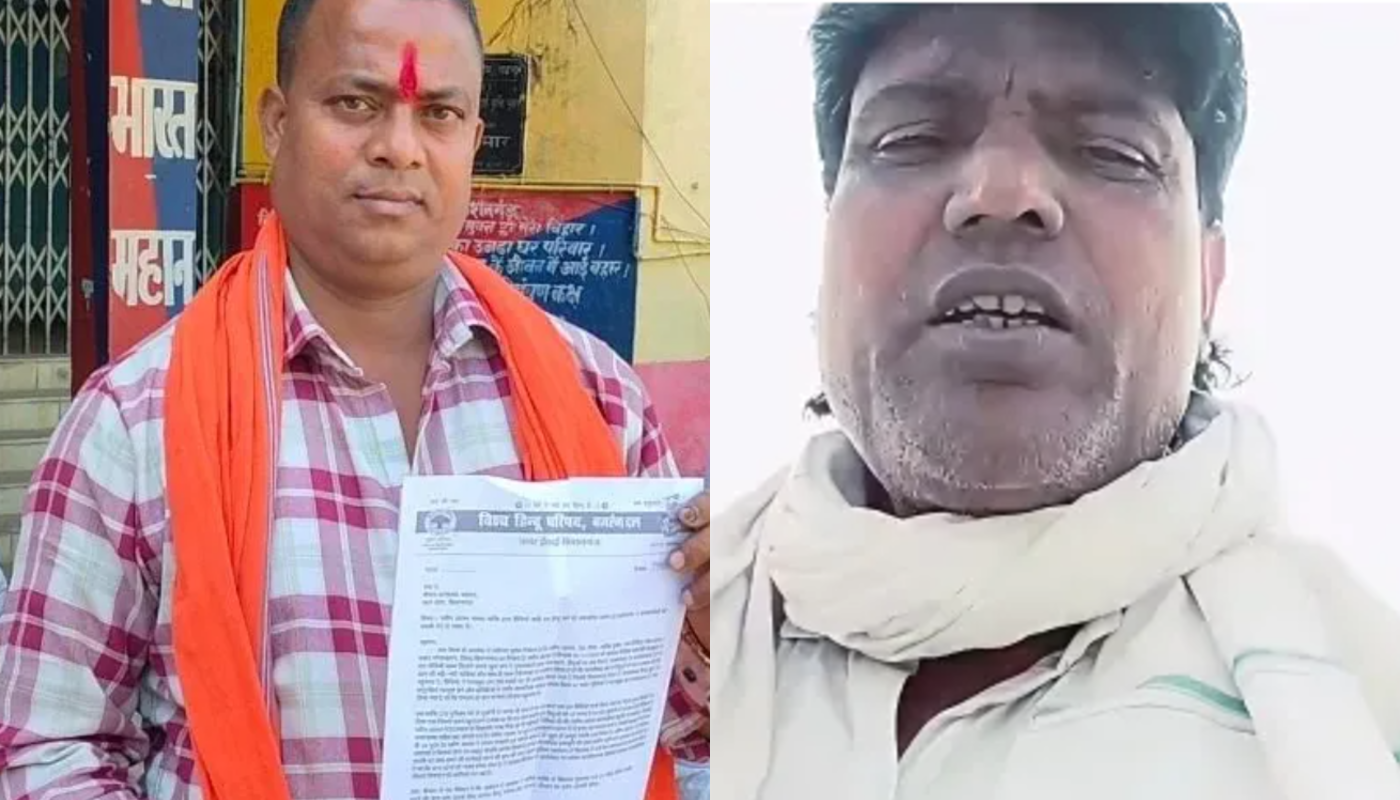
Case Summary
In Kishanganj, Bihar, derogatory remarks against Hindu beliefs were made by a Muslim man named Rakim Alam. The accused also threatened Bajrang Dal workers, a Hindu organisation, prompting a formal complaint to the police. According to media reports, the complaint against the accused was filed by a man named Pradeep Singh, stating that on 24 November 2025, Rakim Alam uploaded a Facebook video in which he used abusive and provocative language targeting the Hindu religion, Bajrang Dal, and its workers. The content of the video was described as inflammatory and intended to spark tension by insulting Hindu sentiments. The complaint further mentioned that this was not an isolated incident. Earlier, during Eid al-Adha, an Islamic festival, Rakim had released another video in which he disrespected cows, mocked Hindu traditions, and used crude language about Bharatiya Janata Party MLA Raj Singh. That video was later removed from social media. According to the complainant, Rakim and members of his family had been involved in earlier incidents that generated communal friction in the area. The complaint also highlighted Rakim’s criminal background, stating that cases against him were already registered at the Kochadhaman police station. It stated that he was associated with illegal activities such as the illicit liquor trade and drug smuggling. The complainant urged the police to conduct a high-level investigation into Rakim’s actions and take legal measures for repeatedly creating communal tension and disturbing social harmony. Copies of the complaint were also sent to senior officials for further action.
Why it is Hate Crime ?
The primary category selected in this case is: Hate speech against Hindus. The subcategory under this is: Anti-Hindu slurs, mocking faith. Anti-Hindu slurs and the deliberate mocking of the Hindu faith owing to religious animosity involve the usage of derogatory terms, stereotypes, or offensive references to religious practices, symbols, or figures. One of the common anti-Hindu slurs used against Hindus is “cow-worshipper” and “cow piss drinker”. The intention of using this term is to demean and mock Hindus as a group and their religious beliefs since Hindus consider the cow holy. Additionally, some symbols and the slurs attached to them have a historical context that exacerbates the insult, hate, stereotyping, dehumanisation and oppression against Hindus. Cow worship has been used for centuries to denigrate Hindus, insult their faith and oppress Hindus specifically as a religious group. There has been overwhelming documentation about how cow slaughter has been used to persecute Hindus with cow meat being thrown in temples and places of worship. There has also been overwhelming documentation where cow meat (beef) has been force-fed to Hindus to either forcefully convert them to Islam or denigrate their faith. Apart from cow worship, the Swastika – which holds deep religious significance for the Hindus – has also been misinterpreted and distorted to use as a slur against Hindus. Similarly, the worship of the Shivling has been used by supremacist ideologies and religions to denigrate Hindus owing to religious animosity. Such slurs and denigration stem out of inherent animosity and hate towards Hindus and their faith, therefore, it is categorised as hate speech targeted at Hindus specifically owing to their religious identity. The other subcategory selected in this case is- Violent Threats. Violent threats, explicit, implicit or implied, is the most dangerous form of hate speech since it goes beyond discriminatory and prejudicial language to express the intent of causing harm to an individual or a group of people based on their religious identity and faith. There could be several different kinds of threats that are issued to Hindus based on religious animosity. An explicit threat would mean the direct threat of violence towards an individual Hindu, a group of Hindus or Hindus at large. Physical violence, death threats, threats of destruction of property belonging to Hindus and threats of genocide would mean explicit threats against Hindus for their religious identity. Implicit threats may not be a direct threat but implied through the use of symbols of actions – for example – in the Nupur Sharma case, other than explicit threats, there were also implicit threats when Islamists took to the streets to burn and beat her effigies. It implies that they want to do the same to Nupur Sharma – thereby is considered an implicit threat. Violent threats can be delivered in person, through letters, phone calls, graffiti, or increasingly through social media and other online platforms. It would be important to understand that a threat – explicit or implicit, online or offline – to an individual who happens to be a Hindu does not qualify as a religiously motivated threat. Such a threat, while vile and dangerous, could be owing to non-religious reasons and/or personal animosity. To qualify as a religiously motivated threat, it would need to exhibit an indication that the individual is being targeted for religious reasons and/or owing to his/her religious identity as a Hindu. This case has been added to the tracker because it reflects a clear pattern of targeted hostility directed at Hindus through sustained verbal provocation, religious mockery, and the deliberate use of inflammatory rhetoric. The videos described in the complaint were not casual expressions of dissent or political criticism. They involved direct insults aimed at Hindu beliefs, practices, and symbols, accompanied by threats towards Bajrang Dal workers, who were targeted specifically because of their Hindu identity and activism. The language used in the videos was intended to demean the faith, provoke emotional disturbance among Hindus, and create an environment of intimidation in the local community. When such remarks are disseminated publicly on social media, their effect extends far beyond the immediate individuals mentioned, contributing to a broader atmosphere of communal humiliation and fear. The references to cows and Hindu rituals are particularly significant, as these are recurring focal points in anti-Hindu slurs. Historically, the targeting of sacred symbols such as the cow, a holy animal in Hinduism, has been a method used to provoke, insult, and psychologically injure Hindu communities. When a person publicly mocks or abuses these religious symbols, the act goes beyond personal expression and becomes a direct form of hostility grounded in religious animus. The complaint indicates that the accused had previously circulated videos containing similar mockery, including vulgar remarks towards Hindu beliefs and sentiments during a religious festival. This repetition underscores the intentional nature of the acts. They were not isolated lapses in judgment but part of a continued effort to antagonise Hindus and incite disharmony. The accused’s criminal record adds another layer to the context. Individuals already engaged in illicit activities often use communal provocation as a tool for asserting dominance or fostering fear. The complaint suggests that his behaviour has contributed to religious tensions in the past, which strengthens the argument that these actions were not spontaneous or benign. When a pattern emerges in which the same person repeatedly posts derogatory content aimed at a specific religious group, the underlying motive becomes clear: to degrade that group and disrupt social harmony. For these reasons, the case qualifies as a hate crime against Hindus. The intent was to humiliate Hindu identity, faith, provoke anger, and destabilise communal peace through explicit anti-Hindu slurs and threats. Such acts are a result of deep-seated animosity towards the Hindu faith and its adherents. Therefore, this case is being added to the hate crime database of the Hinduphobia Tracker.


Case Status
Complaint filed


Perpetrators Details
Perpetrators
Muslim Extremists
Perpetrators Range
One Person
Perpetrators Gender
male
 Sources




