Stones pelted at Hanuman Temple, petty conflict leads to communal violence
 Bhilai, Chhattisgarh, India
  3 July, 2023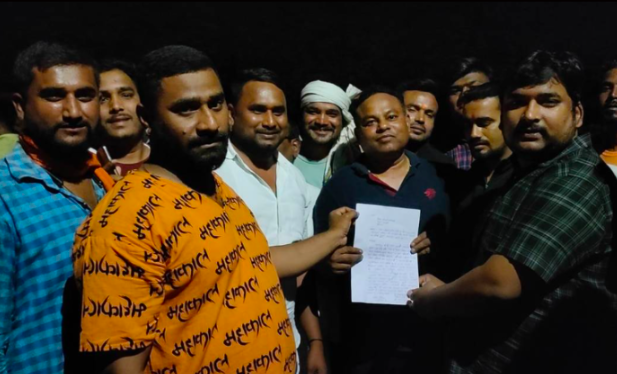
Case Summary
A dispute erupted late at night when some local youths pelted stones and burnt flags in a Hanuman Mandir in the Sharda Para Chowk in Chhattisgarh's Bhilai village. Reportedly, a Hindu family had lodged a complaint about mobile theft at the Cantonment Police Station. Upon returning, they saw that 10 to 12 miscreants had vandalised their house and vehicle. Thereafter, they went to the Hanuman Mandir and pelted stones there. Enraged by the attack on the Hindu Temple, over 200 people, including local villagers and members of Hindu organisations like the Bajrang Dal, gathered at the Sant Ravidas Nagar PS and demanded prompt action against the accused. As the news spread, local Hindus reached the spot and started protesting against the same. A local woman said in an interview that though she did not know the youths personally, she could confirm they all belonged to the Muslim community. Durg Additional Superintendent of Police Sanjay Dhruv said that two people from each factions were arrested. He said that the matter pertains to a personal conflict between members of the two communities. The police restored the damaged grills and other parts of the temple that were vandalised. Furious Hindu locals were heard accusing the local police of being biased towards the Muslim population and releasing the accused right after the arrest.
Why it is Hate Crime ?
The first primary category this case is being added to is 'attack not resulting in death', under the sub-category 'communal clash'. Communal clash is a form of collective violence that involves clashes between groups belonging to different religious identities. For a communal clash between Hindus and non-Hindus to qualify as a religiously motivated hate crime, the trigger of the violence itself would have to be anti-Hindu in essence. For example, if there is a Hindu religious procession that comes under attack from a non-Hindu mob and after the initial attack, Hindus retaliate in self-defence, leading to a communal clash between the two religious communities. While at a later stage, both communities are involved in the clash/violence, the initial trigger of the violence was by the non-Hindu mob against the Hindus and therefore, it could safely be termed as an anti-Hindu violence. Further, the trigger would also have to be religiously motivated. In the cited example, the attack by the non-Hindu mob was against religious processions and therefore, can be concluded to be religiously motivated. In some cases, the trigger may be non-religious, however, it develops into religious violence against Hindus at a later stage. In such cases too, the foundational animosity towards Hindus becomes the motivating factor of the crime and therefore, it would be classified as a religiously motivated hate crime against Hindus under this category. The second primary category is 'Attack on Hindu religious representations' under the sub-category 'attack on temples'. In Hinduism, a temple is the abode of the Deity. The Deity in the Temple is consecrated, thereby, making it a real, breathing entity. Hindus believe that not just the Deity but the temple premises itself are sacred to Hindus since Hindus hold the faith that the entire Temple space is an amalgamation of the divine energy of the deity. Given the central significance of Temples in Hindu Dharma, any attack against a Hindu Temple or its peripheral premises is an attack on the faith itself and is born out of animosity towards the faith, of which, the Temple is a central tenet. Any manner of attack against a Temple and/or its premises would therefore be considered a religiously motivated hate crime. In this case, the police called the incident a personal dispute, but there is no denying that Hindu temples were attacked nevertheless. Additionally, locals also confirmed that some miscreants belonging to the Muslim community were behind the attack on the Hindu temples. The police, in many such cases, where the motive behind the crime is obvious but not explicitly mentioned, deny that the crime committed was in any way motivated by a religious bias or say that there was ‘no communal angle’ to the crime. Several factors are generally at play here. Many a time the police downplay incidents of low-level communal crime because it is their jurisdiction that comes under question. The police also often say that there was ‘no communal angle’ to a crime when there was one because they wish to ensure that owing to the crime already committed, there is no further flare up in the area. Likewise, the Left media and the leftist elite are also inclined to emphasise this "no communal angle" trope, especially wherever the victim of the crime is a Hindu. However, only a police statement or a media report, for instance, cannot be enough to determine whether there is a communal angle present in the crime that has been committed. In fact, to determine whether the crime is communal in nature or not, we need to give emphasis to the ground realities. For example in the case of Rinku Sharma, the Bajrang Dal activist who was mercilessly stabbed in his house in front of his family members in Delhi’s Mangolpuri area in the year 2021, the leftist media and the leftist ecosystem had tried to peddle that there was no communal angle to the crime. Even the police denied that the crime was communal in nature. However, Opindia spoke to several people who are on the ground with the family of Rinku Sharma and we were told that the communal tension in the area is palpable. The family of Rinku Sharma has said that the Muslims of the area held a grudge against Rinku ever since he celebrated the Ram Mandir verdict. Like the case of Rinku Sharma, those cases where even if the police have denied a communal angle or the leftist media have gone on an overdrive to peddle the ‘no communal angle’ trope, the ground reality, like the victim’s family or relative's testimonies, make it clear that there was an obvious religious bias that led to the crime, will be documented in this tracker. Going by the same logic, since the local residents testified that the attack on the temples was deliberate and not emerging from any personal dispute, this case has also been included in the hate tracker.


Case Status
Arrested


Perpetrators Details
Perpetrators
Muslim Extremists
Perpetrators Range
Unknown
Perpetrators Gender
unknown
 Sources




