Hindu community targeted in US politician’s Hinduphobic tweets; Brahmins portrayed as exploitative
 United States
  28 August, 2025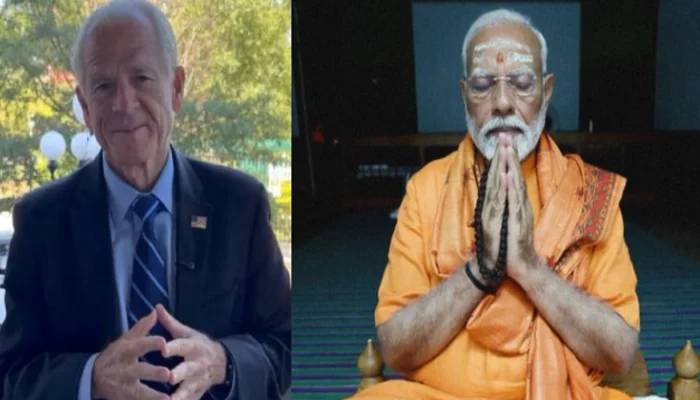
Case Summary
In the United States of America, White House trade adviser Peter Navarro targeted Hindus in India with inflammatory remarks, stating that “Brahmins” were profiteering at the expense of the Indian people. In interviews and on social media, Navarro invoked Hindu caste identity to suggest that a specific religious group, Brahmins, was exploiting the nation, linking this alleged profiteering to India’s purchases of Russian oil and broader trade practices. He repeatedly referred to India as a “laundromat for the Kremlin’s money” and accused Indian refiners, whom he claimed to be majority Brahmins, of exporting fuels for large profits while shielding Russia from sanctions. Navarro’s comments framed Hindu elites as complicit in undermining both Indian citizens and global interests, tying his rhetoric to Prime Minister Narendra Modi’s engagements with Russian and Chinese leaders and portraying India’s democratic leadership as aligned with authoritarian powers. Indian officials strongly rejected Navarro’s statements. Petroleum minister Hardeep Singh Puri emphasised that India’s energy trade had stabilised global markets and complied with international price-cap mechanisms, while Congress leader Pawan Khera called Navarro’s remarks baseless. Sanjeev Sanyal of the Prime Minister’s economic advisory council noted that the episode illustrated how anti-India narratives in Washington were often intertwined with misrepresentations of Hindu society.
Why it is Hate Crime ?
This case has been added to the tracker under the primary category of - Hate speech against Hindus. Within it, the sub-category selected is - Anti-Hindu slurs, mocking faith, Anti-Hindu slurs and the deliberate mocking of the Hindu faith owing to religious animosity involve the usage of derogatory terms, stereotypes, or offensive references to religious practices, symbols, or figures. One of the common anti-Hindu slurs used against Hindus is “cow-worshipper” and “cow piss drinker”. The intention of using this term is to demean and mock Hindus as a group and their religious beliefs since Hindus consider the cow holy. Additionally, some symbols and the slurs attached to them have a historical context that exacerbates the insult, hate, stereotyping, dehumanisation and oppression against Hindus. Cow worship has been used for centuries to denigrate Hindus, insult their faith and oppress Hindus specifically as a religious group. There has been overwhelming documentation about how cow slaughter has been used to persecute Hindus with cow meat being thrown in temples and places of worship. There has also been overwhelming documentation where cow meat (beef) has been force-fed to Hindus to either forcefully convert them to Islam or denigrate their faith. Apart from cow worship, the Swastika – which holds deep religious significance for the Hindus – has also been misinterpreted and distorted to use as a slur against Hindus. Similarly, the worship of the Shivling has been used by supremacist ideologies and religions to denigrate Hindus owing to religious animosity. Such slurs and denigration stem out of inherent animosity and hate towards Hindus and their faith, therefore, it is categorised as hate speech targeted at Hindus specifically owing to their religious identity. This case is included in the tracker because Peter Navarro made explicitly Hinduphobic remarks that singled out India’s Brahmin community, accusing them of profiteering and turning the country into a “laundromat for the Kremlin’s money.” By invoking caste identity, Navarro weaponised Hindu social distinctions to frame Brahmins as exploitative and responsible for harming the nation. His rhetoric was not a critique of trade policy, but an attempt to stigmatise an entire religious group, turning Hindus into scapegoats for geopolitical disputes. Such statements demean the dignity of over a billion Hindus worldwide, encourage hostility toward Brahmins, and exemplify how hate speech can intertwine with foreign policy narratives to justify prejudice against Hindu society. It could be argued that Navarro’s targeting of “Brahmins” was directed at their micro-identity of caste rather than Hinduism itself. However, this argument collapses when viewed in the larger religious context. In the Abrahamic worldview, micro-identities such as caste, region, or language are secondary—the hostility is fundamentally directed at the Hindu identity as a whole. Navarro deliberately invoked the caste marker “Brahmin” to sharpen his attack, but his underlying animosity was against Hindus and Hindu civilisation, which he sought to portray as exploitative, corrupt, and aligned with authoritarian powers. Thus, even though caste was the immediate lens, the prejudice was aimed at Hindu identity itself, making this a religiously motivated act of hate. Navarro also circulated an image of Prime Minister Narendra Modi meditating in saffron robes, a sacred Hindu practice rooted in dharma. The framing of this image was intended to mock Hindu spirituality while advancing political pressure, reducing sacred symbolism to a tool of derision. Protecting national interests is legitimate, but doing so by ridiculing another community’s faith and traditions reflects deliberate animosity. Taken together, Navarro’s attacks on Brahmins and Hindu spiritual practices amount to symbolic violence. They demean Hindu rituals and sacred traditions, reinforce harmful stereotypes, and contribute to the normalisation of prejudice against Hindus in global discourse. By embedding anti-Hindu sentiment within narratives about international trade and politics, his actions intensified cultural disrespect and legitimised hostility toward Hindu identity both in India and abroad. Disclaimer: The Hinduphobia Tracker records incidents based on the date when the victim’s ordeal began or when the event occurred. Since Peter Navarro’s tweets were posted on August 29, 2025, it has been recorded as the date of the incident.


Case Status
Complaint not filed


Perpetrators Details
Perpetrators
State and Establishment
Perpetrators Range
One Person
Perpetrators Gender
male
 Sources




