Muslim man with ties with Pakistan threatens to kill Hindu leaders, edits images of Hindu deities
 Muzaffarpur, Bihar, India
  9 May, 2024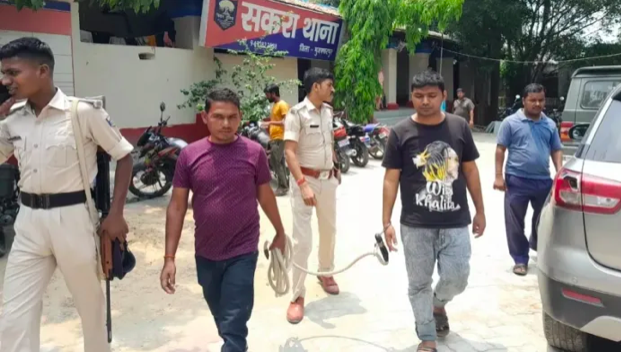
Case Summary
Mohammed Ali or Shahnaz, who made threats to kill several Hindu leaders, including former BJP spokesperson Nupur Sharma and Hindu Sanatan Sangh national president Upadesh Rana, was arrested by the Gujarat Police in Muzaffarpur, Bihar. Ali's connections with Pakistan were. He was part of a WhatsApp group with a Pakistani individual, Dogar and Maulana Sohail Khan of Gujarat. He used a Nepal number on WhatsApp to propagate objectionable content, including edited images and videos of Hindu deities, and made threats via video calls, sometimes adding targets to a group call. This arrest followed the arrest of Maulana Sohail Abubakr Timol in a conspiracy to murder Hindutva leader Upadesh Rana, shedding light on Ali's involvement in the plot.
Why it is Hate Crime ?
This case has been added to the hate tracker under two prime categories. The first is- Hate speech against Hindus- within which, the sub-category selected is- Violent threats- Violent threats, explicit, implicit or implied, is the most dangerous form of hate speech since it goes beyond discriminatory and prejudicial language to express the intent of causing harm to an individual or a group of people based on their religious identity and faith. There could be several different kinds of threats that are issued to Hindus based on religious animosity. An explicit threat would mean the direct threat of violence towards an individual Hindu, a group of Hindus or Hindus at large. Physical violence, death threats, threats of destruction of property belonging to Hindus and threats of genocide would mean explicit threats against Hindus for their religious identity. Implicit threats may not be a direct threat but implied through the use of symbols of actions – for example – in the Nupur Sharma case, other than explicit threats, there were also implicit threats when Islamists took to the streets to burn and beat her effigies. It implies that they want to do the same to Nupur Sharma – thereby is considered an implicit threat. Violent threats can be delivered in person, through letters, phone calls, graffiti, or increasingly through social media and other online platforms. It would be important to understand that a threat – explicit or implicit, online or offline – to an individual who happens to be a Hindu does not qualify as a religiously motivated threat. Such a threat, while vile and dangerous, could be owing to non-religious reasons and/or personal animosity. To qualify as a religiously motivated threat, it would need to exhibit an indication that the individual is being targeted for religious reasons and/or owing to his/her religious identity as a Hindu. The second category chosen here is- Attack on Hindu religious symbols. Under this, the sub-category selected is- Desecration of Hindu religious symbol- Icons and symbols or a religious representation of a spiritual ideal are widely revered in Hinduism. Iconography is of vital significance in the Hindu milieu. It helps connect people’s spiritual beliefs with the real world. Iconography within the Hindu faith takes several shapes and forms. Murtis are of most significance to Hindus, to which daily rituals, prayers and offerings are done. Besides the murtis, there are several other symbols which have deep significance in the Hindu faith – the Om and Swastika for example. Since these Hindu religious symbols hold paramount importance in Hinduism, any desecration of symbols, icons, murtis, religious representations and manifestations, is driven by animosity towards the faith itself which manifests itself through these murtis, icons and symbols. Therefore, any desecration of these Hindu religious symbols and representations is considered religiously motivated hate crimes under this category. Here, by making violent threats against prominent figures like former BJP spokesperson Nupur Sharma and Upadesh Rana, Mohammed Ali aka Shahnaz not only sought to intimidate these individuals but also aimed to instil fear within the broader Hindu community. His use of derogatory content, including edited images and videos of Hindu deities, demonstrates a profound disdain for Hinduism and its symbols, which are held sacred by millions of Hindus worldwide. Such actions are driven by animosity towards Hindus and their faith, reinforcing a narrative of hostility that seeks to marginalise and undermine the religious rights of the Hindu community. This deliberate targeting based on religious identity, coupled with the intent to provoke fear and violence, underscores the nature of Ali's offences as acts of hate-fueled by deep-seated religious animus and this is why this case has been added to this tracker.


Case Status
Arrested


Perpetrators Details
Perpetrators
Muslim Extremists
Perpetrators Range
One Person
Perpetrators Gender
male
 Sources




