Muslim group armed with rods and sticks disrupt Dalit wedding procession as it passes through 'Muslim area', threaten to kill the participants
 Bulandshahr, Uttar Pradesh, India
  16 November, 2024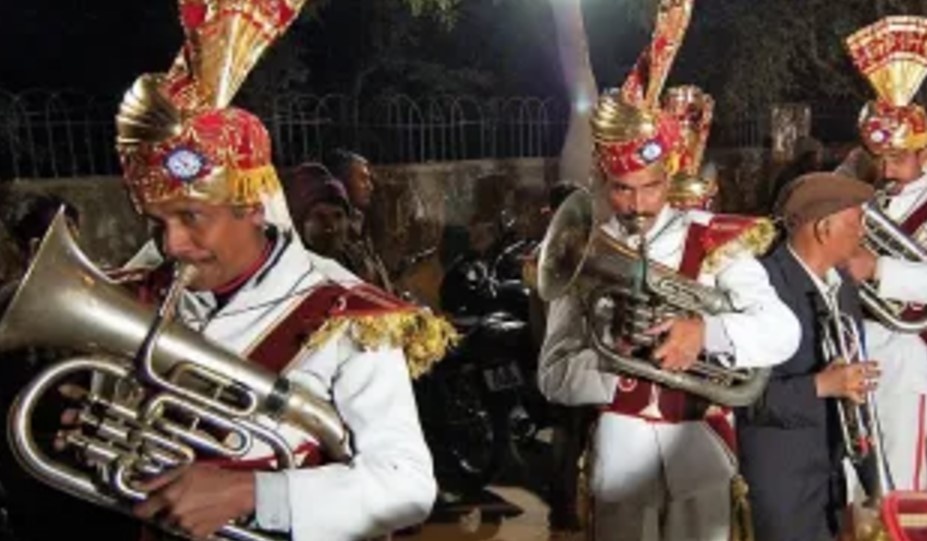
Case Summary
In a village in Bulandshahr district, Uttar Pradesh, some members of the Muslim community disrupted a Dalit wedding procession as it passed through a 'Muslim area'. The accused objected to the DJ music being played during the procession and threatened to kill those participating in it. The incident took place on November 17, 2024, in the Piyana Kala village of the Khanpur police station area, where Kishanlal Jatav's daughter was getting married. As reported by Jagran, the wedding procession from Titota village was making its way to the bride’s house, dancing to the music from the DJ. When the wedding procession entered the area predominantly inhabited by the Muslim community, a group of 15 to 20 individuals armed with sticks and guns stopped the procession. They reportedly behaved inappropriately, issued death threats, and drove away most of the guests. Only a handful of attendees reached the venue while others fled the scene. The marriage ceremony was eventually completed and the bride was sent off the next morning. Following this, the victim approached the village head for help, but it was alleged that the village head, Yunus Khan, sided with the Muslim community members. Later that afternoon, the victim went to the police station and lodged a written complaint naming over 12 individuals. However, it is further alleged that initially no action was taken by the police. On November 19, the police arranged a peace meeting to mediate between the two sides, but the Muslim side reportedly did not attend. Based on the written complaint, 12 individuals from the Muslim side were named and 9 were arrested. CCTV footage from a mosque in the village confirmed the incident, showing a verbal dispute between the two parties over the DJ's volume. However, the Deputy SP of Syana informed OpIndia that allegations of assault and weapon-waving were unfounded. The police also refuted claims that the Muslim side did not attend the peace meeting, stating that the dispute was caused by loud music due to another Muslim event happening in the area.
Why it is Hate Crime ?
The case has been added to the tracker under the prime category- Attack not resulting in death and within this, two sub-categories have been selected, based on the case details. The first is- Attacked for Hindu identity. In several cases, Hindus are attacked merely for their Hindu identity without any perceived provocation. A classic example of this category of religiously motivated hate crime is a murder in 2016. 7 ISIS terrorists were convicted for shooting a school principal in Kanpur because they got ‘triggered’ seeing the Kalava on his wrist and tilak that he had put. In this, the Hindu victim had offered no provocation except for his Hindu religious identity. The motivation for the murder was purely religious, driven by religious supremacy. Such cases where Hindus are targeted merely for their religious identity would be documented as a hate crime under this category. The second sub-category relevant here is- Attacked for crossing 'Muslim area'. One of the reasons that Hindus get attacked unprovoked specifically by Islamists is for crossing ‘Muslim areas’. Essentially, Muslim mobs often attack Hindus crossing or present in certain areas which have a majority Muslim population. It has often been cited as one of the reasons to blame Hindus for attacks against themselves, signalling that Hindus displaying religious symbols, taking our religious processions or crossing any area which is dominated by Muslim residents is a provocation in and of itself. These areas are mostly ghettoized areas where mobs mobilize quickly to attack Hindus for a variety of reasons like playing music during a religious procession, crossing a mosque, wearing a tilak or any other religious symbol in a Muslim-dominated area, praying at a local temple in that area etc. There have been cases where the few local Hindus of that area have been attacked on their way to the Temple for prayers as well, simply because the area is considered a Muslim-dominated area. Several times, it is entirely possible that the immediate trigger for the violence against Hindus was non-religious in nature, however, the violence became religiously motivated in nature because the area was Muslim dominated and the residents on the whole harboured animosity towards Hindus, evidenced from the actions of the mob, the slogans, and the nature of the attack. Such crimes are motivated by the religious identity of the victims and are therefore classified as hate crimes under this category. In this case, the Muslim men took offence to a wedding procession of a Hindu-Dalit family. They attacked the attendees for merely playing DJ music, a long-standing tradition in many cultures, particularly in India, where it adds to the celebratory atmosphere of the event. The attack was unprovoked in nature and the Hindu participants had done nothing which could be branded as provocation leading to the harassment by the Muslim mob. The unprovoked attack was driven by intrinsic and doctrinal religious animosity which also stemmed from the fact that the Hindu procession was crossing an area which had a Muslim-majority population. In areas with a majority Muslim population, Hindus often face hostility since the tenets of Islam harbour antagonism towards the Hindu faith and the adherents of Hinduism. Such religious and doctrinal animosity manifests in violence against Hindu devotees when religious processions pass areas with a Muslim majority. Obviously, it was not the music played by the Hindu participants that actually triggered the Islamists, in fact, that was only an excuse used by the perpetrators to target the procession because of the participants' religious identity. Such attacks are a form of symbolic aggression against the Hindu community that stems from an innate hatred for Hinduism. Given that the fundamental motivation behind these actions is contempt for Hindus and their religion, this instance has been added to the tracker under the following category. It is important to note here that the police refuted that the attack was communal in nature and maintained that it was due to loud music. The police, in many such cases, where the motive behind the crime is obvious but not explicitly mentioned, deny that the crime committed was in any way motivated by a religious bias or say that there was ‘no communal angle’ to the crime. Several factors are generally at play here. Many a time the police downplay incidents of low-level communal crime because it is their jurisdiction that comes under question. The police also often say that there was ‘no communal angle’ to a crime when there was one because they wish to ensure that owing to the crime already committed, there is no further flare up in the area. Likewise, the Left media and the leftist elite are also inclined to emphasise this "no communal angle" trope, especially wherever the victim of the crime is a Hindu. However, only a police statement or a media report, for instance, cannot be enough to determine whether there is a communal angle present in the crime that has been committed. In fact, to determine whether the crime is communal in nature or not, we need to give emphasis to the ground realities. For example in the case of Rinku Sharma, the Bajrang Dal activist who was mercilessly stabbed in his house in front of his family members in Delhi’s Mangolpuri area in the year 2021, the leftist media and the leftist ecosystem had tried to peddle that there was no communal angle to the crime. Even the police denied that the crime was communal in nature. However, Opindia spoke to several people who are on the ground with the family of Rinku Sharma and we were told that the communal tension in the area is palpable. The family of Rinku Sharma has said that the Muslims of the area held a grudge against Rinku ever since he celebrated the Ram Mandir verdict. Like the case of Rinku Sharma, those cases where even if the police have denied a communal angle or the leftist media have gone on an overdrive to peddle the ‘no communal angle’ trope, the ground reality, like the victim’s family or relative's testimonies, make it clear that there was an obvious religious bias that led to the crime, will be documented in this tracker. Going by the same logic, since the participants filed a written complaint and testified that the procession was halted and they were threatened when it crossed a 'Muslim area', this case has also been included in the hate tracker.


Case Status
Case sub-judice


Perpetrators Details
Perpetrators
Muslim Extremists
Perpetrators Range
From 10 to 100
Perpetrators Gender
unknown
 Sources




