Hindu homes and shops attacked, looted in Jessore by Muslim mob in Bangladesh
 Jessore District, Bangladesh
  4 August, 2024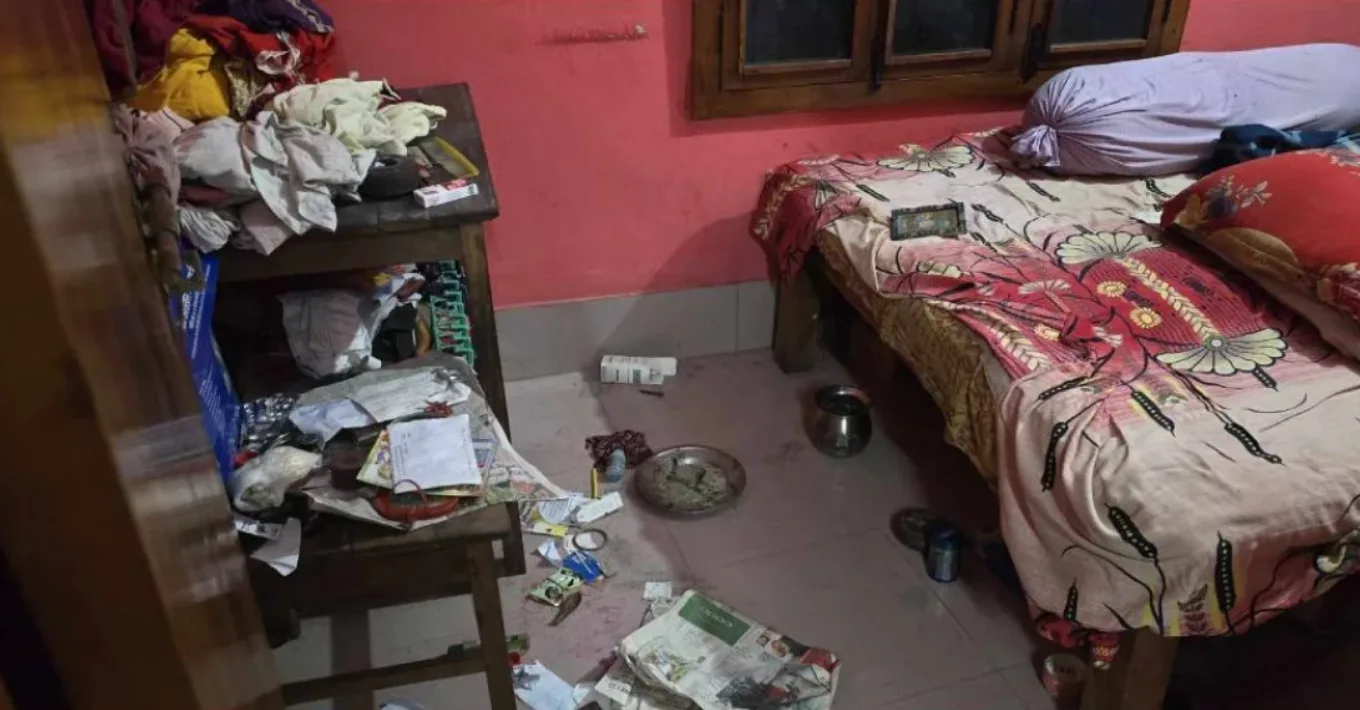
Case Summary
Residents of the Hindu community in the Bejpara Banani Road area of Jessore, Bangladesh, were gripped by fear after a series of attacks and looting incidents. At least 200 Hindu families in the area were affected, prompting them to guard their homes at night due to ongoing threats. According to reports, 20-25 miscreants attacked three houses, armed with machetes and sticks. Around 9:30 PM, they attempted to break the main gate of Gobinda Saha's home, smashed window panes and vandalised the property. Similarly, the home of Lakshmi Rani was targeted, where balcony windows were broken, and items such as a sewing machine were stolen. Another resident, Biplab Kundu, shared that both men and women in the neighbourhood were keeping watch at night and were unable to sleep due to fear. In a separate incident, a group of miscreants looted and vandalised Nath's computer shop on Railway Road, owned by Parthapratim Nath, the son of a local Awami League leader. The attackers, reportedly carrying national flags tied to their heads, looted computers, laptops, and other equipment from the shop and warehouses. The police superintendent of Jessore, Masud Alam, assured the community that measures were being taken to restore law and order. He stated that police were on alert to prevent further attacks and had initiated efforts to stabilise the situation in coordination with local members of society. Despite the presence of army patrol vehicles and assurances from political activists, residents remained in a state of panic, fearing more incidents in the future. Since the fall of Sheikh Hasina’s Awami League government on August 5, 2024, Bangladesh plunged into chaos as Islamist extremists took advantage of the political turmoil to unleash a wave of terror and violence against the Hindu community. The Islamist mobs attacked Hindu homes, burned them to the ground, and abducted women in a horrific descent into anarchy. Several temples have been destroyed in the area in a major crackdown on Hindus.
Why it is Hate Crime ?
This case has been added to the tracker under the prime category- Attack not resulting in death. The sub-category selected is- Attacked for Hindu identity. In several cases, Hindus are attacked merely for their Hindu identity without any perceived provocation. A classic example of this category of religiously motivated hate crime is a murder in 2016. 7 ISIS terrorists were convicted for shooting a school principal in Kanpur because they got ‘triggered’ seeing the Kalava on his wrist and tilak that he had put. In this, the Hindu victim had offered no provocation except for his Hindu religious identity. The motivation for the murder was purely religious, driven by religious supremacy. Such cases where Hindus are targeted merely for their religious identity would be documented as a hate crime under this category. The other sub-category selected is- Attacked to induce migration from non-Hindu dominated area. There have been cases where the Hindus living in an area, often with a majority dwelling belonging to non-Hindus or those harbouring animosity towards the Hindu faith, the Hindu residents experience threats and violence. The violence is employed with the aim of making the Hindus leave the area and relocate, so the area could be turned into an exclusive ghetto for adherents of the non-Hindu faith or those who harbor animosity towards the Hindu faith. In several cases, the aim of exodus is explicit. However, in several cases, the demand for exodus of Hindu residents is not explicit, however, violence by non-Hindu residents leaves the Hindu residents no option but to leave the area, thereby, turning the area into an exclusive ghetto of non-Hindu residents. In such cases, there are instances violence against the Hindu residents explicitly. For example, in the Hauz Qazi case of 2019, the Muslim residents claimed that mob violence against the Hindu residents had been triggered by a parking dispute. However, the violence did turn religious with a temple being desecrated and was directed specifically against the Hindu residents. The Hindu residents of the area were clear that the violence was religiously motivated and one of the motives was to affect an exodus of the Hindu residents. In such cases, even though the perpetrators have not explicitly expressed the aim of affecting exodus, the given circumstances and violence and precedent point to the intention of exodus and therefore would be categorized under this sub-category. Such crimes are religiously motivated and therefore are hate crimes. The Jessore incident is a clear example of Hindus being targeted for their religious identity alone. The Hindu families in the Bejpara Banani Road area were attacked in their own homes without offering any provocation. The attackers carried out vandalism, looting, and intimidation specifically against Hindu households, breaking into homes, destroying property, and stealing possessions. The violence was not incidental but directed at Hindus as a community. Fear was deliberately instilled, with women and men forced to guard their homes throughout the night. The second layer of the hate crime lies in the intent behind the repeated attacks and intimidation: to drive Hindus away from their homes and businesses, forcing them to flee from areas where they live as minorities. With at least 200 Hindu families affected and living under constant threat, the violence functions as a tool to render the locality unsafe for Hindus, effectively coercing them to migrate. Even if the attackers did not make an explicit demand for the Hindus to leave, the coordinated targeting of Hindu homes and shops—combined with the scale of violence after the political upheaval—points to an implicit aim of exodus. These kinds of attacks are not isolated but are part of a recurring pattern of religious hostility towards Hindu minorities in Bangladesh. Time and again, Hindu religious sites and symbols have been destroyed and desecrated by members of the Muslim community. This stems from religious animosity that exists in Islam against idol worshippers like Hindus, as idol worship is forbidden in Islam. This results in Hindus being frequently targeted and attacked just for practising their own faith. These attacks on temples and temple idols are not just acts of vandalism; they are direct assaults on the religious identity of Hindus. It highlights an atmosphere of religious intolerance where Hindu minority communities live under constant threat to their faith and dignity.


Case Status
Complaint filed


Perpetrators Details
Perpetrators
Muslim Extremists
Perpetrators Range
Unknown
Perpetrators Gender
male
 Sources




