Hindus come under attack by Muslim mob over trivial issues, identity based slurs hurled
 Navsari, Gujarat, India
  7 December, 2024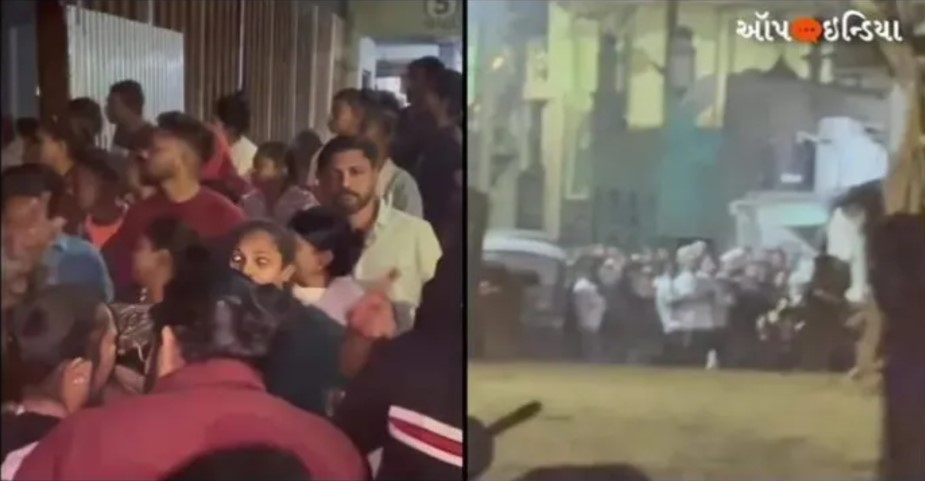
Case Summary
Hindus, especially women, came under attack by a mob of 150 to 200 Islamists, who entered the Hindu areas, abused the women, threatened to kill them and throw them out of the area. The attack followed a minor argument with a local Muslim youth over vehicle parking. After that, a large number of local Muslims arrived at the location carrying sticks and sticks. It is alleged that a mob of 100-150 Muslims abused the women and threatened to kill them. A Hindu victim said that the Islamist mob misbehaved with the women and beat them up saying, ‘Infidels, run away from here, this is our area. This is just the beginning.’ Apart from this, it is alleged that the mob also threatened the Hindu women by saying, ‘We will strip them and kill them’. According to the complainant, caste-based abuses were also used. The women have filed a complaint at the Navsari Town Police Station. The complaint names Shahnawaz Bhandari (main accused), Ajaz Sheikh, Shoaib Sheikh, Sufyan Salim, and Rafiq Patel’s son. Complainant Chandan Rathod further said that the majority of the population on Dargah Road is from the Muslim community. They also have a Dargah here, next to which a Hindu temple is also located. The complainant has said that for the last three years, radical Muslims have not allowed them to celebrate a single festival. The police, meanwhile, stated that there was no assault, and no religious threats were made against Hindus. Police have added that it was a parking dispute and the incident has no communal angle. However, the accused have been arrested under the SC/ST Act and other relevant sections. The police also claimed that anti-Hindu threats or slurs were not spoken and the viral videos of the incident also do not show any anti-Hindu remarks.
Why it is Hate Crime ?
The first category of the Hinduphobia tracker under which this case has been placed is- Attack not resulting in death. Under this, the sub-category selected is- Attacked for Hindu identity. In several cases, Hindus are attacked merely for their Hindu identity without any perceived provocation. A classic example of this category of religiously motivated hate crime is a murder in 2016. 7 ISIS terrorists were convicted for shooting a school principal in Kanpur because they got ‘triggered’ seeing the Kalava on his wrist and tilak that he had put. In this, the Hindu victim had offered no provocation except for his Hindu religious identity. The motivation for the murder was purely religious, driven by religious supremacy. Such cases where Hindus are targeted merely for their religious identity would be documented as a hate crime under this category. The second sub-category relevant under the above-mentioned prime category is- Attacked to induce migration from non-Hindu dominated area. There have been cases where the Hindus living in an area, often with a majority dwelling belonging to non-Hindus or those harbouring animosity towards the Hindu faith, the Hindu residents experience threats and violence. The violence is employed with the aim of making the Hindus leave the area and relocate, so the area could be turned into an exclusive ghetto for adherents of the non-Hindu faith or those who harbor animosity towards the Hindu faith. In several cases, the aim of exodus is explicit. However, in several cases, the demand for exodus of Hindu residents is not explicit, however, violence by non-Hindu residents leaves the Hindu residents no option but to leave the area, thereby, turning the area into an exclusive ghetto of non-Hindu residents. In such cases, there are instances violence against the Hindu residents explicitly. For example, in the Hauz Qazi case of 2019, the Muslim residents claimed that mob violence against the Hindu residents had been triggered by a parking dispute. However, the violence did turn religious with a temple being desecrated and was directed specifically against the Hindu residents. The Hindu residents of the area were clear that the violence was religiously motivated and one of the motives was to affect an exodus of the Hindu residents. In such cases, even though the perpetrators have not explicitly expressed the aim of affecting exodus, the given circumstances and violence and precedent point to the intention of exodus and therefore would be categorized under this sub-category. Such crimes are religiously motivated and therefore are hate crimes. The second prime category relevant here is- Hate speech against Hindus and within this, the sub-category selected is- Anti-Hindu slurs, mocking faith. Anti-Hindu slurs and the deliberate mocking of the Hindu faith owing to religious animosity involve the usage of derogatory terms, stereotypes, or offensive references to religious practices, symbols, or figures. One of the common anti-Hindu slurs used against Hindus is “cow-worshipper” and “cow piss drinker”. The intention of using this term is to demean and mock Hindus as a group and their religious beliefs since Hindus consider the cow holy. Additionally, some symbols and the slurs attached to them have a historical context that exacerbates the insult, hate, stereotyping, dehumanisation and oppression against Hindus. Cow worship has been used for centuries to denigrate Hindus, insult their faith and oppress Hindus specifically as a religious group. There has been overwhelming documentation about how cow slaughter has been used to persecute Hindus with cow meat being thrown in temples and places of worship. There has also been overwhelming documentation where cow meat (beef) has been force-fed to Hindus to either forcefully convert them to Islam or denigrate their faith. Apart from cow worship, the Swastika – which holds deep religious significance for the Hindus – has also been misinterpreted and distorted to use as a slur against Hindus. Similarly, the worship of the Shivling has been used by supremacist ideologies and religions to denigrate Hindus owing to religious animosity. Such slurs and denigration stem out of inherent animosity and hate towards Hindus and their faith, therefore, it is categorised as hate speech targeted at Hindus specifically owing to their religious identity. In this case, a mob of 150-200 Muslims entered a Hindu area and threatened and assaulted Hindu women. They used casteist slurs against them and also threatened to kill them and throw them out of the area. The initial trigger of the attack was non-religious in nature, however, the violence became religiously motivated in nature because, the area was Muslim dominated and the residents on the whole harboured animosity towards Hindus, evidenced by the actions of the mob, which included the caste-based abuses hurled at the victims and the threat to leave the area or face dire consequences. Here, it can be argued that a caste-specific slur is aimed at her micro identity of belonging to the Dalit section of the Hindu community and not her Hindu identity itself. However, as far as Abrahamic religions are concerned, the micro identities of caste, region, and language are secondary. It is the religious identity that drives the animosity of the perpetrator against the Hindu victim. In this case, while the Muslim mob hurled caste abuses at the victims, the animosity was driven by his animosity towards Hinduism and Hindus. While the immediate trigger of the violence could be a "minor dispute over vehicle parking" as mentioned in reports, the fact that caste slurs were hurled at the victims by the perpetrators makes it a religiously motivated hate crime against the victim. Further, the complainant stated that the area where the attack happened was a Muslim-dominated area. Additionally, the perpetrators also threatened the Hindus to leave the area or face dire consequences. When an area becomes dominated by a Muslim population, the Hindus in the area often suffer persecution. This is primarily because radical Muslims view such regions as exclusive zones where non-Muslims, particularly Hindus are unwelcome. This sense of entitlement and superiority not only reflects deep-seated prejudice but also highlights an attempt to assert religious dominance over public spaces. The assault on the Hindu women was motivated by this supremacist ideology, where Islamists in the area looked down upon Hindus, believing that they had the right to dictate who could move freely through their community. The act of attacking and threatening the Hindu women living in one such area is a dangerous mindset rooted in exclusion, intolerance and religious animosity, making this case an ideal example for inclusion in the tracker. Notably, despite the women victims themselves testifying, the police, in this case, denied any communal angle. They also claimed that anti-Hindu threats or slurs were not spoken. The police, in many such cases, where the motive behind the crime is obvious but not explicitly mentioned, deny that the crime committed was in any way motivated by a religious bias or say that there was ‘no communal angle’ to the crime. Several factors are generally at play here. Many a time the police downplay incidents of low-level communal crime because it is their jurisdiction that comes under question. There is also a possibility that the police too, don't have context as to how caste slurs by those who follow Abrahamic religions target the macro religious identity of an individual. The police also often say that there was ‘no communal angle’ to a crime when there was one because they wish to ensure that owing to the crime already committed, there is no further flare-up in the area. Likewise, the Left media and the leftist elite are also inclined to emphasise this "no communal angle" trope, especially wherever the victim of the crime is a Hindu. However, only a police statement or a media report, for instance, cannot be enough to determine whether there is a communal angle present in the crime that has been committed. In fact, to determine whether the crime is communal in nature or not, we need to give emphasis to the ground realities. For example in the case of Rinku Sharma, the Bajrang Dal activist who was mercilessly stabbed in his house in front of his family members in Delhi’s Mangolpuri area in the year 2021, the leftist media and the leftist ecosystem had tried to peddle that there was no communal angle to the crime. Even the police denied that the crime was communal in nature. However, Opindia spoke to several people who are on the ground with the family of Rinku Sharma and we were told that the communal tension in the area is palpable. The family of Rinku Sharma has said that the Muslims of the area held a grudge against Rinku ever since he celebrated the Ram Mandir verdict. Like the case of Rinku Sharma, those cases where even if the police have denied a communal angle or the leftist media have gone on an overdrive to peddle the ‘no communal angle’ trope, the ground reality, like the victim’s family or relative's testimonies, make it clear that there was an obvious religious bias that led to the crime, will be documented in this tracker. Going by the same logic, since the victims testified that the attack on them was deliberate and not accidental, this case has also been included in the hate tracker.


Case Status
Complaint filed


Perpetrators Details
Perpetrators
Muslim Extremists
Perpetrators Range
Unknown
Perpetrators Gender
male
 Sources




