Attack on Hindu sentiments: Muslim politician makes derogatory remark on Hindu women and revered Hindu festival
 Jabalpur, Madhya Pradesh, India
  28 August, 2025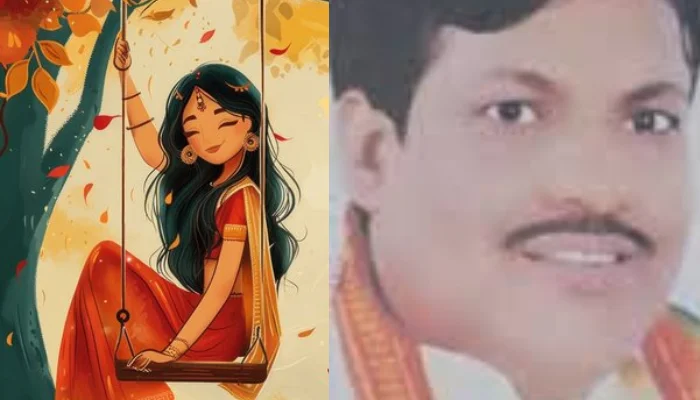
Case Summary
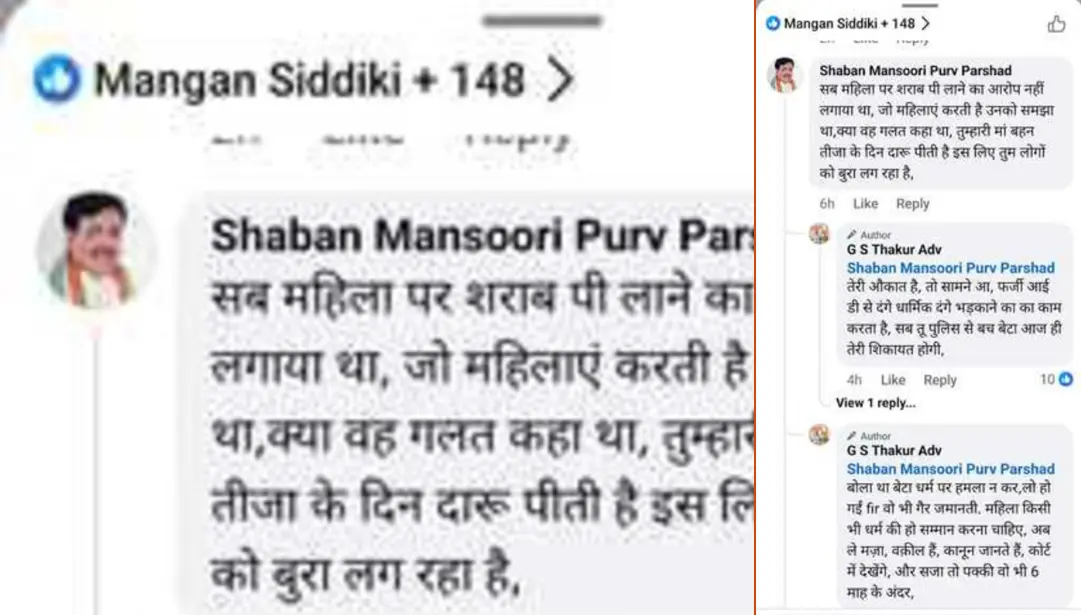
A derogatory remark targeting Hindu women and the Teej festival, a revered Hindu festival, was made by a Muslim politician named Shaban Mansuri. Teej is a significant Hindu festival primarily celebrated by women in parts of India and Nepal during the monsoon season. It commemorates the divine union of Goddess Parvati and Lord Shiva, symbolising love, devotion, and marital fidelity. Women observe fasting, dress in vibrant clothes, apply henna, and participate in singing and dancing to honour the well-being and long life of their husbands or future spouses. Beyond its religious aspects, Teej also celebrates the arrival of monsoon rains, symbolising renewal, fertility, and the harmonious balance between nature and human life. According to media reports, the accused is a former Congress councillor from Jabalpur, Madhya Pradesh. He made derogatory remarks about Hindu women celebrating the Teej festival. He claimed on a social media group that Hindu women spend time drinking alcohol during the time of Teej. The accused said to a Hindu man, “Your mother and sister also drink alcohol on Teej.” His statement was viewed as a grave insult to Hindu women observing religious fasts and as an attempt to demean Hindu customs. The remarks quickly drew condemnation from community members and political leaders for being abusive and communal in nature. Following public outrage, Bharatiya Janata Party leaders lodged an FIR at Ghamapur police station against former Congress councillor Shaban Mansuri, accusing him of using obscene language against Hindu women and of deliberately inciting religious tension during a sacred Hindu festival. The police registered a case under Sections 196, 197, and 299 of the Bharatiya Nyaya Sanhita (BNS), arrested Mansuri, and produced him before the court. His bail plea was rejected, and on the court’s order, he was sent to judicial custody.
Case Images
Why it is Hate Crime ?
The primary category in this case is: Hate speech against Hindus. The subcategory under this is: Anti-Hindu slurs, mocking faith. Anti-Hindu slurs and the deliberate mocking of the Hindu faith owing to religious animosity involve the usage of derogatory terms, stereotypes, or offensive references to religious practices, symbols, or figures. One of the common anti-Hindu slurs used against Hindus is “cow-worshipper” and “cow piss drinker”. The intention of using this term is to demean and mock Hindus as a group and their religious beliefs since Hindus consider the cow holy. Additionally, some symbols and the slurs attached to them have a historical context that exacerbates the insult, hate, stereotyping, dehumanisation and oppression against Hindus. Cow worship has been used for centuries to denigrate Hindus, insult their faith and oppress Hindus specifically as a religious group. There has been overwhelming documentation about how cow slaughter has been used to persecute Hindus with cow meat being thrown in temples and places of worship. There has also been overwhelming documentation where cow meat (beef) has been force-fed to Hindus to either forcefully convert them to Islam or denigrate their faith. Apart from cow worship, the Swastika – which holds deep religious significance for the Hindus – has also been misinterpreted and distorted to use as a slur against Hindus. Similarly, the worship of the Shivling has been used by supremacist ideologies and religions to denigrate Hindus owing to religious animosity. Such slurs and denigration stem out of inherent animosity and hate towards Hindus and their faith, therefore, it is categorised as hate speech targeted at Hindus specifically owing to their religious identity. This case has been added to the Hinduphobia Tracker because it exemplifies a direct and deliberate instance of hate speech targeted at the Hindu community through the denigration of their women and religious practices. The remarks made by the former Congress councillor, Shaban Mansuri, were not casual or isolated expressions of personal opinion but were structured to humiliate and ridicule Hindu women who observe the sacred Teej fast. Teej is a festival of devotion and restraint, particularly for married women, and mocking it by associating it with alcohol consumption constitutes a calculated attempt to demean Hindu faith and insult its practitioners. Such language, when issued publicly by a political figure, contributes to normalising contempt for Hindu traditions, reinforcing a climate of intolerance and prejudice against the community. The case qualifies as a hate crime against Hindus because the remarks directly targeted Hindu religious identity and women adhering to its customs. The insult was intended to provoke communal disharmony and to degrade a sacred observance central to Hindu domestic and cultural life. The deliberate use of derisive commentary against Hindu women fasting for Teej reflects the same pattern of verbal and symbolic aggression that has historically manifested through anti-Hindu slurs and mockery of Hindu deities and rituals. By attacking the integrity of a Hindu festival and the women participating in it, the Muslim councillor’s statement advances an underlying religious animosity, making it an unmistakable case of hate speech rooted in bigotry against Hindus and their faith. Since this case amounts to deliberate targeting and abuse of Hindu women and the Teej festival, it is being added to the hate crime database of the Hinduphobia Tracker. Disclaimer: The Hinduphobia Tracker records the date of an incident based on when the crime actually occurred, rather than when it was reported by the media. However, in this particular case, media reports have not specified the exact date when the accused made the derogatory remarks. Therefore, for documentation purposes, the date when the media report was published—29 August 2025—is being used as the indicative date of the incident.


Case Status
Case sub-judice


Perpetrators Details
Perpetrators
Muslim Extremists
Perpetrators Range
One Person
Perpetrators Gender
male
 Sources




