Hindu rights activist receives ‘Sar Tan Se Juda’ threats from Muslim man over his activism
 Jaipur, Rajasthan, India
  13 October, 2025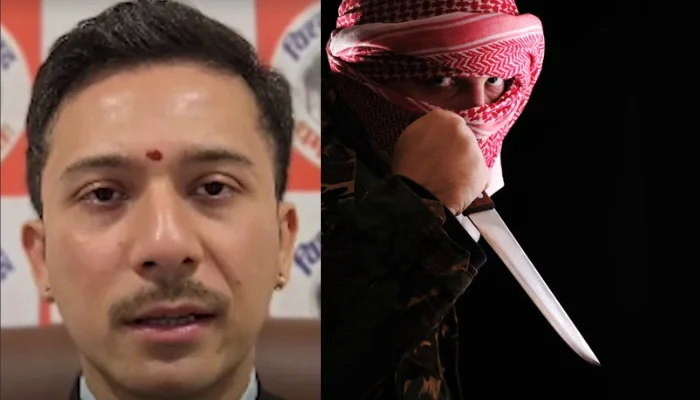
Case Summary
In Jaipur, Rajasthan, a Hindu activist named Amitosh Pareek of the Vishva Hindu Parishad (VHP), a Hindu organisation, was subjected to “Sar Tan Se Juda” (beheading) threats by a Muslim man. According to media reports, the victim, Amitosh Pareek, who was the National Spokesperson of the Vishva Hindu Parishad, received a threatening phone call from a Muslim man in which the caller said, “I want your severed neck.” Messages threatening to behead him were also sent through social media. Following these threats, Amitosh Pareek lodged a complaint at the Gandhi Nagar Police Station. The Gandhi Nagar Police registered a First Information Report (FIR) based on his complaint. The police began investigating the phone number from which the call had originated and were also trying to determine whether the display picture (DP) associated with that number belonged to the person making the call or to someone else. Officers were also tracing the Internet Protocol (IP) addresses of the numbers used to make the calls. The victim, Amitosh Pareek, stated that the call had been made from a Dubai-based number. The caller first used abusive language and then threatened him not to appear on media channels to malign radical members of the Muslim community. He further threatened that if “this continued,” Amitosh would face serious consequences. When Amitosh asked what he had said to provoke the threats, the caller replied, “I want your severed neck.” The accused also sent multiple threatening messages to the victim's mobile phone. Following this, the police registered an FIR under the Terrorism Act and began an investigation.
Why it is Hate Crime ?
This case has been added to the tracker under the primary category- Hate Speech against Hindus. The subcategory selected is- Violent Threats. Violent threats, explicit, implicit or implied, is the most dangerous form of hate speech since it goes beyond discriminatory and prejudicial language to express the intent of causing harm to an individual or a group of people based on their religious identity and faith. There could be several different kinds of threats that are issued to Hindus based on religious animosity. An explicit threat would mean the direct threat of violence towards an individual Hindu, a group of Hindus or Hindus at large. Physical violence, death threats, threats of destruction of property belonging to Hindus and threats of genocide would mean explicit threats against Hindus for their religious identity. Implicit threats may not be a direct threat but implied through the use of symbols of actions – for example – in the Nupur Sharma case, other than explicit threats, there were also implicit threats when Islamists took to the streets to burn and beat her effigies. It implies that they want to do the same to Nupur Sharma – thereby is considered an implicit threat. Violent threats can be delivered in person, through letters, phone calls, graffiti, or increasingly through social media and other online platforms. It would be important to understand that a threat – explicit or implicit, online or offline – to an individual who happens to be a Hindu does not qualify as a religiously motivated threat. Such a threat, while vile and dangerous, could be owing to non-religious reasons and/or personal animosity. To qualify as a religiously motivated threat, it would need to exhibit an indication that the individual is being targeted for religious reasons and/or owing to his/her religious identity as a Hindu. In this case, the beheading threat issued to Hindu activist Amitosh Pareek constituted a direct and unambiguous case of hate speech motivated by anti-Hindu animosity. The phrase “Sar Tan Se Juda,” a slogan synonymous with calls for beheading, has become a notorious symbol of Muslim extremism across South Asia, particularly in India and Pakistan. It is routinely invoked by Muslim radicals against non-Muslims, especially Hindus, whom they derogatorily label as ‘kafirs’ or non-believers. In this incident, a Hindu rights activist was threatened with beheading solely because of his Hindu identity and his association with the Vishva Hindu Parishad, a Hindu rights organisation. This threat represented not merely an attack on an individual but also an assault on Hindu activism, cultural pride, and community defence—rooted in deep-seated religious hatred towards Hindus. Such violent threats reflect the entrenched hostility and radicalisation among the Indian Muslim community that aim to silence and intimidate those who speak for Hindu victims of religious persecution. The threat directed at Amitosh Pareek did not arise from personal conflict but from explicit religious malice targeting his faith and his resistance to Islamic radicalism, which continues to endanger Hindus across multiple regions of India. It underscores the deliberate intent to harm, terrorise, or eliminate individuals who challenge Islamic radicalism and Hinduphobia. This incident, therefore, stands as a glaring example of religiously motivated hate speech and demonstrates the alarming rise of violent threats directed against Hindu activists who courageously defend their community from anti-Hindu elements. It is also important to note that the slogan, “Gustakh-e-Rasool ki Ek hi saza, sar tan se Juda, sar tan se Juda”, which translates to “There is only one punishment for being disrespectful to Rasool (Prophet Muhammad), their head separated from their torso, their head separated from the torso”, is an Islamist clarion call, that has become a staple feature of violent protests that have so far claimed the lives of at least 6 Hindus, including Kanhaiya Lal in Udaipur and Umesh Kolhe in Amravati, after Muslim fundamentalists, egged on by the dog-whistling of Alt News co-founder Mohammed Zubair against former BJP spokesperson Nupur Sharma, resorted to violence for what they perceived as ‘blasphemy’ against Prophet Muhammad. From Kanpur in India’s northern plains to the southern metropolis of Bengaluru, from Kolkata in the east to Hyderabad in the south, protests in the name of blasphemy have erupted in almost every corner of the country as Islamists took to the streets running amok and shouting “Sar Tan Se Juda” chants over the perceived belief of blasphemy against the Prophet. Though a radical Muslim outfit in Pakistan coined the slogan, it has gained popularity among Islamists in regions beyond its geographical origins. Over the years, we have seen large crowds of Islamists chanting the “Sar Tan Se Juda” slogan, which is nothing but a direct incitement to violence, leading to murders committed in the name of 'blasphemy'. The radicalised outcry is not merely a statement of disapproval; it is a call for the execution of an individual through beheading, based on their religious identity. When this slogan is raised, it sends a clear and terrifying message not just to the individual targeted but also to anyone else who might share similar views or dare to express them. This tactic of intimidation aims to silence dissent and suppress freedom of expression, particularly in religious discourse. It aims to instil fear in the broader community. Islamists use this tactic to settle personal scores with non-Muslims, particularly Hindus, by levelling fabricated charges of blasphemy against them, which causes outrage and paints a target on them. The underlying hatred and animosity toward non-Muslims, especially Hindus, is demonstrated when 'Sar Tan Se Juda' or beheading threats are issued by Muslims. Henceforth, it is a clear example of anti-Hindu speech. Given that this case meets the parameters of a religiously motivated hate speech, it is being added to the hate crime database of the Hinduphobia Tracker. Disclaimer: The Hinduphobia Tracker records the date of an incident based on when the crime occurred rather than when it was reported by the media. However, in this particular case, the available media reports did not specify the exact date when the victim, Hindu activist Amitosh Pareek, received the beheading threats from the Muslim accused. Therefore, the earliest date of media publication, 14th October 2025, has been taken as an indicative date of the incident. This date is used solely for documentation purposes and serves as an estimated reference of when the crime took place.
Victim Details
Total Victim
1
Deceased
0
Gender
- Male 1
- Female 0
- Third Gender 0
- Unknown 0
Caste
- SC/ST 0
- OBC 0
- General 1
- Unknown 0
Age Group
- Minor 0
- Adult 1
- Senior Citizen 0
- Unknown 0


Case Status
Complaint registered


Perpetrators Details
Perpetrators
Muslim Extremists
Perpetrators Range
One Person
Perpetrators Gender
male
 Sources




