Muslim man pretends to be Hindu to enter Garba pandal in Ujjain, police finds condoms in his pocket
 Ujjain, Madhya Pradesh, India
  7 October, 2024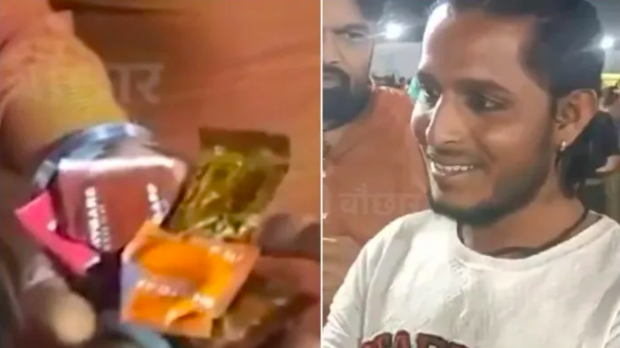
Case Summary
In Ujjain, Madhya Pradesh, a man named Firoz was caught attending a Garba event using a fake Hindu identity, despite the entry of non-Hindus being barred from such events in several districts. The incident occurred on October 8, 2024, in the Pandya Khedi area. Firoz, who introduced himself as "Rahul," raised suspicions among members of the Hindu Jagran Manch during the Garba celebrations. Upon questioning, he initially claimed to be a local Hindu resident who had been attending garba daily, but when taken to the police, he revealed his real identity as Firoz. During a search, police found several packs of condoms and an Aadhaar card with his real name in his possession. The Hindu Jagran Manch members reacted by physically assaulting him in front of the police. Firoz attempted to flee but was caught and handed over to authorities.
Why it is Hate Crime ?
Garba is a deeply religious affair celebrating the 9 forms of Goddess Durga, therefore, a Garba venue is as much a place of worship for that duration. A Muslim perpetrator pretending to be a Hindu to gain access to the celebration is considered breaking the rules of a place of worship. Therefore, this case is being added to the primary category 'attack on religious symbols'. The two secondary categories that this case is being added to are ''defiling religious customs' and 'breaking rules of place of worship'. Sanatan Dharma is not a religion of one book, which is to say that while it has religious scriptures that form the central tenets of the faith, there are several traditions followed through thousands of years, mostly passed from generation to generation orally. One of these oral traditions or written traditions is the rules of specific temples. Certain temples have rules which are traditional rules, dependent on the worship of the presiding deities. These rules and traditions have been followed for thousands of years whether they find scriptural mention or not. Such traditions are based on the nature and rules of worship of the presiding deity of that temple. Any non-compliance of these traditions owing to animosity towards the faith or for the sake of activism stems not only from the lack of faith in the presiding deity but also disregard for the faith of the devotees of that deity/temple and implicit bias against the faith, the tradition and the deity itself. Since these specific traditions are central to the faith of the devotees of that specific temple and presiding deity, any non-compliance with these traditional rules would be considered a religiously motivated hate crime. Further, there are several such customs and traditions that are followed by various Hindus and Hindu sects. Defiling of these traditions and customs is a breach of an individual or group’s religious practices. Such practices can range from dietary restrictions like not eating non-vegetarian food for a certain period of the year, not eating non-vegetarian food at all, not eating beef since the cow is considered holy in Hinduism, the sanctity of religious customs followed in the house (like many ISCKON devotees), etc. Any malicious action leading to the breach of such traditions or defilement of these traditions owing to animosity towards the faith or for the sake of activism stems not only from the lack of faith in the religion itself but also from disregard for the faith of the devotees who follow the customs/traditions and implicit bias against the faith, the tradition itself. Since these specific traditions are central to the faith of the devotees of that specific sect of Hindus, any non-compliance with these traditional rules would be considered a religiously motivated hate crime. In this case, the Muslim man pretended to be a Hindu to gain access to a garba celebration, which is a deeply religious affair celebrating the 9 forms of Goddess Durga. This, was when the committees organising the event had specifically barred the entry of non-Hindus into the celebration. Barring the entry of non-Hindus to a religious and cultural event is the religious right of any religious denomination. When the Muslim perpetrator adopted a fake identity pretending to be a Hindu to gain access, he defiled the religious customs and broke the rules of a sacred place of worship owing to his disregard for the Hindu faith. The disregard stems from religious animosity against non-Muslims inherent to Islam. For that reason, this case is being added to the hate crimes database.


Case Status
Arrested


Perpetrators Details
Perpetrators
Muslim Extremists
Perpetrators Range
One Person
Perpetrators Gender
male
 Sources




