Christian NGO forces Hindu students to recite Christian prayers, even on Hindu festivals like Diwali
 Katni, Madhya Pradesh, India
  28 May, 2023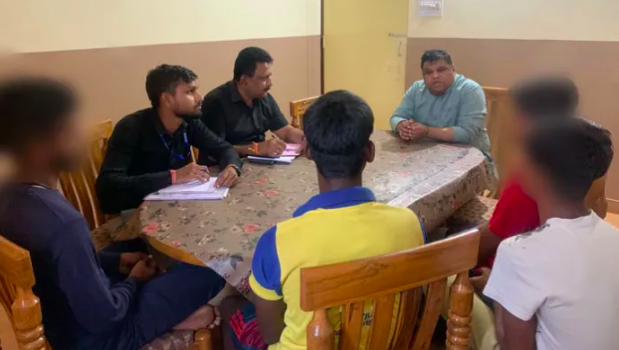
Case Summary
On May 29, 2023, an FIR was registered by Madhya Pradesh Police against a Children’s Home over a complaint filed by the National Commission for Protection of Child Rights (NCPCR). In the Jhinjhari area of Madhya Pradesh's Katni district, children complained that they were forced to recite Christian prayers at their missionary organisation. The Hindu children, who belonged to the SC/ST community, were pressurised by the school administration to offer Christian prayers despite their objection, even on festivals like Diwali. They were not being given medicines and kept away from sports activities. NCPCR chief Priyank Kanoongo stated that this was a clear case of conversion. Kanoongo further said that it was found that the NGO was also receiving foreign funding. Kanoongo added that the NGO officials also altered the children's documents.
Why it is Hate Crime ?
This particular case has been classified as a religiously motivated hate crime under the subcategory: Proselytisation by brainwashing, manipulation or subtle indoctrination, under the core category of Predatory Proselytisation because of the various distinct components that demonstrate the perpetrator's bias against the Hindu faith and the deliberate attempt to alienate the victims, who are minors in this case, from their Hindu identity. Religious brainwashing essentially means the often subtle and forcible indoctrination to induce someone to give up their religious beliefs to accept contrasting regimented ideas. Religious brainwashing also involves propaganda and manipulation. It involves the systematic effort, driven by religious malice and indoctrination, to persuade “non-believers’ to accept allegiance, command, or doctrine to and of a contrasting faith. Cases of such brainwashing are far more nuanced than direct threats, coercion, inducement and violence. In such cases, it is often seen that there is repeated, subtle and continual manipulation of the victim to induce disaffection towards their own faith and acceptance of the contrasting faith of the perpetrator. While subtle indoctrination is widely acknowledged as predatory, an element which is often understated in such conversions or the attempts of such conversion is the role of loyalty and trust which might develop between the perpetrator and the victim. Fiduciary relationships are often abused to affect such religious conversion. For example, an educator transmitting religious doctrine of a competing faith to a Hindu student. The Hindu student is likely to accept what the teacher is transmitting owing to existence of the fiduciary relationship. The exploitation of the fiduciary relationship to religiously indoctrinate victims would also be included in this category. Since the underlying animosity towards the victim’s faith forms the basis of predatory proselytization, such cases are considered religiously motivated hate crimes. In this specific case, we have chosen the core category to be Predatory Proselytisation because, firstly, NCPCR, which is a statutory body, confirmed after findings that this was a clear case of illegal conversion. Secondly, we put this case under the subcategory of Proselytisation by brainwashing, manipulation or subtle indoctrination because, clearly, the missionary school was forcing the Hindu children, to bow down to an alien faith. The Hindu children were being stopped from celebrating their own Hindu festivals and instead expected to offer Christian prayers on such occasions. This is, obviously, a subtle way to brainwash and alienate children from their own faith and draw them closer to the alien faith. Since the Hindu victims in this case were minors, it essentially means that the element of consent and genuine change of conscience was missing ab initio. It is a well-established fact that children are more susceptible to manipulation since they are still developing emotionally, cognitively, and socially. Their brains are not fully matured, making them more vulnerable to influence and less capable of critically evaluating information. Moreover, subtle manipulation tactics can be difficult to detect, especially when employed by trusted authority figures in positions of influence. This makes it challenging for parents, to identify and address instances of religious manipulation in schools. Since the underlying offence in this case is against children of a specific faith and involves subtle tactics of indoctrination, which obviously stems from a bias against the Hindu faith, this case has been documented as a hate crime.


Case Status
Complaint filed


Perpetrators Details
Perpetrators
Christian Extremists
Perpetrators Range
From 10 to 100
Perpetrators Gender
unknown
 Sources




