Hindu doctor deliberately targeted by leftist media; falsely accused of denying treatment to Muslim patient post Pahalgam terror attack
 Kolkata, West Bengal, India
  25 April, 2025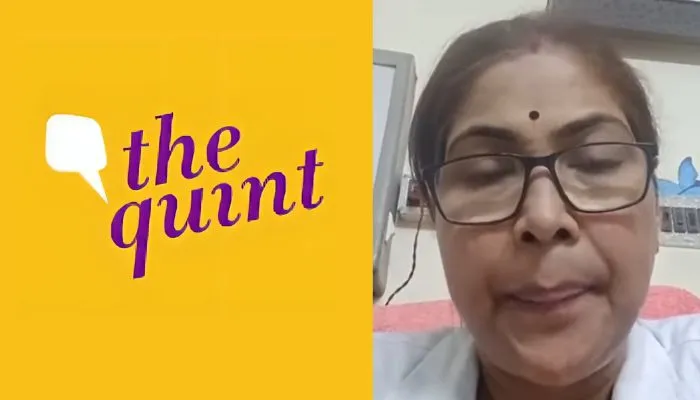
Case Summary
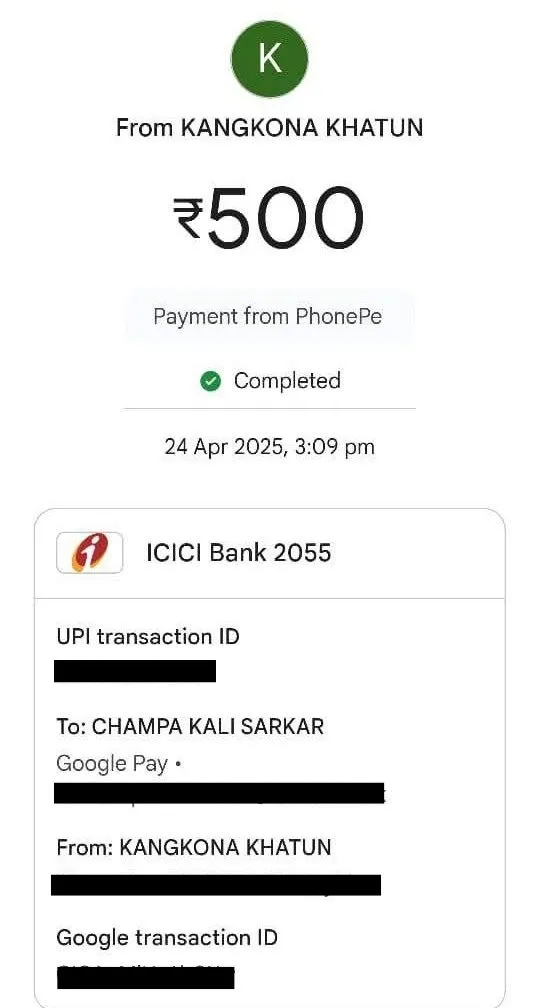
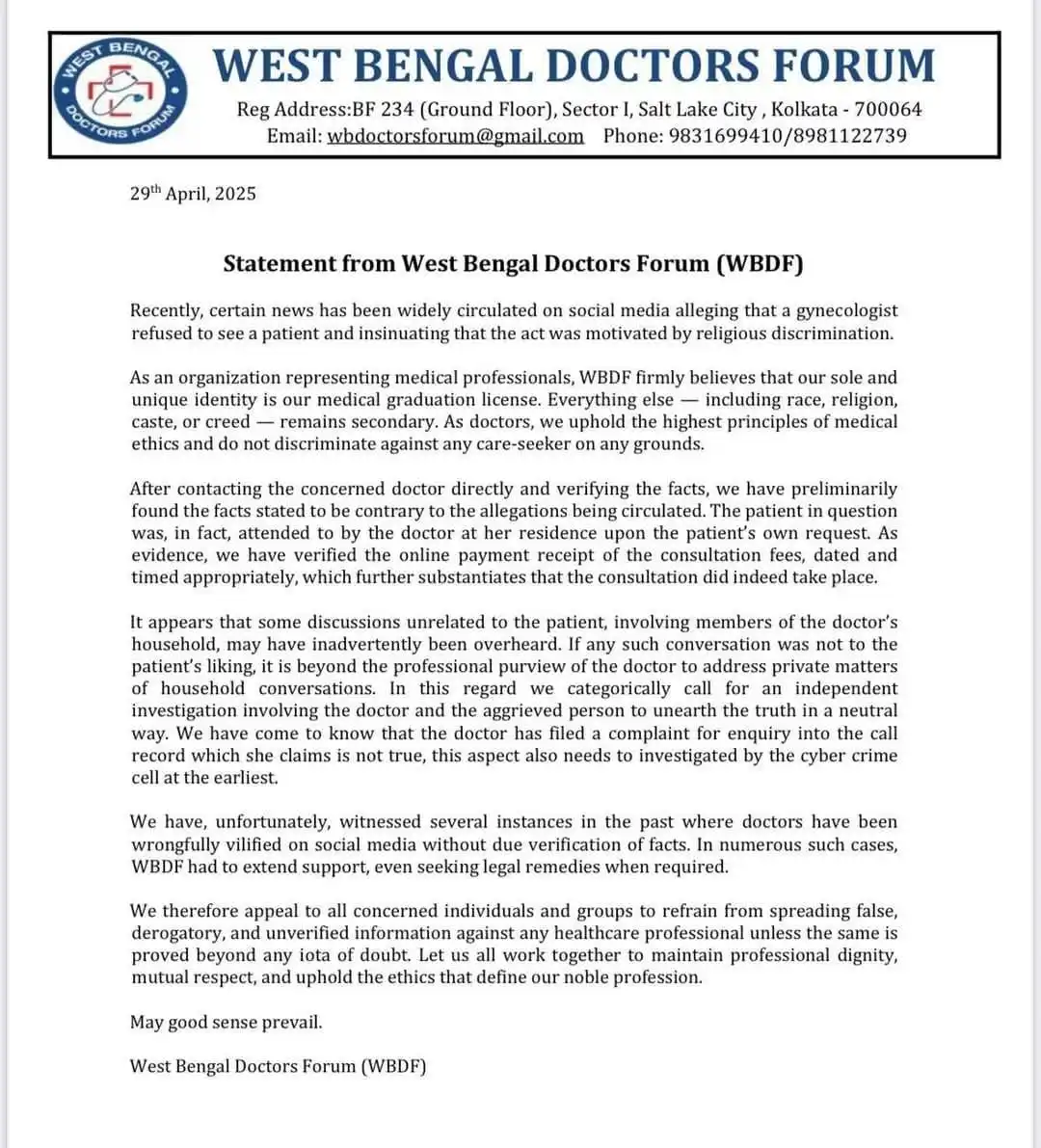
A Hindu female gynaecologist was targeted by leftist media, falsely accusing her of not treating a Muslim female patient due to her Muslim identity. This incident occurred following the anti-Hindu terror attack in Pahalgam. In a horrific act of terror in the Baisaran Valley of Pahalgam, Anantnag district, Jammu and Kashmir, Islamic terrorists systematically identified and targeted Hindu victims. The terrorists demanded names and religious identities, inspected ID cards, coerced tourists to recite the Kalma, and even forcibly pulled down their trousers to check for circumcision—all to single out Hindus. Once identified, the Hindus were shot at point-blank range. The attack, carried out by operatives of The Resistance Force, a proxy of the Pakistan-based terror group Lashkar-e-Taiba (LeT), took the lives of 24 Hindus and left 16 others critically injured. According to media reports, a social media controversy erupted concerning the Hindu victim, Dr Champakali Sarkar, a Kolkata-based gynaecologist, who was falsely accused of refusing medical treatment to a Muslim patient, Kangkona Khatun, on the grounds of religious identity. The story gained traction after being reported by leftist news outlets like 'The Quint', which suggested that Dr Sarkar had made inflammatory remarks towards the patient based on her being a Muslim. The fake news was further peddled by news outlets like the 'Deccan Chronicle' and Islamic propaganda sites like Muslim Mirror, Maktoob Media, and Siasat. These claims were bolstered by an unverified call recording and statements from the patient’s family, including her sister-in-law, a lawyer by profession. However, the Hindu doctor’s own version of events received minimal coverage in the reports that circulated widely. As the situation unfolded, key facts began to emerge that contradicted the allegations made by leftist news portals. It was established that Kangkona Khatun had been receiving routine care from Dr Sarkar for over seven months. The consultation on 24th April 2025, the day on which the patient claimed she was mistreated, did in fact take place, as confirmed by payment receipts. The West Bengal Doctors Forum issued a press release after independently reviewing the evidence, stating that the patient was seen by the doctor at her residence on her own request. They clarified that any overheard private conversations in the household were unrelated to the patient and fell outside the professional domain of the doctor. Dr Champakali Sarkar, a practitioner with over three decades of experience, publicly addressed the issue and reaffirmed her commitment to medical ethics and impartial treatment. She revealed that the majority of her patients are Muslims and rejected the accusations as defamatory. She described the claims as part of a broader attempt to malign her career and declared her intent to pursue legal action against the complainant. Additionally, she denied the authenticity of the call recording cited in some media reports. Notably, this was not the first time that leftist media outlets such as 'The Quint' indulged in spreading a false Muslim victimhood narrative and pushing anti-Hindu propaganda. Previously, the Hinduphobia Tracker documented an incident in which The Quint amplified unverified fake news on social media, claiming that a Muslim man had been assaulted by his Hindu colleagues for refusing to chant the Gayatri Mantra and for not commenting on the Pahalgam attack. The article was published by 'journalist' Aliza Noor, who deleted her X (formerly Twitter) account after being exposed for promoting this fabricated and unverified anti-Hindu story.
Case Images
Why it is Hate Crime ?
This case has been added to the tracker under the primary category- Hate Speech against Hindus. The sub-category selected is- Anti-Hindu subversion and prejudice. The tertiary category selected is- Anti-Hindu Fake News or Downplaying. Hate speech is defined as any speech, gesture, conduct, writing, or display that is prejudicial against a specific individual and/or group of people, which is leading to or may lead to violence, prejudicial action or hate against that individual and/or group. Media plays a specific and overarching reach in perpetuating prejudicial attitudes towards a community owing to unfair, untrue coverage and/or misrepresentation/misinterpretation, selective coverage and/or omission of facts of/pertaining to issues affecting a specific religious group. This type of bias can dehumanise the victim group, making it easier for others to justify harmful actions against them, which aligns with the objectives of hate speech laws aimed at preventing such harm. It is often observed that the media takes a prejudicial stand against the Hindu community driven by their need to shield the aggressor community which happens to be a numeric minority, however, is the one perpetrating violence against Hindus. For example, the media is often quick to contextualise religiously motivated crimes against Hindus, omit or misrepresent facts that point towards religiously motivated hate crimes, justify and/or downplay religiously motivated hate crimes or simply present fake news to stereotype Hindus. Such media bias leads to the denial of persecution and is often used to dehumanise Hindus, leading to justification for violence against them. For example, the media covered several fake allegations of Hindus targeting Muslims and forcing them to chant Jai Shree Ram. Most of these cases were proved false and fabricated after police investigation. These fake news reports were subsequently never retracted or clarified. Such fake news led to the justification of violence and dehumanisation of Hindus based on the argument that since Hindus targeted Muslims and forced them to chant Jai Shree Ram, the dehumanisation of Hindus and violence against them was par for the course and merely a retaliation. Such media bias leads to prejudicial portrayal of Hindus and offers a justification for violence against them and, therefore, is considered hate speech under this category. The incident in which a Hindu doctor was falsely accused of refusing treatment to a Muslim patient demonstrates more than an isolated case of misinformation. It reflects a deeper pattern of narrative-building designed to fuel animosity towards Hindus by portraying them as intolerant and hostile, particularly in moments of heightened communal sensitivity after the Pahalgam anti-Hindu terror attack. In this attack, Islamic terrorists had religiously profiled Hindus and killed them brutally. In this case, the malicious act of framing an innocent Hindu doctor in such a damaging light, leftist and Muslim media platforms like The Quint, Muslim Mirror, Siasat, and Deccan Chronicle not only undermined her reputation but also endangered her safety and professional standing. Such deliberate misreporting goes beyond mere journalistic negligence. It constitutes hate-driven defamation rooted in jealousy, prejudice, and animosity towards Hindus. For a doctor, whose calling is to save lives irrespective of faith, a false accusation of denying care to a patient based on her religious identity is devastating. It not only erodes trust within the community but also subjects the Hindu victim and her family to suspicion, hostility, and potential harm. The human impact of such a falsehood is profound—the doctor, reduced to a caricature of “Hindu intolerance”, becomes a target of collective anger based on nothing but fabricated reporting. This case cannot be dismissed as a mere isolated instance of journalistic lapse. It reflects a broader trend in which left-leaning media outlets consistently amplify unverified narratives that cast Muslims as perpetual victims while portraying Hindus as aggressors. The repeated circulation of such fabrications demonstrates clear intent. These are not accidental errors but deliberate elements of a disinformation campaign designed to present the Hindu community in a negative light. Such actions are a result of deep-seated animosity towards the Hindu community, making it a religiously motivated crime. As this incident fulfils the parameters of a religiously motivated offence targeting a Hindu individual, it is being recorded in the hate crime database.
Victim Details
Total Victim
1
Deceased
0
Gender
- Male 0
- Female 1
- Third Gender 0
- Unknown 0
Caste
- SC/ST 0
- OBC 0
- General 1
- Unknown 0
Age Group
- Minor 0
- Adult 1
- Senior Citizen 0
- Unknown 0


Case Status
Unknown


Perpetrators Details
Perpetrators
Others
Perpetrators Range
One Person
Perpetrators Gender
female
 Sources




