West Bengal chief minister dismisses Murshidabad anti-Hindu violence as 'conspiracy', denies targeting of Hindus
 West Bengal, India
  15 April, 2025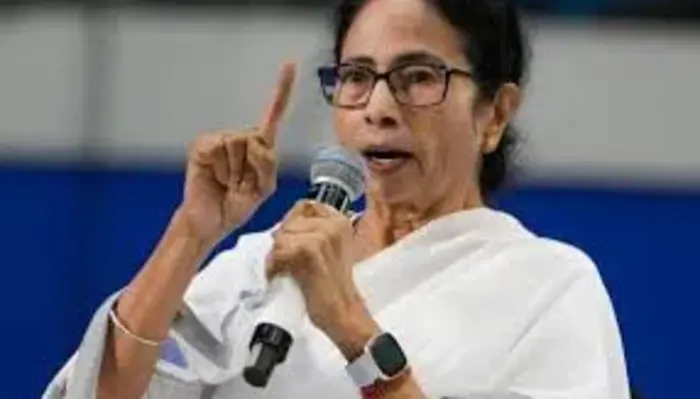
Case Summary
Amidst the widespread anti-Hindu violence in Murshidabad, Mamata Banerjee, the chief minister of Bengal, tried to justify the Muslim aggression. During a gathering of imams, West Bengal Chief Minister Mamata Banerjee referred to the Murshidabad violence as pre-planned and attributed it to a conspiracy involving the BJP, the Border Security Force (BSF), and central agencies. In response to the incident, the West Bengal government constituted a Special Investigation Team (SIT) comprising nine officers, with the DIG of the Murshidabad range appointed to lead the inquiry. Banerjee stated that individuals from Bangladesh were involved in the violence and questioned the role of the BSF, calling upon the central government to take responsibility. She also remarked that had members of the Trinamool Congress been complicit, their homes would not have come under attack. She accused the central government of maligning Bengal through media channels funded by them, while affirming that her government announced a compensation of ₹10 lakh for the families of those killed in the violence. This comes in the backdrop of large-scale riots, arson, and destruction in Murshidabad district, particularly in the Suti and Samserganj areas, following Jumma Namaz on 11th April 2025. Muslim mobs went on a rampage, damaging railway lines, attacking the Block Development Office with stones and sticks, and bringing public life to a halt. While public infrastructure suffered, it was the targeted nature of attacks against Hindus that stood out—temples were desecrated, idols vandalised, and Hindu households and businesses deliberately destroyed. As the Islamic mob violence intensified, hundreds of Hindus were forced to flee their homes, seeking safety from the relentless assault. With three lives already lost, the episode stands as yet another instance of orchestrated communal aggression masked as political protest.
Why it is Hate Crime ?
This case has been added to the tracker under the primary category of- Hate speech against Hindus. Under this, the sub-category selected is- Denial or mocking of genocide/large-scale persecution. Denial or mocking of genocide/large-scale persecution/ethnic cleansing refers to the act of denying or minimizing the fact of the ethnic cleansing and/or genocide and/or religious persecution of Hindus. This often involves denying the scale, mechanisms, religious intent, or even the occurrence of the ethnic cleansing and/or genocide and/or religious persecution of Hindus. Hate speech of this kind involves the dissemination of falsehoods that deny or distort established historical facts or mock the suffering of Hindus by saying that they deserved the persecution, motivated by Hinduphobia. Denying such atrocities is not only about the denial of facts or rewriting/revising history, but it also delegitimises the religiously motivated persecution of Hindus, the religious hate/motivation/animosity that led to the persecution, and dehumanises Hindus as a religious group. Such denial of ethnic cleansing and/or genocide and/or religious persecution of Hindus not only denies the suffering but also paves the way for future/present atrocities and hate speech, inciting prejudice and violence against Hindus. It also provides a justification for violence by delinking religious animosity from religiously motivated crimes committed against Hindus. Since such denial and/or mocking of genocide/ethnic cleansing/atrocities motivated by religious animosity leads to present and future ramifications of creating more hate speech, violence, dehumanisation and delegitimisation, it would be considered hate speech under this category. The other sub-category selected is- Anti Hindu subversion and prejudice, and within it, the tertiary category selected is- Anti-Hindu Fake News or Downplaying. Hate speech is defined as any speech, gesture, conduct, writing, or display that is prejudicial against a specific individual and/or group of people, which is leading to or may lead to violence, prejudicial action or hate against that individual and/or group. Media plays a specific and overarching reach in perpetuating prejudicial attitudes towards a community owing to unfair, untrue coverage and/or misrepresentation/misinterpretation, selective coverage and/or omission of facts of/pertaining to issues affecting a specific religious group. This type of bias can dehumanise the victim group, making it easier for others to justify harmful actions against them, which aligns with the objectives of hate speech laws aimed at preventing such harm. It is often observed that the media takes a prejudicial stand against the Hindu community driven by their need to shield the aggressor community which happens to be a numeric minority, however, is the one perpetrating violence against Hindus. For example, the media is often quick to contextualise religiously motivated crimes against Hindus, omit or misrepresent facts that point towards religiously motivated hate crimes, justify and/or downplay religiously motivated hate crimes or simply present fake news to stereotype Hindus. Such media bias leads to the denial of persecution and is often used to dehumanise Hindus, leading to justification for violence against them. For example, the media covered several fake allegations of Hindus targeting Muslims and forcing them to chant Jai Shree Ram. Most of these cases were proved false and fabricated after police investigation. These fake news reports were subsequently never retracted or clarified. Such fake news led to the justification of violence and dehumanisation of Hindus based on the argument that since Hindus targeted Muslims and forced them to chant Jai Shree Ram, the dehumanisation of Hindus and violence against them was par for the course and merely a retaliation. Such media bias leads to prejudicial portrayal of Hindus and offers a justification for violence against them and therefore, is considered hate speech under this category. This case constitutes a hate crime as it involves the denial and distortion of violence targeted at Hindus in Murshidabad, framing it instead as a conspiracy by political and institutional actors like the BJP, BSF, and central agencies. Such a narrative not only downplays the religious dimension of the violence but also redirects blame in a way that erases the lived experience and suffering of the Hindu victims. By not acknowledging the identity-based targeting of Hindus and instead attributing the incident to political gamesmanship, it effectively erases the religious motivation and seriousness of the attack, fitting the criteria of denying or minimising the persecution of Hindus. Hence, the speech and framing in this case fall squarely within the definition of hate crime. It is important to mention here that this attempt to downplay the targeted anti-Hindu violence in Murshidabad is not an isolated occurrence but part of a broader pattern of dismissiveness and hostility towards Hindu identity by the TMC leadership, particularly Mamata Banerjee. Her public disdain for Hindu religious expression has been repeatedly demonstrated, most notably through her vehement opposition to the chant of 'Jai Shri Ram'. In January 2021, during the birth anniversary event of Netaji Subhas Chandra Bose at Victoria Memorial in Kolkata, she walked off the stage in protest upon hearing 'Jai Shri Ram' slogans. Likewise, in 2019, Mamata Banerjee took to social networking site Facebook to let the world know that she will continue to oppose ‘Jai Shri Ram’ slogans as they are a deliberate attempt ‘to sell hatred ideology’. There have also been multiple instances where individuals chanting 'Jai Shri Ram' were assaulted or arrested under her government’s watch, further reinforcing the notion that expressions of Hindu faith are met with suppression. These repeated actions reflect a systemic pattern of belittling Hindu beliefs, rather than treating them with respect or neutrality. It reinforces the apathy of the Mamata Banerjee administration towards Hindus and their religious beliefs, exposing a persistent unwillingness to acknowledge or safeguard their fundamental right to religious expression. In the context of the Murshidabad violence, this attitude manifests in her refusal to acknowledge the religious nature of the attacks, instead offering political justifications and conspiracy theories. Such rhetoric, while ignoring the brutal targeting of temples, Hindu homes, and lives, only serves to embolden communal aggressors and alienate the Hindu community. The failure to name the violence for what it is, and the consistent vilification of Hindu expressions, underscores the religiously motivated bias that characterises this incident, thereby warranting its inclusion as a hate crime against Hindus.


Case Status
Unknown


Perpetrators Details
Perpetrators
State and Establishment
Perpetrators Range
One Person
Perpetrators Gender
female
 Sources




