Hindu temple set ablaze by miscreants after religious tensions between Hindus and Christians
 Kanker, Chhattisgarh, India
  18 December, 2025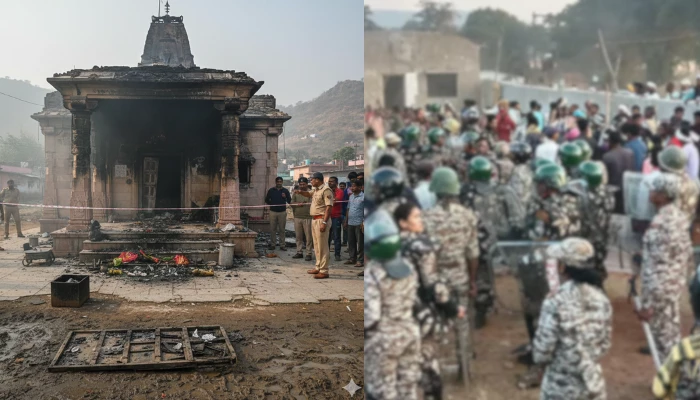
Case Summary
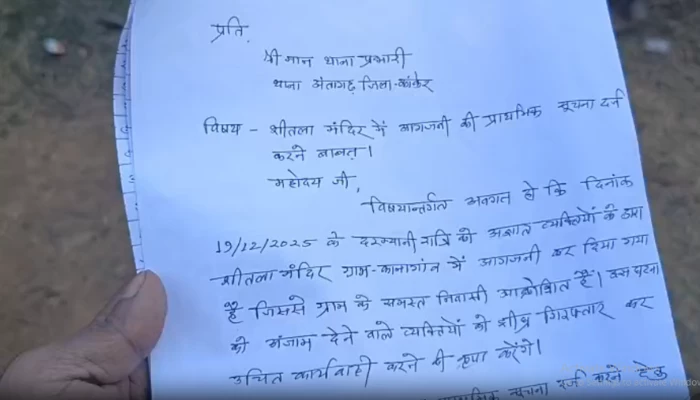
In the Amabeda area of Kanker district, Chhattisgarh, a Hindu temple dedicated to Goddess Sheetala was set ablaze by unknown miscreants. This incident occurred after disputes between Hindus of the tribal community and Christians over a burial site. According to reports, the incident occurred on 19 December 2025; unidentified individuals entered the Sheetala Mata temple and set fire to the idols' platforms and other religious items inside the temple. This followed tensions in Bade Tewda gram panchayat after the sarpanch Rajman Salam buried his father, Chamraran Salam, aged 70, on private land. Chamraram had been ill and died during treatment on 15 December 2025. Locals said the sarpanch had converted to Christianity, but his father Chamraram remained a follower of the Hindu religion. The sarpanch performed the last rites in accordance with Christian beliefs and customs, prompting strong protests from villagers. The burial sparked protests, as it was conducted secretly and not in accordance with tribal customs. The situation, which had remained tense, intensified and escalated into clashes between Hindu and Christian villagers, leading to the desecration of a church. Police resorted to a lathi charge to restore order. The police have registered a case and initiated an investigation into the attack on the Sheetala temple. The village sarpanch, where the arson occurred, stated that the act was carried out by people who do not follow local traditions and expressed suspicion towards those who have converted to another faith.
Case Images
Why it is Hate Crime ?
This case is being documented under the primary category: Attack on Hindu religious representation. The subcategory selected is: Desecration of Hindu religious symbol. Icons and symbols or a religious representation of a spiritual ideal are widely revered in Hinduism. Iconography is of vital significance in the Hindu milieu. It helps connect people’s spiritual beliefs with the real world. Iconography within the Hindu faith takes several shapes and forms. Murtis are of most significance to Hindus, to which daily rituals, prayers and offerings are done. Besides the murtis, there are several other symbols which have deep significance in the Hindu faith – the Om and Swastika, for example. Since these Hindu religious symbols hold paramount importance in Hinduism, any desecration of symbols, icons, murtis, religious representations and manifestations, is driven by animosity towards the faith itself which manifests itself through these murtis, icons and symbols. Therefore, any desecration of these Hindu religious symbols and representations is considered a religiously motivated hate crime under this category. The other sub-category selected is: Attack on Temples In Hinduism, a temple is the abode of the Deity. The Deity in the Temple is consecrated, thereby, making it a real, breathing entity. Hindus believe that not just the Deity but the temple premises itself are sacred to Hindus since Hindus hold the faith that the entire Temple space is an amalgamation of the divine energy of the deity. Given the central significance of Temples in Hindu Dharma, any attack against a Hindu Temple or its peripheral premises is an attack on the faith itself and is born out of animosity towards the faith, of which, the Temple is a central tenet. Any manner of attack against a Temple and/or its premises would therefore be considered a religiously motivated hate crime. This case stands as a stark example of a religiously motivated hate crime, where unknown perpetrators deliberately targeted a Hindu temple in Amabeda, Kanker district, Chhattisgarh, by setting it ablaze. Temples hold profound reverence for Hindus; they stand as far more than mere buildings; they embody the living divine presence, serving as sacred sanctuaries where devotees forge deep spiritual connections through daily rituals, prayers, and festivals that weave the fabric of their lives. The brutal act of torching the Sheetala Mata temple exposes raw, deep-seated religious animosity towards the Hindu faith and its followers, transforming a place of worship into a symbol of targeted hatred. This deliberate desecration strikes at the heart of Hindu identity, making it an undeniable instance of anti-Hindu violence driven by bigotry. The perpetrators went further, setting fire not only to the temple structure but also to the sacred idols' platforms, along with other holy items inside the temple. These religious symbols are held sacred by Hindus, and any assault on them, by reducing them to ashes, stems from visceral hatred for Hinduism itself, inflicting profound emotional wounds on the community whose faith centres on such venerated symbols. This calculated destruction of religious symbols underscores the hate crime's religious core, amplifying the pain felt by tribal Hindus who see their spiritual heritage violated in the most intimate way. This outrage unfolded just days after heated disputes erupted in Bade Tewda gram panchayat between tribal Hindus and Christians over the burial of sarpanch Rajman Salam's father, Chamraram Salam. Locals noted that the sarpanch had converted to Christianity, yet he chose to conduct his father's last rites according to Christian traditions rather than Hindu customs, burying the body secretly on private land, a move that clashed violently with tribal Hindu practices and ignited protests. Tensions boiled over into clashes, with a church desecrated amidst the chaos, prompting police to use lathi charges for control. Even if Christians lay behind the temple arson, it remains a clear anti-Hindu hate crime: they could have pursued legal channels to resolve grievances, not resorted to desecrating an entire sacred Hindu site. With perpetrators unknown, the motive still screams religious vendetta against Hindu worship. Though the culprits remain unidentified, the attack's focus on a Hindu temple and its deities demonstrates unmistakable hatred for Hinduism and its places of worship, leaving no room for doubt about its nature as a hate crime. Therefore, this incident is being added to the Hate Crime database of the Hinduphobia Tracker.


Case Status
Complaint registered


Perpetrators Details
Perpetrators
Unknown
Perpetrators Range
Unknown
Perpetrators Gender
unknown
 Sources




