Hindu temple music restricted while Islamic prayers on loudspeakers permitted in Muslim-majority district of Kerala
 Malappuram, Kerala, India
  15 December, 2025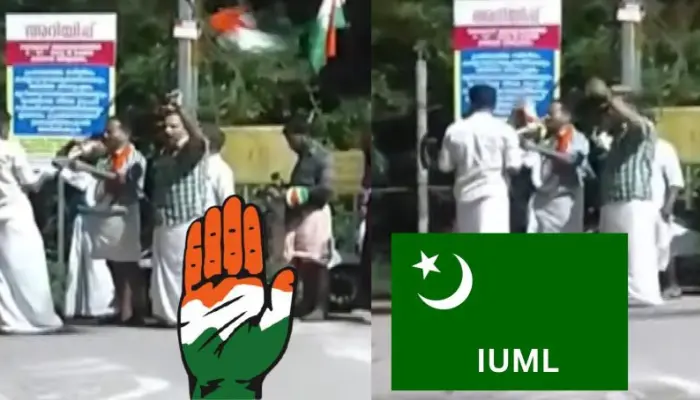
Case Summary
In Malappuram district, a Muslim-majority district of Kerala, a Hindu temple faced targeting as the dominant Leftist-Muslim alliance party, United Democratic Front (UDF), ordered the stoppage of Hindu devotional songs played from temples. The accused stated that it caused "disturbance"; however, several mosques broadcasting Islamic prayers on loudspeakers faced no such orders. The accused also raised provocative slogans outside the temple. Notably, the United Democratic Front (UDF) is an alliance that consists of the Indian National Congress (INC), Indian Union Muslim League (IUML), Kerala Congress (Joseph), Kerala Congress (Jacob), Revolutionary Socialist Party and a variety of other smaller parties. The alliance follows a big tent policy and includes a variety of political parties. It is noted that the Indian Union Muslim League (IUML) is an offshoot of Pakistan's Mohammad Ali Jinnah's All India Muslim League (AIML), a radical Islamic party. According to media reports, this incident occurred at Edavanna in Malappuram district, near the Mahavishnu Temple at Kolappad, where early-morning devotional songs, including Suprabhatham, were traditionally played. The practice, common across Kerala, involved playing devotional music in temples during the early hours of the morning. During a United Democratic Front victory celebration held after the alliance won a ward in the Edavanna panchayat, UDF members raised slogans demanding that songs played from temples should not be audible outside the premises and that such practices would be stopped. The accused also raised provocative slogans in front of the Mahavishnu Temple during their celebration. Slogans raised during the event asserted that loud devotional music from temples caused 'disturbance' to residents and should not be allowed. The slogans were followed by chants of “United Democratic Front Zindabad.” Flags of both the Muslim League and the Indian National Congress were visible, and the procession represented a joint United Democratic Front celebration involving workers from both parties. Reports confirmed that the Mahavishnu Temple at Kolappad had played early-morning devotional songs for years, typically around 5 AM, in a manner that caused no disturbance. The temple committee had obtained the necessary police permissions to play the devotional music, and the activity followed existing rules. Despite this, United Democratic Front workers protested against the practice, claiming that the devotional songs caused 'inconvenience' to local residents. Reports also stated that Malappuram district had numerous mosques where the Azaan, Islamic call to prayer, broadcasts five times a day using loudspeakers, and where religious programmes such as swalaath and other gatherings are conducted using amplified sound, including during night hours. While such practices at mosques continued uninterrupted, objections targeted early-morning devotional songs played at temples.
Why it is Hate Crime ?
The primary category selected in this case is- Restriction/ban on Hindu practices. The subcategory selected is- Restriction on expression of Hindu identity. An example of the state-affected prejudicial and targeted orders against the Hindu community would be a government denying the right of a Hindu or a group of Hindus to hold a religious procession owing to the animosity of non-Hindu groups. Denial of the religious right of the Hindus to assuage the non-Hindu group which harbours animosity to a point where it could lead to violence against Hindus is not only a failure of law and order but is a prejudicial order against Hindus, denying them their fundamental rights to express their religious identity. An example of a hate crime against Hindus by a non-Hindu would be a non-Hindu institution forcing its Hindu employees to abandon religious symbols that a Hindu would wear as an expression of faith owing to inherent prejudice against the faith professed by the victim or a non-Hindu group of people restricting a Hindu group from constructing a place of worship simply because the demography of the area in which the temple is being built is dominated by non-Hindus. Such actions are driven by religious animosity and/or prejudice against Hindus and their faith and would therefore be categorized as a hate crime. The other subcategory selected is- Administration restricting religious practice. In several cases, it is seen that the administration/state disallows a religious practice owing to prejudicial orders and concerns, targeted specifically against the Hindu community. Such restriction/prohibition would be considered documented as a hate crime because the orders are often a result of pressure by groups that harbour animosity towards Hinduism and Hindus. Often, the restriction by the authorities is driven by bias, hostility, or prejudice against the specific community being stopped from holding a religious practice, by pressure groups that harbour animosity towards Hindus, intrinsic to their faith. Since practices are intrinsic to the faith of the Hindus, such prejudicial restriction is considered a curtailing of the fundamental rights of the Hindu community. In several cases, for example, the authorities ban a Hindu religious practice due to pressure from groups opposed to the religion. In other instances the prohibition is selectively enforced against one religious group (Hindus) while others are allowed to proceed. There are still other cases where the authorities preemptively restrict a religious practice by Hindus because those who hold animosity towards Hindus may get “provoked” leading to them being violent, thereby assuaging the sentiments of those who hold animosity towards Hindus by curtailing the religious rights of Hindus. Such acts and orders are prejudiced, indicating discriminatory motives owing to the capitulation to groups that harbour animosity towards Hindus and therefore, would be categorized as a religiously motivated hate crime since the original pressure leading to the order itself is a result of hatred/bias/prejudice/religious hate against Hindus. Another primary category selected is- Hate Speech against Hindus. The subcategory selected is- Anti-Hindu slurs, mocking faith. Anti-Hindu slurs and the deliberate mocking of the Hindu faith owing to religious animosity involve the usage of derogatory terms, stereotypes, or offensive references to religious practices, symbols, or figures. One of the common anti-Hindu slurs used against Hindus is “cow-worshipper” and “cow piss drinker”. The intention of using this term is to demean and mock Hindus as a group and their religious beliefs since Hindus consider the cow holy. Additionally, some symbols and the slurs attached to them have a historical context that exacerbates the insult, hate, stereotyping, dehumanisation and oppression against Hindus. Cow worship has been used for centuries to denigrate Hindus, insult their faith and oppress Hindus specifically as a religious group. There has been overwhelming documentation about how cow slaughter has been used to persecute Hindus with cow meat being thrown in temples and places of worship. There has also been overwhelming documentation where cow meat (beef) has been force-fed to Hindus to either forcefully convert them to Islam or denigrate their faith. Apart from cow worship, the Swastika – which holds deep religious significance for the Hindus – has also been misinterpreted and distorted to use as a slur against Hindus. Similarly, the worship of the Shivling has been used by supremacist ideologies and religions to denigrate Hindus owing to religious animosity. Such slurs and denigration stem out of inherent animosity and hate towards Hindus and their faith, therefore, it is categorised as hate speech targeted at Hindus specifically owing to their religious identity. Another primary category selected is- Attack not resulting in death. The subcategory selected is- Attacked for crossing 'Muslim area'. One of the reasons that Hindus get attacked unprovoked specifically by Islamists is for crossing ‘Muslim areas’. Essentially, Muslim mobs often attack Hindus crossing or present in certain areas which have a majority Muslim population. It has often been cited as one of the reasons to blame Hindus for attacks against themselves, signalling that Hindus displaying religious symbols, taking our religious processions or crossing any area which is dominated by Muslim residents is a provocation in and of itself. These areas are mostly ghettoized areas where mobs mobilize quickly to attack Hindus for a variety of reasons like playing music during a religious procession, crossing a mosque, wearing a tilak or any other religious symbol in a Muslim-dominated area, praying at a local temple in that area etc. There have been cases where the few local Hindus of that area have been attacked on their way to the Temple for prayers as well, simply because the area is considered a Muslim-dominated area. Several times, it is entirely possible that the immediate trigger for the violence against Hindus was non-religious in nature, however, the violence became religiously motivated in nature because the area was Muslim dominated and the residents on the whole harboured animosity towards Hindus, evidenced from the actions of the mob, the slogans, and the nature of the attack. Such crimes are motivated by the religious identity of the victims and are therefore classified as hate crimes under this category. In this case, the restriction on the Mahavishnu Temple in Edavanna, Malappuram, from playing its traditional Hindu devotional music clearly amounted to a religiously motivated hate crime driven by animosity towards Hindus. Hindu devotional songs such as Suprabhatham hold deep spiritual importance in Hinduism, and it is a long-standing religious practice for temples to play or sing such bhajans and hymns in the early morning as part of daily worship and ritual life. Objecting specifically to this practice and declaring that temple music should not be allowed to be heard outside the premises under the pretext of “disturbance” demonstrated a deliberate attempt to curtail Hindu religious expression, reflecting deep-seated prejudice and hostility towards the Hindu community and its modes of worship. The fact that this objection was raised by workers and supporters of the United Democratic Front, which held local power in the area, further underscored the role of political authority in enabling the restriction of Hindu religious practice. When those aligned with the ruling local alliance publicly demanded that temple music not be heard beyond the compound, it indicated that elements within the local administration were effectively supporting the suppression of Hindu practices rather than protecting equal religious freedoms. State‑linked or politically backed efforts to restrict only Hindu forms of worship constitute a deliberate repression of Hindu religious expression, amounting to a clear instance of a religiously motivated hate crime. Reports also stated that Malappuram district had numerous mosques where the azaan was broadcast five times a day through loudspeakers, and where Islamic religious gatherings and programmes, including swalaath and other events, used amplified sound even at night without facing comparable objections or restrictions. Yet, demands for curbs targeted only early-morning Hindu devotional songs from the temple, not the amplified sounds from mosques. This selective targeting of Hindu temples, while leaving Islamic practices untouched, exposed a pattern of religious bias, prejudice, and hostility specifically directed at Hinduism and its public expression, making it a clear case of religious discrimination and anti-Hindu hate crime. It was also significant that United Democratic Front workers went outside the Mahavishnu Temple and raised provocative and hostile slogans during their political victory procession. Chanting such provocative slogans directly in front of a temple, a sacred institution for Hindus, constituted an act of intimidation and symbolic aggression against the community and its place of worship. This conduct amounted to anti‑Hindu slurring and hate speech, grounded in deep‑seated religious animosity, reinforcing that the incident was not a neutral noise dispute but a clear instance of religiously motivated hate crime directed at Hindus and their faith. This targeting unfolded in a Muslim-dominated district of Kerala, Malappuram, where the United Democratic Front, comprising not only the Indian Union Muslim League but also Leftist parties like Congress, demanded curbs on Hindu temple music. Despite the involvement of diverse political groups, the prominent role of the Indian Union Muslim League, an offshoot of Jinnah's radical All India Muslim League, amplified the religious undertones in this Muslim-majority zone. It is important to state that Muslims often consider areas near mosques, dargahs, or where their community is in the majority as "Muslim areas." This reveals a disturbing sense of Islamic supremacy held by the accused, who viewed the Muslim-majority area as an exclusive zone where non-Muslims, particularly Hindus, were unwelcome. This sense of entitlement and superiority reflects deep-seated prejudice and an attempt to assert religious dominance over public spaces. In this case, the Muslim League and its alliances, wielding power in such areas, dictate conduct to enforce their norms, selectively censoring Hindu religious expressions while permitting unrestricted Muslim practices, thereby asserting Islamic supremacy and relegating Hindus to an inferior status, a clear instance of a religiously motivated hate crime aimed at suppressing Hindu faith. Given that this case demonstrates clear instances of anti-Hindu hate crime motivated by religious animosity towards Hindus and their places of worship, it has been added to the Hinduphobia Tracker's hate crime database. Disclaimer: The Hinduphobia Tracker records the dates of incidents based on when the crime occurred rather than when it was reported by the media. In this particular case, media reports did not state the exact date of the incident. They only mentioned the date of the first media reporting, which was 16th December 2025. Hence, this date is used as an indicative date of the incident for this case. This is done for documentation purposes only. In this case, since the United Democratic Front (UDF) held power in the local area when they targeted the Hindu temple, for documentation, we are recording the perpetrator as 'State and Establishment'.


Case Status
Unknown


Perpetrators Details
Perpetrators
State and Establishment
Perpetrators Range
Unknown
Perpetrators Gender
unknown
 Sources




