Several Hindu girls lured and targeted by Muslim man wearing kalava, posing as Hindu
 Sailana, Madhya Pradesh, India
  14 December, 2025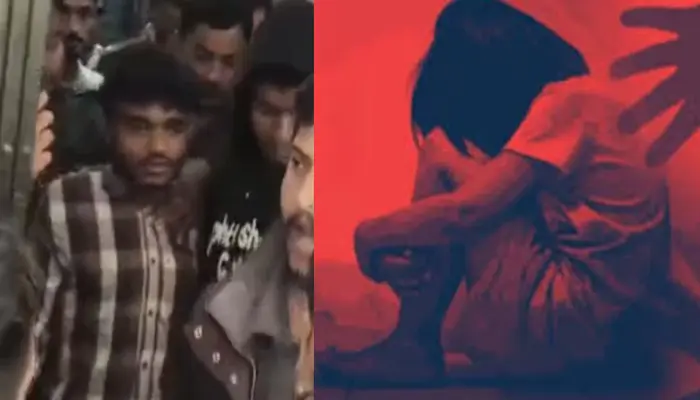
Case Summary
At a Government College in the Sailana city of Ratlam, multiple Hindu girls were lured and targeted by a Muslim youth named Kamran Khan by using several fake Instagram identities under Hindu names. According to reports, Kamran, son of Zafar Khan and a resident of Sarwan, pretended to be a Hindu by creating multiple fake Instagram profiles under Hindu names, including some with the names of Hindu girls. He used this Hindu identity to lure and interact with Hindu girl students. The accused also used to tie a kalava (sacred thread) on his hand to lend more credibility to his deception. On 15 December 2025, members of Bajrang Dal and Vishwa Hindu Parishad, Hindu organisations, received information that the accused was targeting Hindu girls by pretending to be a Hindu. They arrived at the college campus and confronted the accused. It was found that he had created more than five Instagram IDs under false Hindu identities, with his mobile phone containing objectionable material. He had also been filming female students on campus without their consent, and several videos and social media accounts were found to have been deleted prior to the police examination. As tensions escalated, the police were informed, who promptly arrived and took the situation under control. The police seized the accused's mobile phone and sent it for forensic and cyber examination, took preventive action, and later produced him before the Sub-District Magistrate court, where he was sent to jail. Bajrang Dal officials submitted a written complaint at the police station demanding legal action and a detailed cyber investigation, while the police stated that the matter was under investigation.
Why it is Hate Crime ?
This case has been added to the tracker under the primary category of - Crimes against women in relationships and other sexual crimes. Within it, the sub-category selected is - Man pretends to be Hindu, with the tertiary category being - Name changed, Wear symbols of Hinduism and Pattern of targeting Hindu women. When a non-Hindu man pretends to be a Hindu to deceive a Hindu woman into a relationship, the act is seen as triggered by malafide intentions. In some cases, the woman eventually accepts the man’s original religious identity and converts after the man’s identity is revealed. These cases could be argued as cases of religious brainwashing and a result of the pressure a woman feels after getting into a relationship with a man. The woman, it can be argued, also changed her religious identity because of the stigma she believes she might face if she chooses to walk out of a deceptive relationship. However, for the purpose of documenting hate crimes, the cases in this subcategory are limited to those where there is explicit violence aimed at religious conversion against the wishes of the victim (force-feeding beef, blackmailing with intimate videos, rape on refusal to convert, etc), or if the woman herself complains of the man’s religious deception. In such cases, it is established that the deception of the non-Hindu man had a specific aim of religious conversion or targeting of the victim due to her Hindu religious identity, therefore, making it a religiously motivated hate crime. This case has been added to the tracker because Hindu girl students were systematically targeted and deceived by a Muslim student, Kamran Khan, who concealed his religious identity and posed as a Hindu. This pattern of deception was central to how the victims were approached and targeted, making the acts inseparable from the victims’ religious identity. Firstly, the accused deliberately concealed his religious identity to initiate and sustain contact with Hindu girls. This itself is a clear manifestation of bias and malicious intent towards the victims' religion. By concealing his true identity, he exploited their trust, targeting them under false pretences. This indicates a premeditated intent to manipulate them based on their religious background. In cases like these, the tactic of adopting a false Hindu identity to manipulate and "ensnare" Hindu individuals is not just an act of personal betrayal but can also be interpreted as an expression of disdain or disregard for Hinduism and its customs that reflects a deeper animosity towards Hindus and their beliefs. Secondly, the accused also wore a kalava to lend credibility to his deception. The deliberate use of Hindu religious symbols to gain trust and misrepresent one’s identity reflects not only calculated deceit but also an underlying bias against the victim’s faith. By exploiting the sanctity of Hindu symbols to further his personal agenda, the accused demonstrated a deliberate disrespect for Hinduism. The kalava holds deep spiritual significance within Hinduism, and using it as a tool of deception not only violates the trust placed in religious identity but also amounts to a desecration of sacred symbols. It reflects religious insensitivity and shows disregard for Hindu beliefs and practices, which highlights the religious dimension of the crime. Thirdly, the act of secretly filming female students on the college campus without their consent, along with the recovery of objectionable material from the accused’s mobile phone, revealed a pattern of exploitation directed at Hindu girls. Several videos and social media accounts were found to have been deleted, indicating consciousness of guilt and an attempt to conceal evidence. These actions were not isolated or accidental but formed part of a sustained method of targeting Hindu girls through deception and digital manipulation. The repeated targeting of Hindu girls using the same deception established that the conduct was driven by religious impersonation and bias. Taken together, the deception, misuse of religious symbols, and targeted exploitation demonstrated a clear pattern of hostility and prejudice towards Hindu identity, making it a religiously motivated hate crime. Disclaimer: The Hinduphobia Tracker records incidents based on when an event occurred or when the victim’s ordeal began, rather than when it was reported in the media. In this case, none of the media sources specified the exact period during which the accused was carrying out these activities. Therefore, for documentation purposes, the date has been recorded as 15 December 2025, corresponding to when the Hindu organisation received information about the incident and arrived at the college campus to confront the accused.


Case Status
Arrested


Perpetrators Details
Perpetrators
Muslim Extremists
Perpetrators Range
One Person
Perpetrators Gender
male
 Sources




