Hindu family targeted with sustained harassment and discrimination; coerced to vacate their home in Muslim-majority area of Bhopal
 Bhopal, Madhya Pradesh, India
  15 December, 2010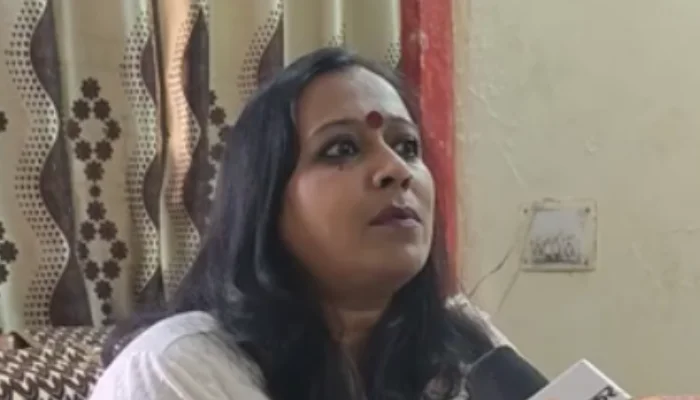
Case Summary
In the Housing Board Colony of Old Subhash Nagar area, a Muslim-dominated area in Bhopal, Madhya Pradesh, Hindu female lawyer Advocate Veena Gautam and her family faced sustained and persistent harassment from local Muslims in the area. The accused selectively targeted her and harassed her repeatedly with the intent to drive her and her Hindu family away from the area. According to media reports, ten to fifteen years ago (around 2010-2015), the majority of Veena's neighbours were Hindu, but gradually Hindus sold their houses and mostly Muslim families moved in. This further led to frequent disputes between Veena and her Muslim neighbours. Following this, this issue reached the police station, where the police attempted to shield the local Muslim perpetrators and falsely framed Veena and her family as a "goonda", meaning a goon. After this, Veena fought her case in court and not only had the action dismissed but also filed a defamation case against the police officers. This incident came to light when Veena Gautam shared her ordeal with the media. She said, "Only two Hindu families live where my house is located. Our house is worth 15 million rupees, but they (Muslims) wanted us to sell it for only 8 million rupees. When we refused, they started harassing the entire family." The victim, Veena, expressed her helplessness and anger. She further added, "A group of eight to ten Muslim boys on motorcycles stood in front of our house. It became difficult for the children to play. My daughter stopped even going down the stairs. The police made up for the remaining inconvenience by standing by their side." Veena asked, "What other option did we have but to fight for our survival?" Veena lived in the Housing Board Colony of Old Subhash Nagar. Veena explained, "I got married in 2003. My father-in-law, SP Gautam, built this house in the Housing Board Colony of Old Subhash Nagar in the 1980s. Back then, the area was peaceful and mostly Hindu families lived here. There was a mosque behind the house, but only Hindus lived in the permanent houses of the colony. The picture changed completely in the next 15-20 years." One by one, the Hindu families sold their houses and left, following which, only two Hindu families remained. The root of the problem was the 10,000 to 15,000 square feet of open land in front of Veena's home. As the religious demography of the area changed, this vacant land became a source of self-use for the majority Muslim community. Cars started getting parked there, and goats started being tied. When Veena and her family objected, the Muslims became extremely hostile towards them. Veena, along with the remaining residents of the colony, developed a park on the open land in front of her house so that children could have a place to play. As soon as it came to installing a gate to the park, the Muslim neighbours started protesting vehemently. They did not want the land to become a park. They wanted to use it as an open field where their goats could graze. The Muslims wanted vehicles parked there and religious or social events held whenever they wanted. Since Veena and her family were the biggest obstacle to this development, and this was where the pressure to sell her house and leave the area began. Veena also said that she was harassed immensely during the lockdown, so that she would leave the house and migrate to some other locality. All kinds of tactics were used to exert pressure. A group of 8-10 Muslim boys stood in front of the house all day. They smoked cigarettes, made lewd remarks and made the atmosphere so tense that it became difficult for the women and children of the house to go out. Veena's daughter stopped going down the stairs out of fear. Veena explained, "When we were all confined to our homes during the lockdown, they sat on chairs on the street. There was a constant flow of people coming and going, laughter echoing throughout. Social distancing was not observed. To drive us away, the situation became so bad that the garbage truck's microphone was turned off as soon as it arrived in front of our house. I had to make the children stand in the gallery to see if the truck arrived. When all this did not work, the Muslim family on the other side of the house blocked our sewage line. Dirty water began to overflow into the bathrooms. The filth seeped into the rooms, and the entire house became odorous. We had to call a sweeper every day to clean the house." As per reports, the limit was reached when, during the laying of a Narmada water pipeline in the colony, the main line leading to her house was not allowed. Veena complained to the Chief Minister's helpline, but no action was taken. When the dispute with Muslim neighbours reached the police station, the police falsely branded Veena and her family as criminals. Aishbagh police station submitted a report to the Sub-Divisional Magistrate court to include Veena Gautam's name in the gangster list under Section 110 of the Code of Criminal Procedure. It was written in that report – “Veena Gautam, wife of Sandeep Gautam, resident of Abhiruchi Complex, House No. 65, is a habitual criminal, against whom 3 crimes are registered in Police Station Aishbagh and other police stations. The accused's tendency to abuse, assault, and threaten increased so much that if the accused was not given a bond, there was every possibility of her creating a dispute. This also had the potential to disrupt peace in the area. Therefore, please allow the applicant to sign a bond for a maximum amount of surety, so that the election could be conducted peacefully and the city's peace and order maintained." Veena was shocked when she received the notice, which declared her a habitual criminal. When she checked the police report, she discovered that her status as a "goonda" (goon) was based on three cases. Two of these cases were filed after disputes with her Muslim neighbours. Veena explained, "When our neighbours fought with us, I went to the police station and filed a case against them. After I returned home, the police filed a counter-case on their behalf. Similarly, the second case was also a counter-case. The third case involved a minor car accident. Based on these three cases, the police declared me a habitual offender." Following this, as a lawyer, Veena understood the intricacies of the law. She decided to fight for her honour in court. She filed a Right to Information request seeking information from all police stations in the city about the cases filed against her. Each police station responded that no cases had been filed against her. She said, "I would arrive for the hearing at 11 a.m., but the clerk would tell me the officer had not arrived. I would wait for hours. Often, the afternoon would pass before the hearing was held. Meanwhile, the police would arrive in uniform, seemingly to exert pressure, but I left no stone unturned in presenting my case. They presented all the evidence in the Sub-Divisional Magistrate court." Veena stated that the police station in charge, Aishbagh, had filed this false and malicious complaint. When the Sub-Divisional Magistrate asked the police for evidence proving her "goonda" status, the then-station in-charge, Ajay Nair, and Sub-Inspector Gaurav Pandey failed to produce anything beyond those three First Information Reports. Ultimately, the Sub-Divisional Magistrate court dismissed the police complaint. While the police action was proven wrong in the Sub-Divisional Magistrate court, Veena did not stop there. She said, "The police left no stone unturned to frame me." She consulted with fellow lawyers and filed a defamation suit in court to compensate for the damage to her social standing. She told the court that her family had always been prestigious and that she had earned respect in society through her more than two decades of practising law. However, this false police action discredited her and her family. She detailed how, after news of her inclusion on the criminal list spread, her caseload declined, and her social standing suffered. After a long hearing, the court found Veena's side correct and imposed a fine of Rs 2 lakh on the then Aishbagh police station in-charge Ajay Nair and Sub-Inspector Gaurav Pandey.
Why it is Hate Crime ?
The primary category selected in this case is- Attack not resulting in death. The subcategory selected is- Attacked for Hindu identity. In several cases, Hindus are attacked merely for their Hindu identity without any perceived provocation. A classic example of this category of religiously motivated hate crime is a murder in 2016. 7 ISIS terrorists were convicted for shooting a school principal in Kanpur because they got ‘triggered’ seeing the Kalava on his wrist and tilak that he had put. In this, the Hindu victim had offered no provocation except for his Hindu religious identity. The motivation for the murder was purely religious, driven by religious supremacy. Such cases where Hindus are targeted merely for their religious identity would be documented as a hate crime under this category. The subcategory selected is- Attacked for crossing 'Muslim area'. One of the reasons that Hindus get attacked unprovoked specifically by Islamists is for crossing ‘Muslim areas’. Essentially, Muslim mobs often attack Hindus crossing or present in certain areas which have a majority Muslim population. It has often been cited as one of the reasons to blame Hindus for attacks against themselves, signalling that Hindus displaying religious symbols, taking our religious processions or crossing any area which is dominated by Muslim residents is a provocation in and of itself. These areas are mostly ghettoized areas where mobs mobilize quickly to attack Hindus for a variety of reasons like playing music during a religious procession, crossing a mosque, wearing a tilak or any other religious symbol in a Muslim-dominated area, praying at a local temple in that area etc. There have been cases where the few local Hindus of that area have been attacked on their way to the Temple for prayers as well, simply because the area is considered a Muslim-dominated area. Several times, it is entirely possible that the immediate trigger for the violence against Hindus was non-religious in nature, however, the violence became religiously motivated in nature because the area was Muslim dominated and the residents on the whole harboured animosity towards Hindus, evidenced from the actions of the mob, the slogans, and the nature of the attack. Such crimes are motivated by the religious identity of the victims and are therefore classified as hate crimes under this category. The other subcategory selected is- Attacked to induce migration from non-Hindu dominated area. There have been cases where the Hindus living in an area, often with a majority dwelling belonging to non-Hindus or those harbouring animosity towards the Hindu faith, the Hindu residents experience threats and violence. The violence is employed with the aim of making the Hindus leave the area and relocate, so the area could be turned into an exclusive ghetto for adherents of the non-Hindu faith or those who harbor animosity towards the Hindu faith. In several cases, the aim of exodus is explicit. However, in several cases, the demand for exodus of Hindu residents is not explicit, however, violence by non-Hindu residents leaves the Hindu residents no option but to leave the area, thereby, turning the area into an exclusive ghetto of non-Hindu residents. In such cases, there are instances violence against the Hindu residents explicitly. For example, in the Hauz Qazi case of 2019, the Muslim residents claimed that mob violence against the Hindu residents had been triggered by a parking dispute. However, the violence did turn religious with a temple being desecrated and was directed specifically against the Hindu residents. The Hindu residents of the area were clear that the violence was religiously motivated and one of the motives was to affect an exodus of the Hindu residents. In such cases, even though the perpetrators have not explicitly expressed the aim of affecting exodus, the given circumstances and violence and precedent point to the intention of exodus and therefore would be categorized under this sub-category. Such crimes are religiously motivated and therefore are hate crimes. This case exemplifies an anti-Hindu hate crime, as the Hindu family of advocate Veena Gautam faced targeted harassment by Muslims in a Muslim-majority area of Bhopal. As one of the last two Hindu families remaining, they endured immense social discrimination and sustained pressure to flee, with selective hostility aimed at their Hindu identity. The relentless efforts to drive them out, including lewd remarks, intimidation, and encroachments, demonstrated deep-seated religious animosity towards them due to their faith identity, making it a clear case of a religiously motivated crime. Another factor to highlight is that this occurred in the Muslim-dominated Housing Board Colony of Old Subhash Nagar in Bhopal. Here, it is crucial to note that Muslims often consider areas near mosques, dargahs, or where their community is in the majority as "Muslim areas." This reveals a disturbing sense of Islamic supremacy held by the Muslim locals, who viewed the Muslim-dominated locality as an exclusive zone where non-Muslims, particularly Hindus, were unwelcome. This sense of entitlement and superiority reflects deep-seated prejudice and an attempt to assert religious dominance over public spaces. The targeting and harassment of the Hindu victims was motivated by this supremacist ideology, with Muslims in the area looking down upon Hindus and believing they have the right to control who can move freely or live in ‘their area.’ Such an act illustrates a dangerous mindset rooted in exclusion, intolerance, and religious animosity. In this case, too, Veena Gautam noted that when the neighbourhood shifted from Hindu-majority to Muslim-dominated around 2010-2015, sparking disputes as Muslim neighbours grew hostile upon her family's objections to illegal land use. Groups of Muslim boys loitered on motorcycles, smoked, and made lewd comments, confining women and children indoors, while they grazed goats, parked vehicles, and planned events on the 10,000-15,000 square feet open land in front of her home, turning aggressive when challenged. Such domination extended to sabotage during lockdown: Muslim neighbours blocked the sewage line, causing filthy overflows into bathrooms and rooms, silenced the garbage truck's announcements near her house, and prevented the Narmada water pipeline from connecting to her property. Veena's complaints to the Chief Minister's helpline yielded no action, underscoring systemic bias. These acts of public space control and targeted exclusion align with broader patterns of Hindus facing religiously motivated intimidation and persecution in Muslim-majority zones, revealing Islamic supremacy rooted in animosity towards the victims' Hindu identity. All these acts amounted to social discrimination, targeted specifically at Veena's family with the clear intent to drive them away from the area where Hindu families numbered only two. This selective pressure on one of the last remaining Hindu households showcased deep-seated religious animosity, marking a clear attack on a Hindu family aimed at expelling them from a Muslim-dominated zone. Such targeting amounted to religious profiling and hatred directed at the Hindu family due to their religious identity, constituting a crime of religious profiling with the intent to force the exile of even a minimal Hindu presence, thereby converting the area into a completely Muslim-dominated enclave. This pattern exemplifies a religiously motivated hate crime. Furthermore, the police efforts to sabotage Veena Gautam's image by falsely labelling her a "goonda" and siding with Muslim perpetrators further revealed institutionalised discrimination, bias, and hatred against the Hindu community when victimised in religiously motivated crimes, particularly by Muslims. These combined actions underscore a clear instance of anti-Hindu hate crime, warranting inclusion in the Hate Crime Database of the Hinduphobia Tracker, as they stem from profound religious animosity towards Hindus and their faith. Disclaimer: In this case, it is mentioned that the family of Veena Gautam were targeted by Muslim locals for their religious identity. However, the exact number of family members is not specified. Due to this lack of clarity, we have relied on the most recent Indian census data, which indicates that the average family size in India is approximately 4.8 members per household. To ensure a standardised estimation, we have opted to consider an average of 5 members per family. Based on this approach, the estimated total number of victims in this case is calculated as 5 individuals. Among these 5, two are highlighted: Veena Gautam and her daughter. The Hinduphobia Tracker records the dates of incidents based on when the crime occurs rather than when it is reported by the media. In this case, media reports did not state the exact date when the victim's ordeal began. However, it stated that almost 10-15 years ago, when the Muslim population began increasing, this issue started, and the media reported this case on 16th December 2025. Based on these two pieces of information, 16th December 2010 is selected as the indicative date of the incident for documentation purposes.
Victim Details
Total Victim
5
Deceased
0
Gender
- Male 0
- Female 2
- Third Gender 0
- Unknown 3
Caste
- SC/ST 0
- OBC 0
- General 0
- Unknown 5
Age Group
- Minor 0
- Adult 1
- Senior Citizen 0
- Unknown 4


Case Status
Perpetrator held guilty by court


Perpetrators Details
Perpetrators
Muslim Extremists
Perpetrators Range
Unknown
Perpetrators Gender
unknown
 Sources




