Hindu wedding procession forcibly stopped near mosque over DJ music by Muslim group
 Sitamarhi, Bihar, India
  20 November, 2025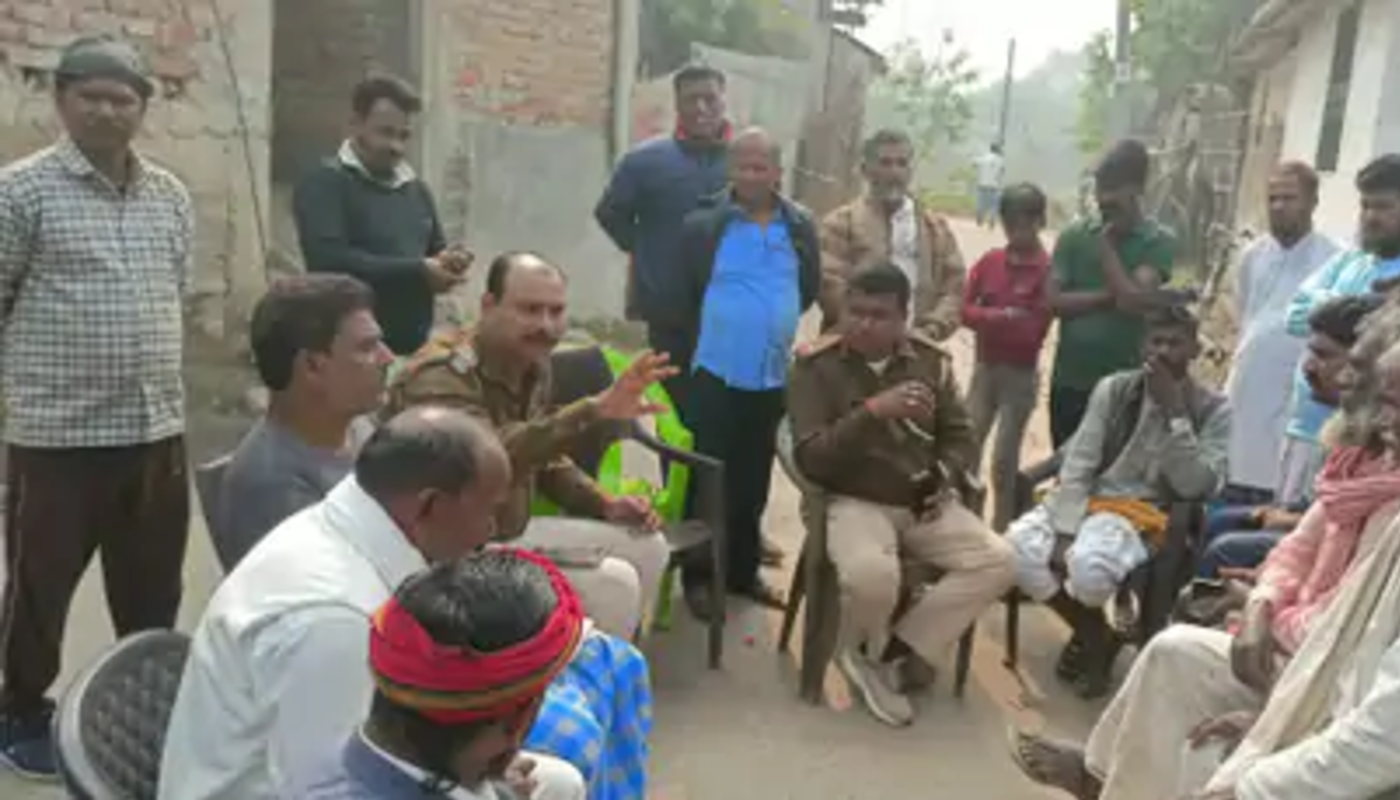
Case Summary
Hindus were confronted by a group of Muslims who stopped a Hindu wedding procession’s DJ music as it passed a mosque in Bhamaha village, Pupri, Sitamarhi, Bihar, creating a tense situation during the celebrations. The incident occurred on the night of 21 November, when the wedding procession for Santosh Mandal’s daughter was en route to the bride’s house, accompanied by music playing. As the group approached the mosque, members of the Muslim community objected to the DJ and forced it to stop, leading to a sharp verbal exchange. The disagreement quickly escalated into a tense standoff between the two sides. Police arrived promptly, with Pupri station in charge, Ramshankar Kumar reaching the spot with his team. Officers spoke to both groups and brought the situation under control before it could develop into a larger conflict. They secured written assurances from members of both communities to maintain peace. Local elders intervened early and assured the two sides that the matter would be discussed in a community meeting. On 24 November 2025, representatives from both communities met in a panchayat setting to work towards resolving the dispute.
Why it is Hate Crime ?
The primary category in this case is: Attack not resulting in death. The subcategory under this is: Attacked for crossing 'Muslim area.' One of the reasons that Hindus get attacked unprovoked specifically by Islamists is for crossing ‘Muslim areas’. Essentially, Muslim mobs often attack Hindus crossing or present in certain areas which have a majority Muslim population. It has often been cited as one of the reasons to blame Hindus for attacks against themselves, signalling that Hindus displaying religious symbols, taking our religious processions or crossing any area which is dominated by Muslim residents is a provocation in and of itself. These areas are mostly ghettoized areas where mobs mobilize quickly to attack Hindus for a variety of reasons like playing music during a religious procession, crossing a mosque, wearing a tilak or any other religious symbol in a Muslim-dominated area, praying at a local temple in that area etc. There have been cases where the few local Hindus of that area have been attacked on their way to the Temple for prayers as well, simply because the area is considered a Muslim-dominated area. Several times, it is entirely possible that the immediate trigger for the violence against Hindus was non-religious in nature, however, the violence became religiously motivated in nature because the area was Muslim dominated and the residents on the whole harboured animosity towards Hindus, evidenced from the actions of the mob, the slogans, and the nature of the attack. Such crimes are motivated by the religious identity of the victims and are therefore classified as hate crimes under this category. The other subcategory selected here is- Attacked for Hindu identity. In several cases, Hindus are attacked merely for their Hindu identity without any perceived provocation. A classic example of this category of religiously motivated hate crime is a murder in 2016. 7 ISIS terrorists were convicted for shooting a school principal in Kanpur because they got ‘triggered’ seeing the Kalava on his wrist and tilak that he had put. In this, the Hindu victim had offered no provocation except for his Hindu religious identity. The motivation for the murder was purely religious, driven by religious supremacy. Such cases where Hindus are targeted merely for their religious identity would be documented as a hate crime under this category. This case has been included in the tracker because it reflects a recurring pattern in which Hindu religious activity becomes the target of obstruction and hostility when it passes through areas dominated by another community. The confrontation did not arise from a private dispute but from the objection to a Hindu wedding procession moving along a public route. The objection was triggered specifically when the procession approached a mosque, and the demand to stop the music created an environment where communal identity became the central point of tension. The ensuing standoff, even without physical injury, shows how easily intimidation can be used to restrict Hindu religious expression when it intersects with zones informally claimed by another group. The incident, therefore, carries a significance that extends beyond a wedding dispute and points towards an established behavioural pattern where Hindus are pressured, cornered or confronted for exercising cultural practices in spaces considered out of bounds. The case also aligns with documented situations where Hindus face hostility simply because they enter or pass through neighbourhoods with a demographic tilt. In such instances, the conflict is shaped not by individual grievances but by communal perceptions about who is permitted to express religious identity in a given locality. When members of the Muslim community objected to the music and compelled the procession to stop, it reflected an assertion of territorial control where Hindu practices were treated as provocations by their very presence. This territorialised response reinforces a climate in which Hindus are expected to modify or suppress their customs to avoid confrontation, indicating an imbalance rooted in communal boundaries rather than mutual accommodation. There is a structural pattern here which is now well-documented in the Tracker across multiple cases. Hindu processions are treated as provocation merely because they pass through or near Muslim localities. Instead of accepting the normal coexistence of religious communities in public spaces, there is the construction of territorial ownership, where Hindus are punished for passing through or for celebrating religiously significant moments. The claim of the attackers that the procession was near a mosque and that the DJ needed to be stopped is, in itself, part of the mechanism by which Hindus are delegitimised and made unwelcome in areas where Muslims have demographic dominance. Hindu religious activities are treated as a violation, and any resistance from Hindu youth becomes the excuse for a violent collective assault. Moreover, the speed with which tensions escalated and the need for police intervention underline the underlying hostility that can surface in such settings. The pressure placed on the Hindu procession was not limited to a simple request but was enforced in a manner that created fear and insecurity during a moment meant for celebration. When identity-based resentment shapes the interaction, the result is a targeted form of intimidation that fits within the broader spectrum of religious hostility. For these reasons, the incident is treated as a hate-motivated confrontation and recorded in the tracker as part of a wider pattern of pressure, obstruction and communalised aggression directed at Hindus in specific localities.


Case Status
Unknown


Perpetrators Details
Perpetrators
Muslim Extremists
Perpetrators Range
Unknown
Perpetrators Gender
unknown
 Sources




