Hindus targeted for conversion during Christian prayer gathering in Kushinagar, Uttar Pradesh
 Kushinagar, Uttar Pradesh, India
  14 November, 2025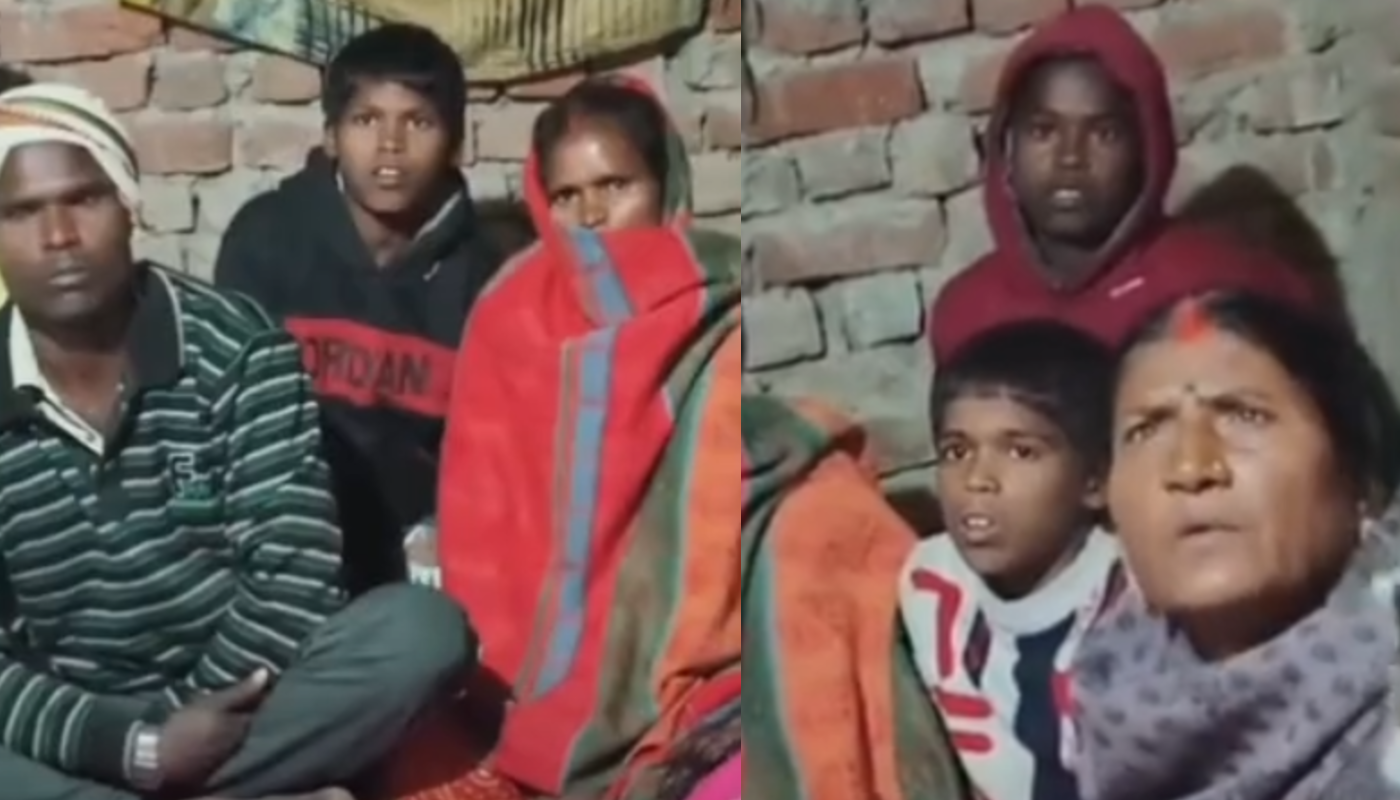
Case Summary
Hindus were targeted for religious conversion in Kokilpatti village under Vishunpura police station in Kushinagar district, Uttar Pradesh, where a Christian missionary led a prayer gathering on the night of 15 November 2025, which was reportedly a conversion attempt. The incident unfolded around 8.15 pm, when local residents noticed unusual activity inside a house where a religious meeting was underway and suspected that Hindu villagers were being influenced to convert. The crowd alerted members of the Vishva Hindu Parishad and Bajrang Dal, who reached the spot and informed the police. According to villagers, people from outside the village had arrived for the gathering, and the prayer session was being used to encourage Hindus to give up their faith. Two videos from the event later surfaced, showing activities that locals believed were linked to covert conversion efforts. As tension grew in the locality, a police team from Vishunpura station reached the scene and detained several individuals for questioning, including Suresh, son of Siyar, a resident of Kokilpatti, and Omprakash, son of Ramlal, from Ahirauli. Police also recovered Bibles from the possession of those detained. The individuals taken into custody denied that conversion was taking place. They told police that they had come for treatment and believed in combining medicine with prayer for healing. They insisted that no one was being converted and that the gathering was purely for spiritual and healing purposes. Villagers, however, stated that similar meetings had been secretly taking place for several months, although this was the first time a video had surfaced, leading to a public outcry late at night. The situation became tense as more villagers gathered, but police intervened before matters escalated. Station House Officer Anand Gupta said that the matter was being investigated seriously. He added that no formal complaint had been filed yet, but once a written report was submitted, further legal action would be taken to determine whether attempts at religious conversion were indeed made.
Why it is Hate Crime ?
The primary category in this case is: Predatory Proselytisation. The first subcategory under this is: Conversion/ attempts to convert by inducement. Predatory Proselytisation is not just limited to threat, harassment, force and violence, but it also has contours of stealth. In several cases, the Hindu victim is exploited to convert, with non-Hindus taking advantage of their poverty. In such cases, the Hindu victim who is suffering financially is offered monetary benefits, including lucrative offers for jobs, health treatment, education, etc, to induce the victim into changing his/her religion. In such cases, the religious identity of the victim and the aim to disenfranchise him from his faith form the heart of the crime. Also, taking advantage of and exploiting an individual’s economic vulnerabilities is widely acknowledged as exploitation, forms of which are often penalised by law. Such cases therefore are considered religiously motivated hate crimes since the victim’s religious identity forms the very heart of the crime itself. The second subcategory under this is: Proselytisation by grooming, brainwashing, manipulation or subtle indoctrination. The tertiary category under this is: Conversion of minor. Religious brainwashing essentially means the often subtle and forcible indoctrination to induce someone to give up their religious beliefs to accept contrasting regimented ideas. Religious grooming or brainwashing also involves propaganda and manipulation. It involves the systematic effort, driven by religious malice and indoctrination, to persuade “non-believers’ to accept allegiance, command, or doctrine to and of a contrasting faith. Cases of such grooming or brainwashing are far more nuanced than direct threats, coercion, inducement and violence. In such cases, it is often seen that there is repeated, subtle and continual manipulation of the victim to induce disaffection towards their own faith and acceptance of the contrasting faith of the perpetrator. While subtle indoctrination is widely acknowledged as predatory, an element which is often understated in such conversions or the attempts of such conversion is the role of loyalty and trust which might develop between the perpetrator and the victim. Fiduciary relationships are often abused to affect such religious conversion. For example, an educator transmitting religious doctrine of a competing faith to a Hindu student. The Hindu student is likely to accept what the teacher is transmitting owing to existence of the fiduciary relationship. The exploitation of the fiduciary relationship to religiously indoctrinate victims would also be included in this category. Since the underlying animosity towards the victim’s faith forms the basis of predatory proselytisation, such cases are considered religiously motivated hate crimes. This case has been added to the Hinduphobia Tracker because the circumstances surrounding the Kokilpatti incident reflect a clear pattern of predatory proselytisation directed specifically at Hindus. The gathering held inside a private house late at night, the presence of individuals from outside the village, and the recovery of Christian religious material all point toward a coordinated effort to influence Hindu residents into abandoning their faith. Though the accused attempted to frame the event as a healing session, the combination of secrecy, targeted invitations to Hindu women and children, and the emergence of videos depicting conversion-linked activity strongly indicates that the meeting was not merely a spiritual gathering but a deliberate attempt at religious conversion. The method employed in this incident aligns with well-documented conversion strategies wherein vulnerable or unsuspecting Hindu individuals are approached under the guise of prayer, healing, or charity. In Kokilpatti, villagers reported that the organisers had been conducting similar covert meetings for several months, a feature typical of conversion attempts that rely on gradual grooming rather than open doctrinal instruction. The use of inducements, assurances of healing, and emotional persuasion is characteristic of predatory practices that seek to manipulate individuals already facing financial or health-related hardship. Such tactics are designed to take advantage of vulnerability, diminishing the capacity for informed choice and shifting the interaction into the domain of coercive religious influence. A crucial factor making this a case of a religiously motivated hate crime is the method of denigrating Hindu beliefs. Witnesses stated that attendees were exposed to claims undermining Hindu deities and traditions. Conversion attempts rooted in the insult or dismissal of Hindu religious identity reflect animosity rather than spiritual outreach. This demonstrates that the objective was not moral upliftment or voluntary faith transition, but the dismantling of Hindu identity through psychological pressure. When religious gatherings become a platform for deriding Hindu symbols and persuading Hindu attendees to renounce their ancestral traditions, the act constitutes an ideological attack on the community’s religious dignity. It is further important to note here that minors were also present at the site, which means the element of consent and genuine change of conscience was missing ab initio. Minors, due to their young age and lack of maturity, are particularly vulnerable to manipulation and coercion. The event also contained markers of grooming and subtle indoctrination, as the accused framed the activity as a combination of prayer and healing. Such frameworks are particularly influential for women, children, and the economically vulnerable, who are more likely to trust assurances delivered with spiritual authority. By blurring the line between religious practice and material support, these gatherings cultivate dependency while gradually weakening confidence in Hindu belief. For these reasons, the Kokilpatti incident has been categorised as a religiously motivated hate crime rooted in predatory proselytisation, exhibiting clear hostility toward Hindu identity through deceit, inducement, and attempted conversion. Disclaimer: The number of perpetrators in this case has been recorded as two, based on the individuals detained and named during the initial police inquiry. However, media reports and local accounts indicate the possible involvement of additional unidentified persons who were present during the prayer gathering. Since their identities have not been officially confirmed, they have not been included in the perpetrator count. If further investigation reveals more names, the perpetrator list will be updated accordingly.


Case Status
Arrested


Perpetrators Details
Perpetrators
Christian Extremists
Perpetrators Range
From 2 To 5
Perpetrators Gender
male
 Sources




