Hindus targeted for conversion through denigration of Hindu faith during Christian prayer meeting
 Bilaspur, Chhattisgarh, India
  12 November, 2025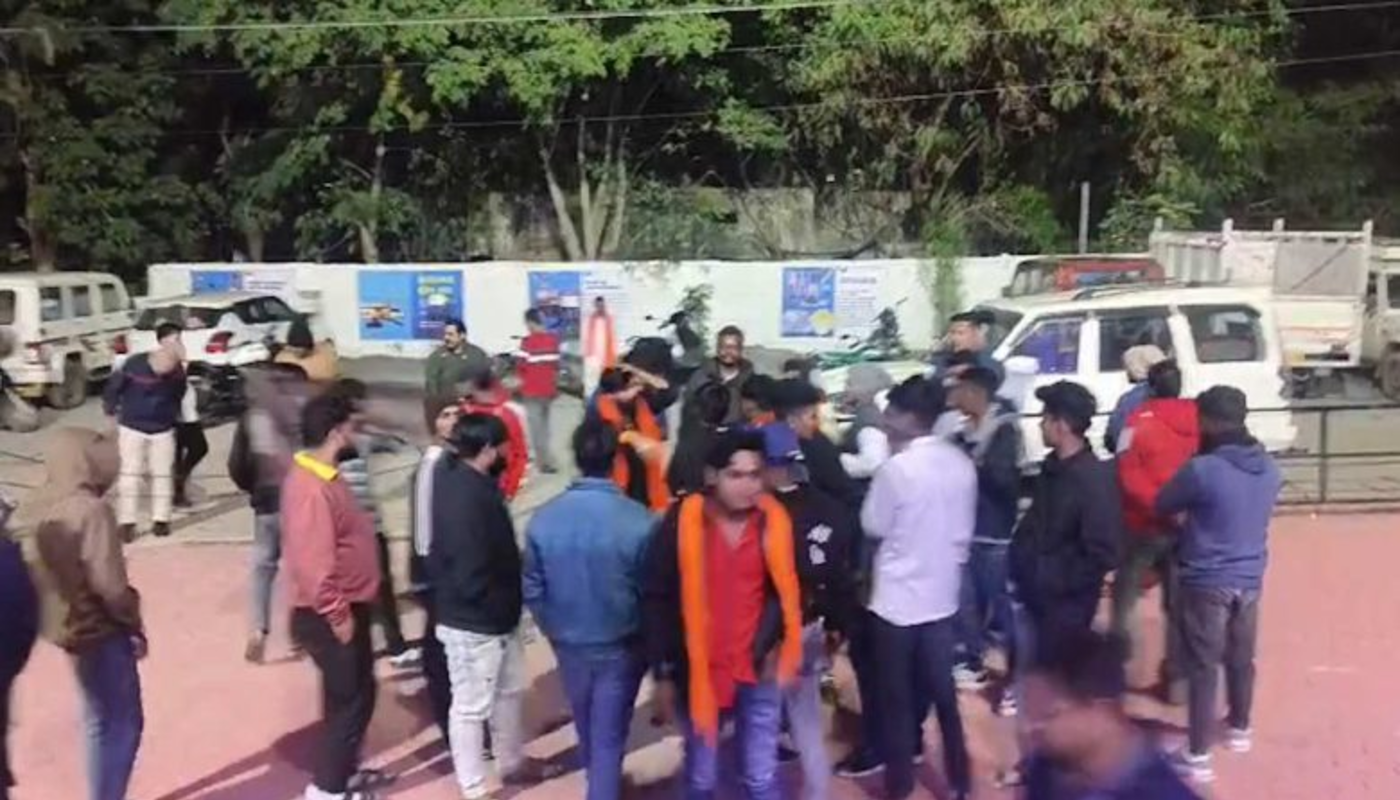
Case Summary
Hindus were targeted for religious conversion in Bilaspur district of Chhattisgarh, where activities promoting Christianity were being conducted under the guise of a prayer meeting. The incident took place in Basant Vihar Colony, under the Sarkanda police station area, and involved a South Eastern Coalfields Limited (SECL) employee who organised the gathering at his residence. The event was disrupted after Hindu organisations exposed the conversion attempt and informed the police, leading to the registration of a criminal case and the organiser’s detention. According to reports, members of local Hindu organisations received information that a Christian prayer meeting was being held at the house of Rajendra Khare, an SECL employee, where people from the Hindu community, including men, women, and children, were in attendance. Upon reaching the spot, the activists found that those present were being influenced to adopt Christianity through misleading statements about Hindu deities and by being encouraged to renounce their faith. The members immediately objected to the activity and began protesting outside the residence, raising slogans and demanding police action. Officers from the Sarkanda police station arrived at the scene and intervened to restore order. Hindu organisation representatives later submitted a written complaint, asserting that such attempts at conversion were being systematically carried out in Bilaspur under various pretexts. The police subsequently registered a case and arrested Rajendra Khare. From the site, police recovered Christian religious books and other conversion-related material that had been used during the prayer session. According to sources, the participants were told that Hindu gods were false and that salvation could only be attained by accepting Christianity. A police officer confirmed that the case had been registered under relevant sections of the Chhattisgarh Freedom of Religion Act, and an investigation was underway to identify other individuals involved in organising or funding the conversion activity. The police stated that further legal action would follow based on the findings of the inquiry.
Why it is Hate Crime ?
The primary category in this case is: Predatory proselytisation. The first subcategory under this is: Attempting to convert/converting by denigrating Hinduism. In several cases, Hindus are converted or an attempt is made to convert Hindus by denigrating their faith, Hinduism. In such cases, the Hindus associate with the non-Hindu perpetrators often by choice and then, the attempt to convert them by insulting their faith, showing the faith down etc begins. An example of this would be a non-Hindu gathering where the Hindus are attending the gathering of their own free will. However, once they attend the gathering, there is an explicit attempt to convert them by abusing their faith and hailing the faith of the perpetrator. The denigration of the Hindu faith is often based on misrepresentation of the Hindu faith, its doctrine and scriptures and insult to espoused traditions if not blatant lies about Hindu beliefs and ways. Such conversions or attempts at conversions are driven by animosity towards the Hindu faith and are therefore documented as religiously motivated hate crimes. The second subcategory under this is: Proselytisation by grooming, brainwashing, manipulation or subtle indoctrination. The tertiary category under this is: Conversion of minor. Religious brainwashing essentially means the often subtle and forcible indoctrination to induce someone to give up their religious beliefs to accept contrasting regimented ideas. Religious grooming or brainwashing also involves propaganda and manipulation. It involves the systematic effort, driven by religious malice and indoctrination, to persuade “non-believers’ to accept allegiance, command, or doctrine to and of a contrasting faith. Cases of such grooming or brainwashing are far more nuanced than direct threats, coercion, inducement and violence. In such cases, it is often seen that there is repeated, subtle and continual manipulation of the victim to induce disaffection towards their own faith and acceptance of the contrasting faith of the perpetrator. While subtle indoctrination is widely acknowledged as predatory, an element which is often understated in such conversions or the attempts of such conversion is the role of loyalty and trust which might develop between the perpetrator and the victim. Fiduciary relationships are often abused to affect such religious conversion. For example, an educator transmitting religious doctrine of a competing faith to a Hindu student. The Hindu student is likely to accept what the teacher is transmitting owing to existence of the fiduciary relationship. The exploitation of the fiduciary relationship to religiously indoctrinate victims would also be included in this category. Since the underlying animosity towards the victim’s faith forms the basis of predatory proselytization, such cases are considered religiously motivated hate crimes. This incident in the Bilaspur district of Chhattisgarh represents a clear instance of predatory proselytisation, where conversion efforts were conducted under the guise of a Christian prayer meeting. What distinguishes this case is not merely the attempt to convert Hindus, but the deliberate denigration of the Hindu faith as part of the process. The perpetrators used religious gatherings as platforms to spread misinformation about Hindu deities and scriptures, while promoting Christianity as the only true path to salvation. Such actions reveal a conscious and premeditated design to undermine the faith and identity of the attendees through a combination of doctrinal distortion and emotional manipulation. In this case, the venue itself, a private residence in Basant Vihar Colony, was transformed into a site of religious exploitation. Those invited were not strangers but members of the local Hindu community, including women and children, who had likely been approached under the pretext of participating in a benign communal prayer. Once assembled, the nature of the gathering shifted from devotion to persuasion, with the organiser misrepresenting Hindu beliefs and attacking Hindu deities to sow doubt and guilt in the minds of participants. Such tactics, though subtle in form, reflect a deep-rooted animosity towards Hinduism, where the first step in conversion begins by eroding confidence in one’s own tradition. This strategy of conversion through denigration is not accidental but systemic. It employs a gradual process of psychological grooming, where faith-based authority and familiarity are weaponised to induce disaffection. In this instance, the accused, an SECL employee, leveraged his social position and trust within the community to create a facade of religious inclusivity. Behind that facade lay a calculated attempt to indoctrinate Hindus through misinformation and selective preaching, replacing reverence with self-doubt and spiritual dependency on the competing faith. The pattern also shows how conversion networks exploit both trust and ignorance, particularly among economically and socially ordinary families. The repeated manipulation of religious symbols and doctrines, accompanied by emotional appeals to guilt and salvation, is designed to disrupt cultural continuity and displace inherited faith systems. Such incidents are more than isolated breaches of law; they represent a targeted form of religious hostility aimed at weakening the Hindu community’s spiritual resilience. The denigration of Hindu gods, the distortion of its texts, and the exploitation of prayer as a conversion tool are not expressions of free belief but acts of ideological aggression. By embedding conversion in the language of compassion and community, perpetrators disguise coercion as grace, a pattern that makes such crimes both insidious and enduring. Disclaimer: As no specific date of occurrence has been provided in any of the available reports, the date has been recorded as the date the incident was first reported in the media. The Hinduphobia Tracker documents incidents according to the date on which the crime was committed, not the date on which it was reported; however, in the absence of that information, the media report date has been used for record consistency.


Case Status
Arrested


Perpetrators Details
Perpetrators
Christian Extremists
Perpetrators Range
One Person
Perpetrators Gender
male
 Sources




