Three Hindu men killed in Pakistan’s Tharparkar after threats over relationship with Muslim girl
 Sindh, Pakistan
  8 November, 2025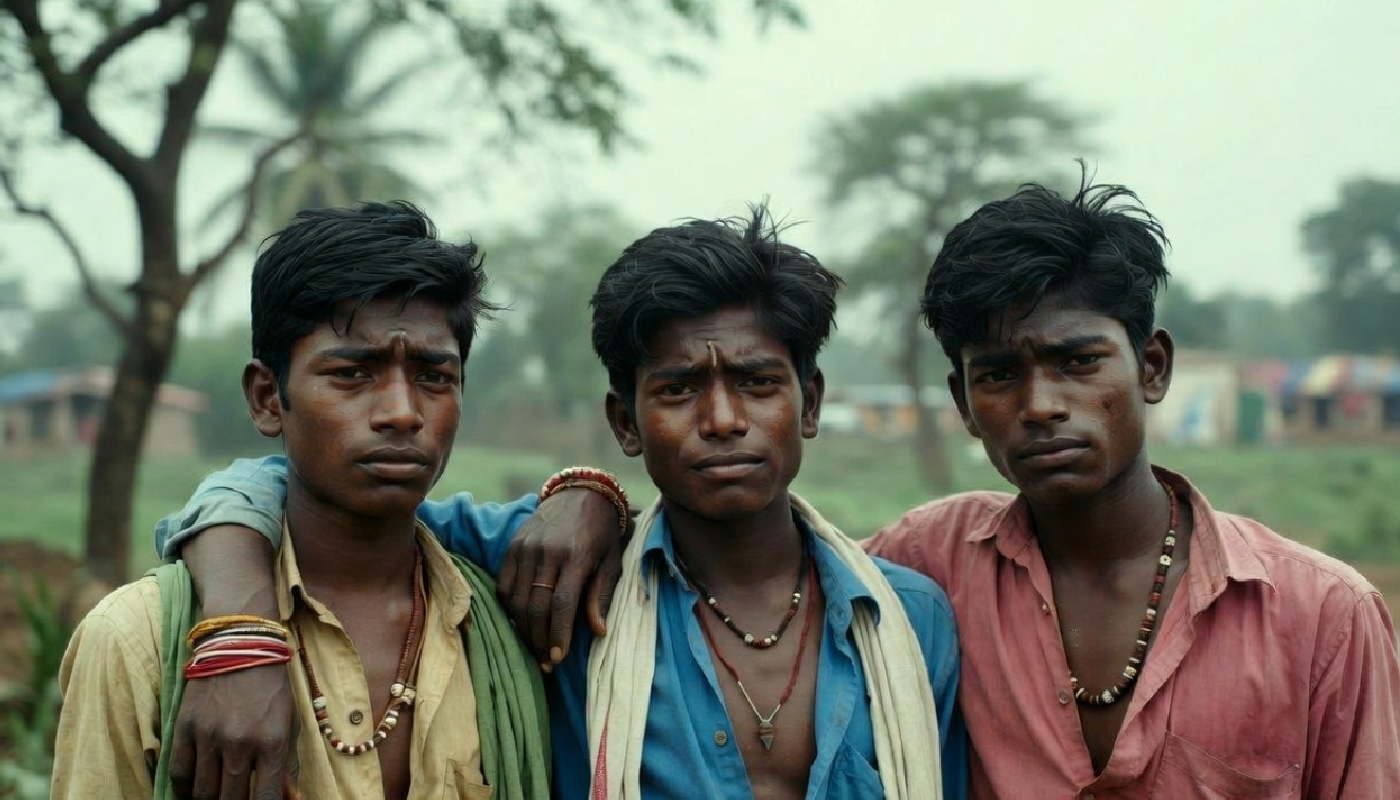
Case Summary
Three Hindu youths were killed as one of them was in a relationship with a Muslim girl. The incident happened in Dano Dhandhal, Tharparkar district, Sindh province of Pakistan. They were identified as Dhanji, Gautam, and Jayaram, aged between 16 and 21, and belonging to the Kolhi community. Their bodies were discovered hanging from a tree in the locality. The police took custody of the bodies and sent them for post-mortem in Nagarparkar Taluka Hospital. The senior police officer claimed that there were no clear marks of violence, and he claimed it looked like a collective suicide. The families dismissed that version completely. They explained that Gautam and his family had been receiving death threats because he was in a relationship with a Muslim girl. They said that someone called the three boys out of their houses the previous night. They never returned home, and the next morning their bodies were found hanging. The families insisted that this was a collective murder and that the police tried to frame it as suicide.
Why it is Hate Crime ?
The primary category in this case is: Men attacked for being associated with non-Hindu women. The subcategory under this is: Attacked/killed for being associated or suspicion of being associated with Muslim woman. There have been several cases documented of Hindu men/boys being attacked specifically by Muslim groups/mobs for merely being associated or suspicion of being associated or being seen with a Muslim woman in public. In most of such cases, the Hindu man is not in a relationship with the Muslim woman, however, the mob proceeds to threaten and/or assault the Hindu man for merely being associated with the Muslim woman in any capacity. The rise of such crimes stems from a particularly sinister campaign run by several Muslim ideologues and activists. The campaign claims that Hindu men are attempting to ‘lure’ Muslim women into relationships to ensure that Muslim women leave their faith and follow Hinduism. The propaganda has been spearheaded with the help of WhatsApp groups and the extensive use of social media, sans evidence of the same. In many cases, pamphlets were fabricated to lend credence to this campaign. The root of this campaign lies in the fact that several cases of sectarian crimes against Hindu women in relationships with Muslim men have been documented. In such cases, Hindu women have often been forced/pressured to convert to Islam, assaulted, threatened and even murdered owing specifically to their religious identity and their refusal to give up that religious identity to adopt Islam. To delegitimise the suffering of Hindu women when such sectarian crimes are committed against them, the theory of ‘Bhagwa Love Trap’ was floated by sections of the Muslim community. As this theory gained traction, Muslim mobs started targeting Hindu men who were seen with Muslim women. In several such cases, the Hindu man was assaulted merely for offering to drop a Muslim woman in his vehicle or for being friends. The differentiating factor between such cases and legitimate cases of Hindu women being targeted while in a relationship with Muslim men is that there is no sectarian violence, and force/pressure to convert. The nature of sectarian violence against Hindu women is not about two adults in a consensual relationship, working together, studying together, or even marrying each other, where religious considerations are declared. In this category of crimes, it is pertinent to remember that in none of the cases is there an element of the Hindu man masking his identity or forced religious conversion. Such cases are driven by specific religious motivations and against the religious identity of the victim and are therefore qualified as hate crimes. Another primary category in this case is: Attack resulting in death. The subcategory under this is: Attacked for Hindu identity. In several cases, Hindus are attacked merely for their Hindu identity without any perceived provocation. A classic example of this category of religiously motivated hate crime is a murder in 2016. 7 ISIS terrorists were convicted for shooting a school principal in Kanpur because they got ‘triggered’ seeing the Kalava on his wrist and tilak that he had put. In this, the Hindu victim had offered no provocation except for his Hindu religious identity. The motivation for the murder was purely religious, driven by religious supremacy. Such cases where Hindus are targeted merely for their religious identity would be documented as a hate crime. Under this category, cases where the attack led to the death of the Hindu victim/s would be documented. This case is being documented in the tracker because it reflects a convergence of two patterns which have appeared repeatedly in the context of violence against Hindus. First, a set of Hindu boys or men is singled out because of their association with a Muslim woman. Second, the outcome involves their death, and local instruments of power attempt to reduce or reinterpret the violent nature of the incident as self-infliction or neutral misfortune. The details emerging from Tharparkar, as reported by families, carry both of these elements. Continuous threats directed at Gautam because of his relationship with a Muslim girl introduce a context which aligns with an established pattern. The subsequent disappearance of the three boys after being called out at night, and the discovery of their bodies the next morning, indicates the type of targeted result previously observed in other similar instances. This case also needs to be understood within a wider ideological environment which has developed in Pakistan, as well as in some parts of India, where a theoretical narrative claims that Hindu men are attempting to lure Muslim women into relationships to damage Muslim society from within. This is presented and circulated by certain religious actors as an inversion of the well-documented experience of Hindu women who have faced coercive conditions inside some interfaith relationships. The counter-narrative has been built to dilute sympathy for Hindu women, to equate religious coercion with consensual interactions, and to construct a justification for aggressive reactions against Hindu men who engage with Muslim women in any normal social situation. Incidents of assault, intimidation, and social sanction have emerged from that ideological construction. Within this framework, violence against young Hindu men is explained away as a community defence mechanism. That intellectual architecture is a driver of harm. In Tharparkar, the immediate instinct of the police to frame the situation as suicide, while dismissing family statements, also fits within a measurable pattern. The murder of Hindus in Pakistan is frequently minimised at the level of local enforcement. Reports often demonstrate a tendency to deflect blame, to avoid admitting a religious motivation, and to demand standards of proof which are not expected or applied in other equivalent contexts. This adds an institutional dimension to the violence itself because the minimisation of motive weakens the possibility of justice, bolsters impunity, and encourages repetition. Hindus in Pakistan continue to face a climate of insecurity marked by forced conversions of girls, intimidation of families, social power imbalances in rural districts, repeated desecration of temples, and frequent pressure to abandon their identity in public life. The combination of state weakness, local police bias, and the dominance of feudal religious actors has produced a reality where violence against Hindus rarely receives rigorous investigation or justice, which encourages further impunity and a continuous sense of fear within the community. For these reasons, the case is suitable for documentation as a hate crime. The victims were Hindu boys; the background of threat relates to an inter-community relationship, the form of violence resulted in death, and the official response reflects a reluctance to recognise the incident as criminal aggression. These elements taken together provide sufficient grounds to classify this incident as an act wherein the Hindu identity of the victims was central to the harm they suffered. Disclaimer: Since no date of occurrence has been mentioned in the available reporting, the date on which this case was reported in the media has been taken as the incident date for documentation purposes. Disclaimer: The perpetrator category has been marked as Muslim in this entry because the underlying pattern of persecution of Hindus in Pakistan is driven primarily by Muslim groups and because the family confirmed that the threats and hostility originated from the Muslim side of the dispute. If further verifiable information emerges regarding named individuals or a different actor category, this entry will be revisited and updated accordingly.
Victim Details
Total Victim
3
Deceased
3
Gender
- Male 3
- Female 0
- Third Gender 0
- Unknown 0
Caste
- SC/ST 0
- OBC 0
- General 0
- Unknown 3
Age Group
- Minor 1
- Adult 1
- Senior Citizen 0
- Unknown 1


Case Status
Unknown


Perpetrators Details
Perpetrators
Muslim Extremists
Perpetrators Range
Unknown
Perpetrators Gender
unknown
 Sources




