Insult to Hindu religious sentiments: Hindu deities abused by man in Balia
 Ballia, Uttar Pradesh, India
  2 November, 2025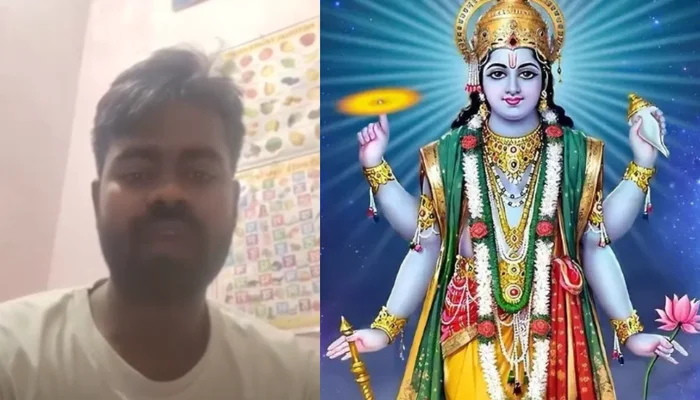
Case Summary
In Ballia district of Uttar Pradesh, Hindu religious were insulted after an objectionable video was posted on social media against Hindu deities and Hinduism by a man named Vishnu Shankar alias Golu. According to reports, the accused was a resident of Hadsar village under Sikandarpur police station, had uploaded a video on Facebook in which he used abusive language towards Lord Shri Ram and Lord Parashurama. In the video, he was seen shouting inflammatory remarks, including “Manuvadis, reform yourselves!”, while making derogatory comments against revered Hindu figures. The video, which went viral online, caused deep offence within the Hindu community for its explicit insult to deities central to Hindu worship. Subsequently, a written complaint submitted to Sikandarpur police, based on which a case was registered under relevant sections of the Indian Penal Code. Acting on a tip-off, Sub-Inspector Ramskal Yadav and his team apprehended Vishnu Shankar from Banshi Bazaar Chatti. The accused was taken into custody and produced before the court.
Why it is Hate Crime ?
The primary category selected in this case is- Hate Speech against Hindus. The subcategory selected is- Anti-Hindu slurs, mocking faith. Anti-Hindu slurs and the deliberate mocking of the Hindu faith owing to religious animosity involve the usage of derogatory terms, stereotypes, or offensive references to religious practices, symbols, or figures. One of the common anti-Hindu slurs used against Hindus is “cow-worshipper” and “cow piss drinker”. The intention of using this term is to demean and mock Hindus as a group and their religious beliefs since Hindus consider the cow holy. Additionally, some symbols and the slurs attached to them have a historical context that exacerbates the insult, hate, stereotyping, dehumanisation and oppression against Hindus. Cow worship has been used for centuries to denigrate Hindus, insult their faith and oppress Hindus specifically as a religious group. There has been overwhelming documentation about how cow slaughter has been used to persecute Hindus with cow meat being thrown in temples and places of worship. There has also been overwhelming documentation where cow meat (beef) has been force-fed to Hindus to either forcefully convert them to Islam or denigrate their faith. Apart from cow worship, the Swastika – which holds deep religious significance for the Hindus – has also been misinterpreted and distorted to use as a slur against Hindus. Similarly, the worship of the Shivling has been used by supremacist ideologies and religions to denigrate Hindus owing to religious animosity. Such slurs and denigration stem out of inherent animosity and hate towards Hindus and their faith, therefore, it is categorised as hate speech targeted at Hindus specifically owing to their religious identity. In this case, the accused, Vishnu Shankar alias Golu, posted an objectionable video on social media targeting Lord Shri Ram and Lord Parashurama. The video contained deeply derogatory and abusive language directed at these revered deities, amounting to hate speech that insulted and denigrated figures central to the Hindu faith. Hindu deities occupy an immensely important and sacred position in Hinduism and are deeply revered by the Hindu community. Targeting them in a derogatory and abusive manner is not merely offensive; it reflects direct religious animosity towards Hinduism and its followers. By publicly maligning revered Hindu deities, the accused not only disrespected the faith but also incited hostility, making this a clear example of a religiously motivated crime. Such actions are consistent with hate speech, as they were designed to provoke hostility, offend religious sentiments, and spread contempt for Hinduism and its adherents. The Manusmriti is one of the foundational texts in Hinduism, traditionally attributed to the sage Manu. It serves as a dharmaśāstra, offering guidance on various aspects of life, including morality, law, and social conduct. It is a symbol of Hindu cultural and religious heritage. Therefore, using the term “Manuvadi” as an insult and implying backwardness, and linking it with abusive remarks towards Hindu deities is therefore not merely rhetorical but constitutes a direct ideological attack on Hindu philosophy and sacred tradition. By combining vulgar abuse with mockery of revered symbols and texts, the accused displayed explicit religious hostility and contempt towards Hinduism and its adherents. In recent times, there has been a noticeable rise in the circulation of derogatory videos, memes, and posts targeting Hinduism, its deities, and followers on social media. This case is emblematic of that broader trend of online Hinduphobia, where hatred towards Hindus is normalised and amplified through systematic ridicule and abuse of their sacred symbols. Such conduct fosters religious antagonism, deepens social fractures, and perpetuates a climate of intolerance towards the Hindu community. Disclaimer: The Hinduphobia Tracker records incidents based on when an event occurred or when the victim's ordeal began. It is important to clarify that the report does not specify the exact date when the video was posted on social media by the accused. Therefore, for documentation purposes, we have recorded the date based on when it was reported in the media, which is 2 November 2025.


Case Status
Arrested


Perpetrators Details
Perpetrators
Others
Perpetrators Range
One Person
Perpetrators Gender
male
 Sources




