Hundreds of Hindu children lured for conversion with ‘free education,’ taught Bible and anti-Sanatan propaganda
 Ajmer, Rajasthan, India
  28 October, 2025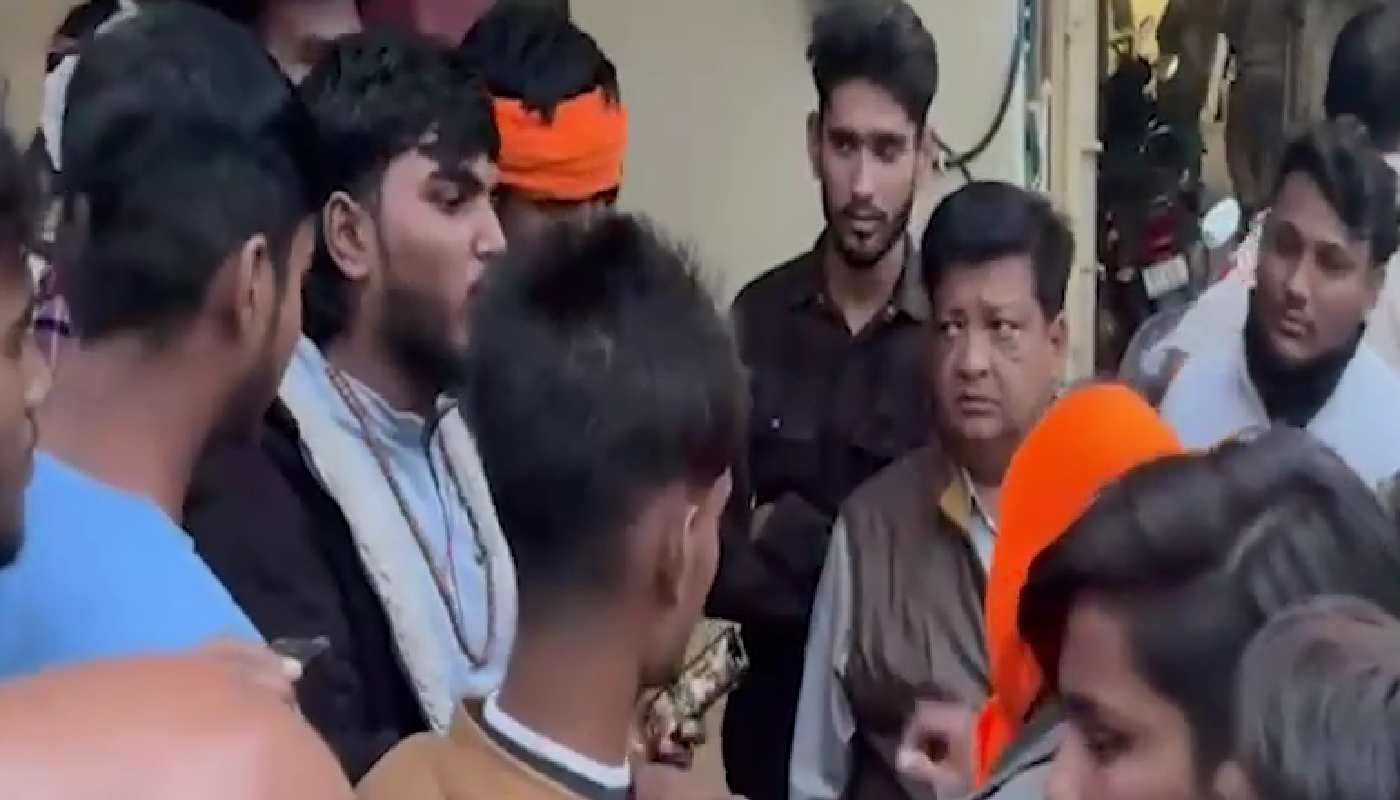
Case Summary
Around 250 to 300 underprivileged Hindu children were lured under the pretext of free education by a coaching centre in Ajmer, Rajasthan. According to reports, the Udaan Coaching Centre, in Daata Nagar, was engaged in teaching Hindu children the Bible and spreading falsehoods against Sanatan Dharma. Acting on information received, local Hindu organisations conducted a raid at the premises, during which several children confirmed that they were being subjected to religious indoctrination and denigration of their own faith. The coaching centre taught students from Class 1st to 12th. The coaching was run by a Christian missionary named Sunil George. The students were lured with promises of better education and food. Local Hindu organisations intervened when they found that students were indoctrinated with anti-Hindu teachings. Following the intervention, the police initiated an investigation into the activities of the centre and its operators to determine the extent of religious manipulation and potential violations of law. Sunil denied the allegations and stated it was all being done for the welfare of poor, destitute kids.
Why it is Hate Crime ?
The primary category in this case is: Predatory Proselytisation. The subcategory under this is: Proselytisation by grooming, brainwashing, manipulation or subtle indoctrination. Religious brainwashing essentially means the often subtle and forcible indoctrination to induce someone to give up their religious beliefs to accept contrasting regimented ideas. Religious grooming or brainwashing also involves propaganda and manipulation. It involves the systematic effort, driven by religious malice and indoctrination, to persuade “non-believers’ to accept allegiance, command, or doctrine to and of a contrasting faith. Cases of such grooming or brainwashing are far more nuanced than direct threats, coercion, inducement and violence. In such cases, it is often seen that there is repeated, subtle and continual manipulation of the victim to induce disaffection towards their own faith and acceptance of the contrasting faith of the perpetrator. While subtle indoctrination is widely acknowledged as predatory, an element which is often understated in such conversions or the attempts of such conversion is the role of loyalty and trust which might develop between the perpetrator and the victim. Fiduciary relationships are often abused to affect such religious conversion. For example, an educator transmitting religious doctrine of a competing faith to a Hindu student. The Hindu student is likely to accept what the teacher is transmitting owing to the existence of the fiduciary relationship. The exploitation of the fiduciary relationship to religiously indoctrinate victims would also be included in this category. Since the underlying animosity towards the victim’s faith forms the basis of predatory proselytization, such cases are considered religiously motivated hate crimes. Another subcategory in this case is: Conversion/ attempts to convert by inducement. Predatory Proselytisation is not just limited to threat, harassment, force and violence, but it also has contours of stealth. In several cases, the Hindu victim is exploited to convert, with non-Hindus taking advantage of their poverty. In such cases, the Hindu victim who is suffering financially is offered monetary benefits, including lucrative offers for jobs, health treatment, education, etc, to induce the victim into changing his/her religion. In such cases, the religious identity of the victim and the aim to disenfranchise him from his faith form the heart of the crime. Also, taking advantage of and exploiting an individual’s economic vulnerabilities is widely acknowledged as exploitation, forms of which are often penalised by law. Such cases, therefore, are considered religiously motivated hate crimes since the victim’s religious identity forms the very heart of the crime itself. The other subcategory selected is- Attempting to convert/converting by denigrating Hinduism. In several cases, Hindus are converted or an attempt is made to convert Hindus by denigrating their faith, Hinduism. In such cases, the Hindus associate with the non-Hindu perpetrators often by choice and then, the attempt to convert them by insulting their faith, showing the faith down etc begins. An example of this would be a non-Hindu gathering where the Hindus are attending the gathering of their own free will. However, once they attend the gathering, there is an explicit attempt to convert them by abusing their faith and hailing the faith of the perpetrator. The denigration of the Hindu faith is often based on misrepresentation of the Hindu faith, its doctrine and scriptures and insult to espoused traditions if not blatant lies about Hindu beliefs and ways. Such conversions or attempts at conversions are driven by animosity towards the Hindu faith and are therefore documented as religiously motivated hate crimes. This case has been documented in the Hinduphobia Tracker because it exemplifies an organised and deliberate attempt to target Hindu minors through predatory proselytisation under the guise of education and welfare. The Udaan Coaching Centre in Daata Nagar, Ajmer, operated not as a legitimate educational institution but as a covert mechanism for religious indoctrination aimed at dismantling the children’s spiritual and cultural foundations. By disguising religious conversion as charitable assistance, the perpetrators exploited both poverty and trust, two of the most sensitive vulnerabilities in any social structure, to achieve a gradual erosion of Hindu identity among impressionable minors. The case is emblematic of hate-driven manipulation because it combines deceit, inducement, and abuse of fiduciary relationships to subvert a child’s sense of belonging and belief. The educator, positioned as a moral authority, holds immense psychological influence over students, particularly when the students come from poor families seeking education as a pathway out of hardship. By introducing the Bible as the central text and simultaneously disseminating disparaging views about Sanatan Dharma, the perpetrators used their position to systematically alienate these children from their faith. This act was not an exchange of ideas but a calculated psychological assault intended to instil inferiority about Hinduism and reverence for a competing creed. The hate element in this act lies in its foundational purpose: to dismantle the faith of Hindu children and replace it with a religious identity that negates their cultural and spiritual heritage. It was not an act of compassion, as falsely claimed by the accused, but an expression of contempt and aggression directed at the Hindu way of life. When proselytisation takes the form of deceptive tutoring and uses misinformation to malign Hindu beliefs, it ceases to be religious teaching and becomes a form of cultural violence. The systematic denigration of Sanatan Dharma under the pretext of education reveals the intent to destroy rather than uplift, to replace rather than enlighten. The victims in this case were minors, which makes the crime even more egregious. Children lack the capacity for informed consent and are easily influenced by authority figures, especially when those figures offer food, care, and promises of better education. The centre’s approach of attracting poor Hindu children by offering free education and sustenance constitutes an inducement, a classic tool of covert conversion. It manipulates deprivation into dependence and turns the innocent pursuit of learning into a channel for religious exploitation. The minors, unable to understand the deeper implications of what was being taught, were systematically conditioned to reject their inherited faith, an act that constitutes not spiritual guidance but coercive indoctrination. This case also underscores how fiduciary relationships, such as that between a teacher and student, can be cynically weaponised for religious conversion. When educators, entrusted with the moral and intellectual formation of children, instead propagate hostility toward their students’ religion, the act becomes both a moral and cultural betrayal. Such manipulation, driven by religious malice, targets not only individuals but the collective continuity of Hindu society, aiming to weaken its roots through the corruption of its youngest members. The inclusion of this case in the Hinduphobia Tracker serves a dual purpose: to record the incident as a matter of evidence and to highlight the deeper pattern of religious hostility disguised as welfare. This was not an isolated or benign instance of interfaith teaching; it was a premeditated strategy to implant ideological disdain toward Hinduism among economically vulnerable children. Such practices represent a refined form of religious aggression — one that does not always rely on overt violence but achieves the same destructive outcome through psychological domination and cultural displacement. In essence, the Udaan Coaching Centre case illustrates how predatory proselytisation can take on subtle, sophisticated forms that disguise hatred under the guise of benevolence. By targeting Hindu minors, exploiting poverty, and misusing the educational platform to propagate religious animosity, the perpetrators engaged in an act of hate against Hindus. It attacked the very foundation of their cultural continuity and faith identity. The coercive nature of this indoctrination, its deceptive intent, and its ideological hostility toward Hinduism make it a clear case of religiously motivated hate crime and justify its inclusion in the Hinduphobia Tracker. Moreover, it is also important to mention here that Hindu victims were minors, which essentially means that the element of consent and genuine change of conscience was missing ab initio. It is a well-established fact that children are more susceptible to manipulation since they are still developing emotionally, cognitively, and socially. Their brains are not fully mature, making them more vulnerable to influence and less capable of critically evaluating information. Moreover, subtle manipulation tactics can be difficult to detect, especially when they are employed by trusted authority figures in positions of influence. This makes it challenging for parents to identify and address instances of religious manipulation in schools. Since the underlying offence in this case is against children of a specific faith and involves subtle tactics of indoctrination, which obviously stems from a bias against the Hindu faith, this case has been documented as a hate crime. Disclaimer: It is important to clarify that none of the media sources covering this case have specified the exact date on which the coaching centre started and got involved in conversion activities. Therefore, for documentation purposes, we have recorded the date based on when the incident was reported in the media.


Case Status
Complaint filed


Perpetrators Details
Perpetrators
Christian Extremists
Perpetrators Range
N/A
Perpetrators Gender
unknown
 Sources




