Hindu family abused with caste based slurs, brutally attacked by Muslim mob after minor dispute
 Meerut, Uttar Pradesh, India
  24 October, 2025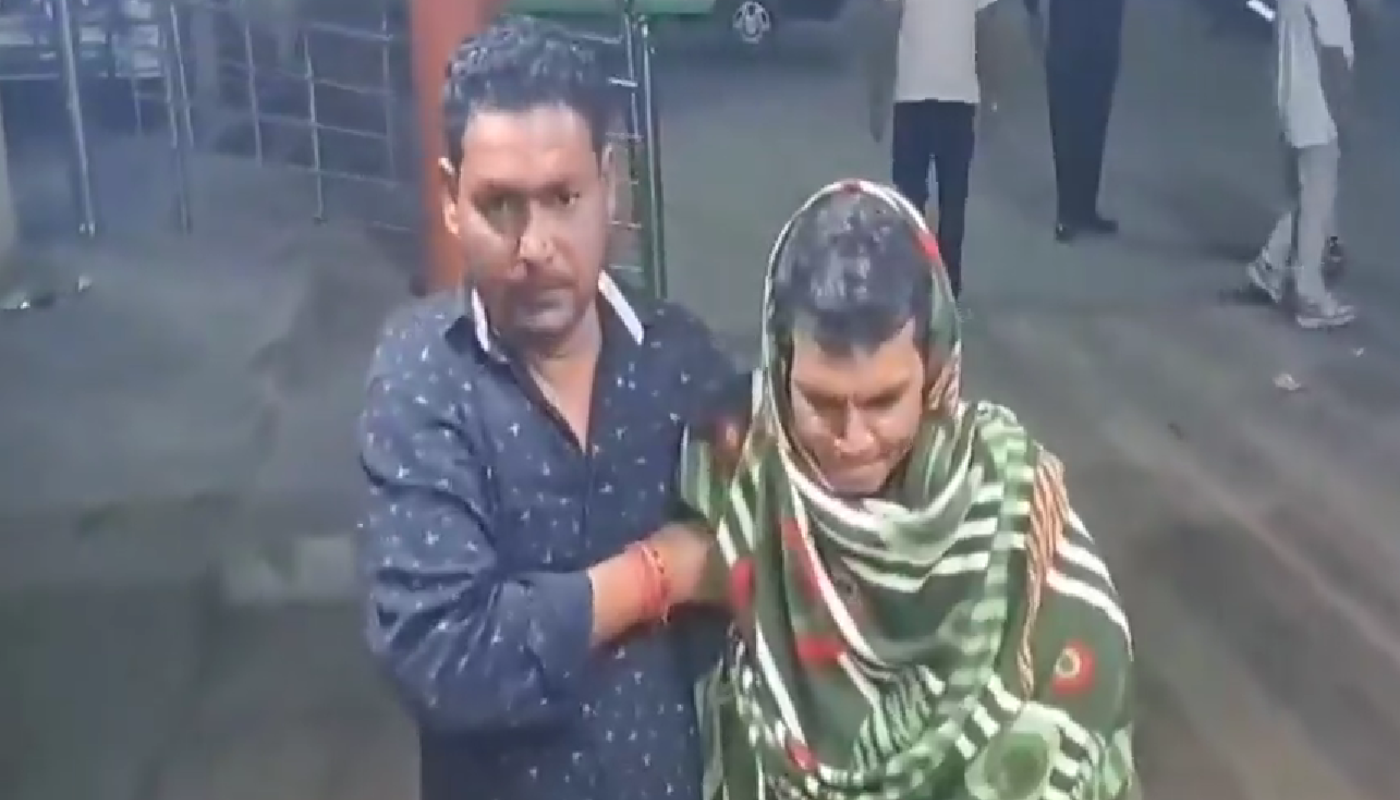
Case Summary
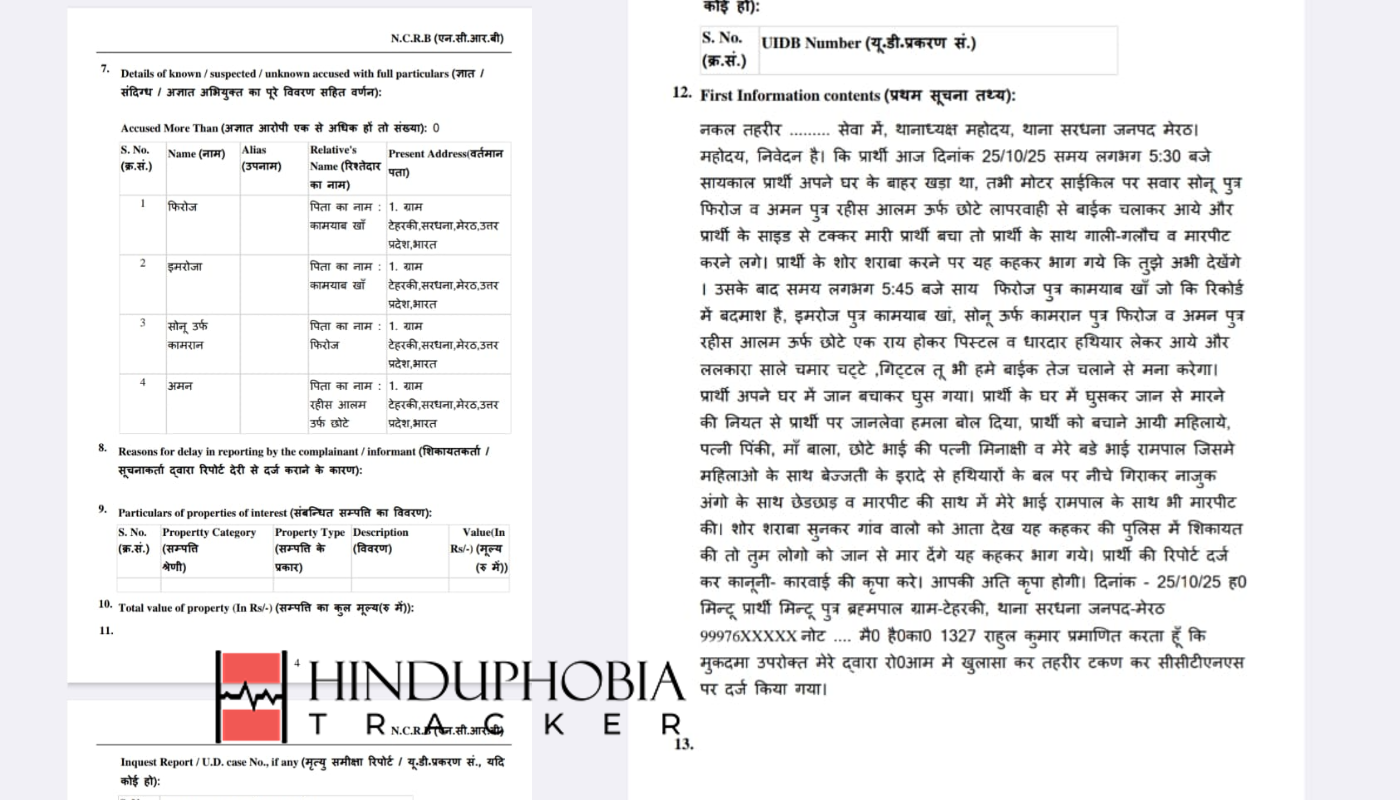
Hindus were attacked and abused with casteist slurs by Muslims in Tehraki village under the Sardhana area of Meerut, Uttar Pradesh, on the evening of October 25, 2025, following a minor altercation that escalated into a violent assault. The victims were identified as Kartik alias Vishnu, his father Mintu, his aunt Meenakshi, and his grandmother Bala, all belonging to the Hindu family. The conflict began earlier that morning when Kartik was on his way to a local shop. A Muslim man named Sonu sped past him on a motorcycle, nearly hitting pedestrians. When Kartik asked him to slow down, Sonu responded with caste-based slurs and verbal abuse. Locals intervened to defuse the situation temporarily. Later that evening, Sonu returned with several accomplices and launched a violent attack on Kartik. When his family members tried to rescue him, they too were beaten brutally. The attackers not only threatened to kill the victims but also continued to hurl caste-based and communal abuses during the assault before fleeing the scene. The injured were taken to the Sardhana Community Health Centre for treatment. The victims later lodged a complaint with the police. Station in-charge Dinesh Pratap Singh confirmed that an FIR had been registered against the accused under relevant sections, and strict action would follow.
Case Images
Why it is Hate Crime ?
The primary category in this case is: Attack not resulting in death. The subcategory under this is: Attacked for Hindu identity. In several cases, Hindus are attacked merely for their Hindu identity without any perceived provocation. A classic example of this category of religiously motivated hate crime is a murder in 2016. 7 ISIS terrorists were convicted for shooting a school principal in Kanpur because they got ‘triggered’ seeing the Kalava on his wrist and tilak that he had put. In this, the Hindu victim had offered no provocation except for his Hindu religious identity. The motivation for the murder was purely religious, driven by religious supremacy. Such cases where Hindus are targeted merely for their religious identity would be documented as a hate crime under this category. Another primary category in this case is: Hate speech against Hindus. The subcategory under this is: Anti-Hindu slurs, mocking faith. Anti-Hindu slurs and the deliberate mocking of the Hindu faith owing to religious animosity involve the usage of derogatory terms, stereotypes, or offensive references to religious practices, symbols, or figures. One of the common anti-Hindu slurs used against Hindus is “cow-worshipper” and “cow piss drinker”. The intention of using this term is to demean and mock Hindus as a group and their religious beliefs since Hindus consider the cow holy. Additionally, some symbols and the slurs attached to them have a historical context that exacerbates the insult, hate, stereotyping, dehumanisation and oppression against Hindus. Cow worship has been used for centuries to denigrate Hindus, insult their faith and oppress Hindus specifically as a religious group. There has been overwhelming documentation about how cow slaughter has been used to persecute Hindus, with cow meat being thrown in temples and places of worship. There has also been overwhelming documentation where cow meat (beef) has been force-fed to Hindus to either forcefully convert them to Islam or denigrate their faith. Apart from cow worship, the Swastika, which holds deep religious significance for the Hindus, has also been misinterpreted and distorted to use as a slur against Hindus. Similarly, the worship of the Shivling has been used by supremacist ideologies and religions to denigrate Hindus owing to religious animosity. Such slurs and denigration stem from inherent animosity and hate towards Hindus and their faith; therefore, it is categorised as hate speech targeted at Hindus specifically owing to their religious identity. This case has been included in the tracker because it represents a clear instance of targeted violence and hate speech against Hindus, motivated by religious hostility. The attack in Tehraki village was not a spontaneous act of personal anger but a deliberate assault in which the perpetrators, belonging to the Muslim community, used both physical violence and caste-laden communal slurs to humiliate and harm members of a Hindu family. The violence escalated from a trivial exchange into a premeditated assault carried out with collective intent, underscoring the presence of communal motivation rather than an isolated neighbourhood quarrel. The use of caste-specific slurs during the attack also reinforces the layered nature of anti-Hindu hate crimes. While it can be argued that such insults target the victim’s micro identity as a Dalit, it is important to recognise that from the standpoint of Abrahamic religious worldviews, distinctions of caste, region, or language within Hindu society are of little relevance. The animosity is directed fundamentally toward the Hindu identity itself, and the invocation of caste abuse serves only as an additional means of demeaning that broader religious identity. In this case, the attackers’ conduct, marked by violence, death threats, and explicit verbal abuse, reflects deep-seated hostility against Hindus as a collective. Such acts fall within the broader spectrum of religiously motivated hate crimes, where the Hindu identity of the victims becomes the central reason for their persecution. Therefore, the incident has been categorised under “Attack not resulting in death” and “Hate speech against Hindus,” both of which accurately capture the dual dimensions of physical aggression and verbal denigration driven by religious animus.
Victim Details
Total Victim
4
Deceased
0
Gender
- Male 2
- Female 2
- Third Gender 0
- Unknown 0
Caste
- SC/ST 4
- OBC 0
- General 0
- Unknown 0
Age Group
- Minor 0
- Adult 4
- Senior Citizen 0
- Unknown 0


Case Status
Complaint registered


Perpetrators Details
Perpetrators
Muslim Extremists
Perpetrators Range
From 2 To 5
Perpetrators Gender
male
 Sources




