Dalit boy killed in Uttar Pradesh; political parties spread false ‘upper-caste attack’ narrative to demean Hinduism
 India
India  24 October, 2025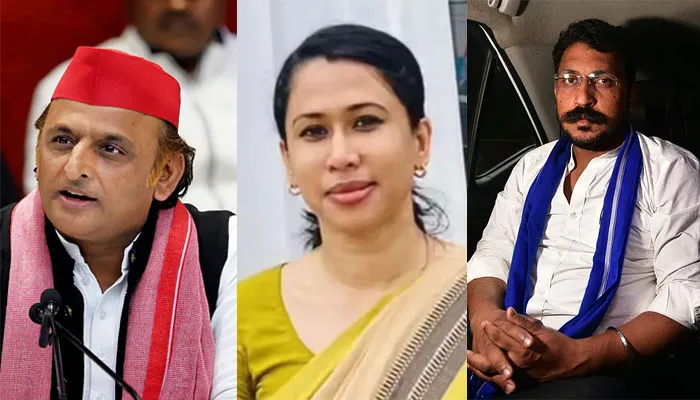
Case Summary
Several political parties, including the Indian National Congress, the Samajwadi Party, and the Azad Samaj Party, spread false and inflammatory claims that “upper caste” men had murdered a 17-year-old Dalit boy in Greater Noida. Congress national spokesperson Dr Shama Mohamed posted on X that “upper caste goons” had beaten the boy, while the Samajwadi Party media cell circulated messages naming the assailants as “Thakurs” and the Bhim Army used highly charged labels to stoke caste anger. These narratives circulated widely on social media before the facts recorded by police were clear. The factual record, as set out in the First Information Report, differed markedly from those political claims. The victim was 17-year-old Aniket Jatav. He was badly beaten on 15 October 2025 near Syed Pokar while celebrating his birthday with friends. An FIR was registered on 17 October 2025 by his uncle Momchand under multiple sections of the Bharatiya Nyaya Sanhita and under the SC/ST (Prevention of Atrocities) Act; after Aniket died of his injuries on 24 October 2025, the police added the provision for murder. The FIR named seven men, Yuvraj, Jeetu, Rachit, Bharat, Anjit, Pawan and Sunit, and listed a further 10 to 12 unidentified persons. The complaint said the group attacked Aniket and his companions with sticks and iron rods, hurled casteist slurs, left Aniket unconscious in nearby bushes, and took property, including a gold chain and a mobile phone. Witnesses and the complainant said the group had earlier threatened Aniket. Police investigations identified the seven men as members of the Meena community, which is classified as a Scheduled Tribe, not an upper caste. Police arrested Yuvraj Meena and Jitu Meena on 19 October 2025 and later arrested Rachit and Ankit on 24 October 2025; multiple police teams continued searches for the remaining suspects. Senior police officials stated that the victims and the men had prior quarrels, and that investigators were examining motive and previous incidents between the groups. The rapid politicisation of the case by several parties had the immediate effect of fuelling caste tensions and amplifying misinformation. Political actors framed the episode as a simple “Dalit versus upper caste” crime without waiting for verification of the police record, while the official FIR and police statements pointed to a different communal and criminal configuration. Local elected representatives from several parties met the bereaved family and promised action; police said they were pursuing all leads and assured that those responsible would face the law. In sum, the boy, Aniket, was beaten on 15 October 2025, hospitalised with severe head injuries, and died on 24 October 2025; seven men were named in the FIR and several arrests followed. Claims by Congress, Samajwadi Party channels, and others that upper caste perpetrators were responsible were not supported by the police record, which identified the named suspects as Meena community members.
Why it is Hate Crime ?
The primary category in this is: Hate speech against Hindus. The subcategory under this is: Anti-Hindu slurs, mocking faith. Anti-Hindu slurs and the deliberate mocking of the Hindu faith owing to religious animosity involve the usage of derogatory terms, stereotypes, or offensive references to religious practices, symbols, or figures. One of the common anti-Hindu slurs used against Hindus is “cow-worshipper” and “cow piss drinker”. The intention of using this term is to demean and mock Hindus as a group and their religious beliefs since Hindus consider the cow holy. Additionally, some symbols and the slurs attached to them have a historical context that exacerbates the insult, hate, stereotyping, dehumanisation and oppression against Hindus. Cow worship has been used for centuries to denigrate Hindus, insult their faith and oppress Hindus specifically as a religious group. There has been overwhelming documentation about how cow slaughter has been used to persecute Hindus with cow meat being thrown in temples and places of worship. There has also been overwhelming documentation where cow meat (beef) has been force-fed to Hindus to either forcefully convert them to Islam or denigrate their faith. Apart from cow worship, the Swastika – which holds deep religious significance for the Hindus – has also been misinterpreted and distorted to use as a slur against Hindus. Similarly, the worship of the Shivling has been used by supremacist ideologies and religions to denigrate Hindus owing to religious animosity. Such slurs and denigration stem out of inherent animosity and hate towards Hindus and their faith, therefore, it is categorised as hate speech targeted at Hindus specifically owing to their religious identity. This case has been added to the tracker because it demonstrates a deliberate attempt to manufacture and amplify anti-Hindu disinformation through the manipulation of caste narratives. The false claim that a “Dalit boy was murdered by upper-caste Hindus” was not merely an error in reporting or premature political commentary; it was a calculated distortion designed to present Hindu society as inherently violent, oppressive, and divisive. By circulating this narrative even before the police investigation was complete, several political actors sought to deepen caste fissures within Hindu society and reinforce the false image of Sanatan Dharma as a discriminatory and hierarchical faith that victimises its own adherents. The intention behind spreading such misinformation was not to seek justice for the victim but to vilify the Hindu community as a whole. The portrayal of “upper-caste Hindus” as aggressors and “Dalits” as perpetual victims serves a long-standing ideological project that seeks to delegitimise Hinduism by associating it with systemic cruelty. In this particular case, the narrative was shown to be baseless — the accused were from the Meena community, categorised as a Scheduled Tribe, and not from any so-called upper-caste group. Yet, the falsehood continued to circulate because it served a political and ideological purpose: to depict Hindus collectively as morally corrupt and socially oppressive. Such narratives constitute hate speech against Hindus because they rely on centuries-old tropes used to demonise Hindu society. They imply that caste-based oppression is not a historical or social problem with varied causes, but rather a natural outcome of Hindu belief itself. This framing targets the faith, not just individuals, by asserting that Sanatan Dharma sanctions inequality and violence. The result is the systematic dehumanisation of Hindus, portraying them as inherently bigoted, incapable of compassion, and undeserving of moral legitimacy. Furthermore, this kind of misinformation functions as a form of psychological warfare. It seeks to alienate different sections of Hindus from one another by instilling resentment among marginalised groups and guilt or self-hatred among others. It attempts to turn Hindus against their own civilisation by persuading them that their religion is the source of their suffering. This deliberate erosion of internal trust within the community is a key objective of anti-Hindu propaganda. By creating a constant flow of fabricated or distorted “atrocity literature,” such campaigns normalise the view that Hinduism is a faith that must be resisted or dismantled. The broader consequence of such falsehoods is the legitimisation of hatred and violence against Hindus. When society is repeatedly told that Hindus represent an oppressive majority that thrives on discrimination, any hostility towards them begins to appear as “resistance” rather than prejudice. This inversion of morality allows anti-Hindu sentiment to flourish unchecked. It also pressures Hindus, particularly those belonging to historically disadvantaged castes, to distance themselves from their own religion under the belief that it is irredeemably unjust. It is important to mention here that the Bhim Army chief Chandrashekhar Azad first made a hate-filled and misleading post on social media, spreading the false “upper-caste attack” narrative. While the Bhim Army presents itself as a champion of Dalit rights, its actions and affiliations often contradict this claim. Dalits are very much Hindus, yet the Bhim Army frequently targets Hindu symbols, festivals, and practices, including those held sacred by Dalits themselves. This pattern suggests that the organisation’s agenda is less about genuine Dalit upliftment and more aligned with broader anti-Hindu narratives that seek to divide and weaken Hindu society from within. This becomes particularly apparent when the Bhim Army aligns with leftist and Islamist platforms, where identity politics is weaponised against Hindus. In such spaces, the micro identities of caste, region, and language are secondary; what matters most is religious identity. It is the Hindu identity, regardless of caste, that often becomes the target of animosity. As seen in cases where Dalit families were attacked for displaying Hindu symbols or worshipping deities, the hostility stems not from caste differences, but from a disdain for Hindu religiosity. For example, on May 19, 2020, reports emerged in which a Dalit family in Bihar’s Kishanganj district accused the local Bhim Army unit of attacking them for their beliefs, desecrating a temple as they objected to their reverence for Hindu deities and saffron flags. Similarly, on June 29, 2021, in Saharanpur, Uttar Pradesh, a Hindu named Saurabh Sharma was reportedly attacked by Bhim Army members over political differences. The assailants used swords and rods, causing severe injuries, and threatened to eliminate the Brahmin community from the area. Moreover, Bhim Army chief Chandrashekhar Azad himself has repeatedly made statements and taken positions that reflect his anti-Hindu stance. For instance, he has publicly endorsed conversion as a political weapon, invoking B.R. Ambedkar’s decision to leave Hinduism, and has actively supported movements that call for a rejection of Hindu festivals and practices. In fact, Chandrashekhar Azad's political trajectory has strongly focused on building a Dalit-Muslim alliance, a strategy that became particularly visible during his active participation in the anti-CAA (Citizenship Amendment Act) protests that culminated in the Delhi anti-Hindu Riots 2020. His brand of politics, under the banner of Dalit-Muslim unity, has contributed to narratives that vilify Hindu traditions and exacerbate targeted attacks against Hindus. Therefore, the inclusion of this case in the tracker is not about the criminal incident alone but about the coordinated disinformation campaign that followed. The attempt to frame the murder as an “upper caste versus Dalit” crime, despite clear evidence to the contrary, reveals an intent to malign Hindu identity and weaken the social cohesion of Hindu society. The purpose of this false narrative was not to expose injustice but to weaponise a tragedy to serve ideological hostility against Hinduism and its adherents. Such manipulation of caste dynamics to demonise an entire faith falls squarely within the definition of a hate crime against Hindus. It targets their collective identity, distorts the moral and cultural foundations of their religion, and fosters division and animosity within their community. It is for these reasons that this case has been classified under “Hate speech against Hindus,” specifically under the subcategory “Anti-Hindu slurs, mocking faith,” as it reflects a broader pattern of ideological hostility aimed at discrediting, delegitimising, and dehumanising the Hindu faith and its followers. Disclaimer: The date of the incident has been recorded as 24 October 2025, corresponding to the day Bhim Army chief Chandrashekhar Azad first made a hate-filled and misleading post on social media, spreading the false “upper-caste attack” narrative. This date has therefore been taken as the reference point for documenting the incident in the tracker.


Case Status
Unknown


Perpetrators Details
Perpetrators
Others
Perpetrators Range
N/A
Perpetrators Gender
both
 Sources




