Hindu festival Diwali maligned: Congress leader links lighting diyas with Hindu-Muslim divide and Dalit oppression
 India
India  20 October, 2025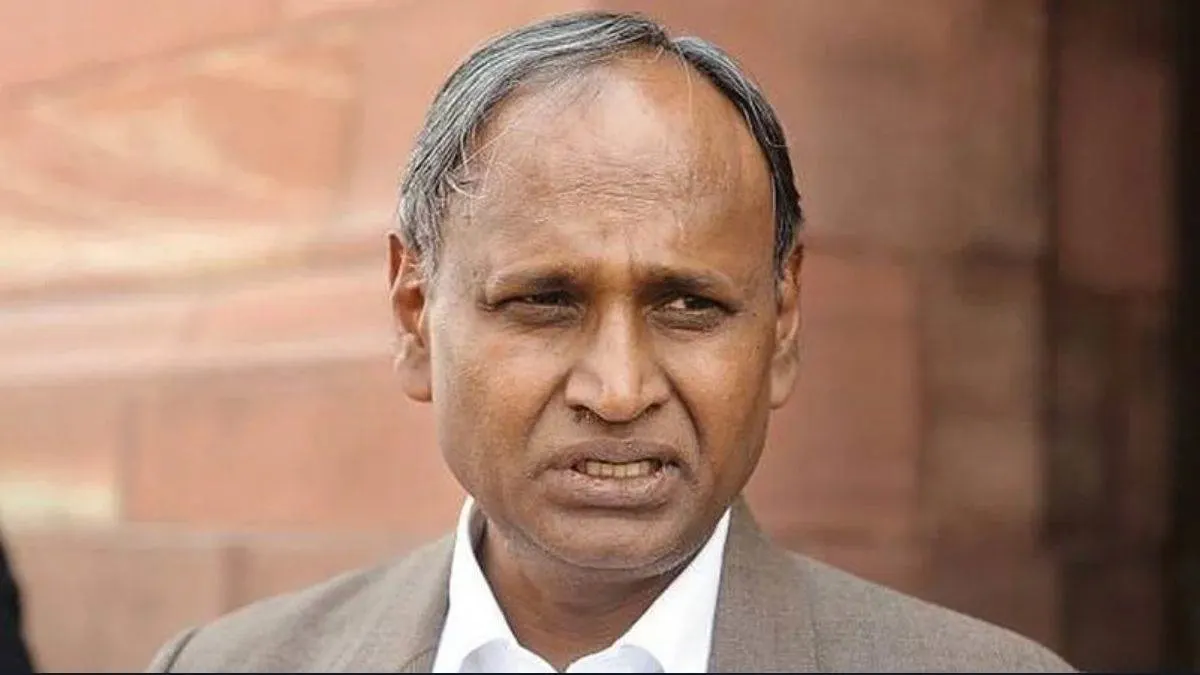
Case Summary
Congress leader Udit Raj criticised the celebration of Diwali in Ayodhya, where more than 26.17 lakh lamps were lit on the ghats of the Saryu River during Deepotsav. He said that those lighting the lamps were responsible for creating divisions between Hindus and Muslims and for the oppression of Dalits. Raj told the media that lighting lamps would not change anything as India faced deeper problems like crimes against Dalits, poverty, and unemployment. Continuing his line of criticism, Raj cited post-Diwali pollution levels in Delhi, accusing the government of negligence and claiming that despite the Supreme Court’s ban on non-green crackers, air quality worsened to “very poor.” However, his selective concern appeared one-sided — he attributed pollution solely to Hindu festivities while ignoring other major factors such as industrial emissions and stubble burning, which experts identify as primary causes. Raj further claimed that anyone questioning such issues was labelled anti-Hindu and argued that speaking for public health and the environment should not be seen as opposing tradition. He also questioned the educated and wealthy individuals spending large sums on fireworks, saying that civil society must take responsibility and that nothing is more important than health.
Why it is Hate Crime ?
The primary category in this case is: Hate speech against Hindus. The subcategory under this is: Anti-Hindu slurs, mocking faith. Anti-Hindu slurs and the deliberate mocking of the Hindu faith owing to religious animosity involve the usage of derogatory terms, stereotypes, or offensive references to religious practices, symbols, or figures. One of the common anti-Hindu slurs used against Hindus is “cow-worshipper” and “cow piss drinker”. The intention of using this term is to demean and mock Hindus as a group and their religious beliefs since Hindus consider the cow holy. Additionally, some symbols and the slurs attached to them have a historical context that exacerbates the insult, hate, stereotyping, dehumanisation and oppression against Hindus. Cow worship has been used for centuries to denigrate Hindus, insult their faith and oppress Hindus specifically as a religious group. There has been overwhelming documentation about how cow slaughter has been used to persecute Hindus with cow meat being thrown in temples and places of worship. There has also been overwhelming documentation where cow meat (beef) has been force-fed to Hindus to either forcefully convert them to Islam or denigrate their faith. Apart from cow worship, the Swastika – which holds deep religious significance for the Hindus – has also been misinterpreted and distorted to use as a slur against Hindus. Similarly, the worship of the Shivling has been used by supremacist ideologies and religions to denigrate Hindus owing to religious animosity. Such slurs and denigration stem out of inherent animosity and hate towards Hindus and their faith, therefore, it is categorised as hate speech targeted at Hindus specifically owing to their religious identity. This case has been added to the tracker because the statement made by Congress leader Udit Raj constitutes a direct act of hate speech against Hindus by denigrating one of their most sacred festivals. His remark that “those lighting lamps are responsible for Hindu-Muslim division and Dalit oppression” is not a critique of governance or environmental policy; it is a sweeping generalisation targeting Hindus as a community for observing a core religious ritual. By associating the act of lighting diyas with social division and oppression, Raj effectively vilified a Hindu religious tradition and framed it as morally corrupt, thereby mocking faith in the guise of social commentary. Diwali holds profound spiritual, cultural, and civilisational importance in Hinduism. It celebrates the victory of light over darkness, knowledge over ignorance, and righteousness over evil. The lighting of diyas (oil lamps) is not merely a decorative act but a sacred ritual symbolising the triumph of dharma and the illumination of both the home and the inner self. It is one of the few Hindu observances that transcends caste, regional, and linguistic distinctions, uniting people across India in a collective celebration of hope and moral renewal. To denigrate this act or associate it with divisiveness is to attack the very foundation of Hindu cultural identity. Udit Raj’s statement, made in the context of Ayodhya’s Deepotsav, an event celebrating the return of Bhagwan Ram to his kingdom after exile, carries even deeper implications, as Ayodhya represents the spiritual heart of Hindu civilisation. His comments implicitly mock those who participate in this celebration, suggesting that expressions of Hindu devotion and joy are inherently communal or socially regressive. The invocation of Dalit oppression in this context is both misleading and exploitative. By linking the sacred act of lighting diyas during Diwali with caste-based oppression, Udit Raj distorted a religious observance into a political weapon. This rhetorical manoeuvre falsely projects Hindu faith itself as the root of social injustice, thereby delegitimising an entire civilisation’s spiritual traditions. The struggle against caste discrimination is an essential moral pursuit, but conflating it with Diwali, a festival that symbolically celebrates equality of light in every home, reflects deep-seated prejudice against Hinduism rather than genuine concern for social reform. In Hindu tradition, Diwali is celebrated by people of all castes and communities; its rituals are inherently inclusive, affirming the dignity of every participant through the symbolism of shared illumination. Using Dalit suffering to malign Hindu faith not only undermines the sincerity of social justice discourse but also reinforces the colonial-era narrative that Hinduism itself is oppressive. This narrative continues to fuel anti-Hindu sentiment today. Such rhetoric falls squarely within the category of hate speech against Hindus, specifically the subcategory of “Anti-Hindu slurs, mocking faith.” It perpetuates prejudice against Hindu customs, normalises disdain for Hindu worship, and equates the most cherished expressions of faith with bigotry and oppression. By portraying the lighting of diyas as an act of moral wrongdoing, it encourages a social climate where Hindu religious observance itself becomes a target of suspicion and derision. This case is therefore recorded to highlight the pattern of systemic belittling and moral inversion directed at Hindu practices under the guise of political or social critique. Disclaimer: It is important to clarify that none of the media sources covering this case have specified the exact date on which the hate speech against Hindus was made by Udit Raj. Therefore, for documentation purposes, we have recorded the date based on when the incident was reported in the media.


Case Status
Unknown


Perpetrators Details
Perpetrators
Others
Perpetrators Range
One Person
Perpetrators Gender
male
 Sources




