Hindus assaulted in Nalanda during Diwali celebrations after Muslim mob objected to bursting crackers, threatened with 'Sar Tan Se Juda'
 Nalanda, Bihar, India
  19 October, 2025
Case Summary
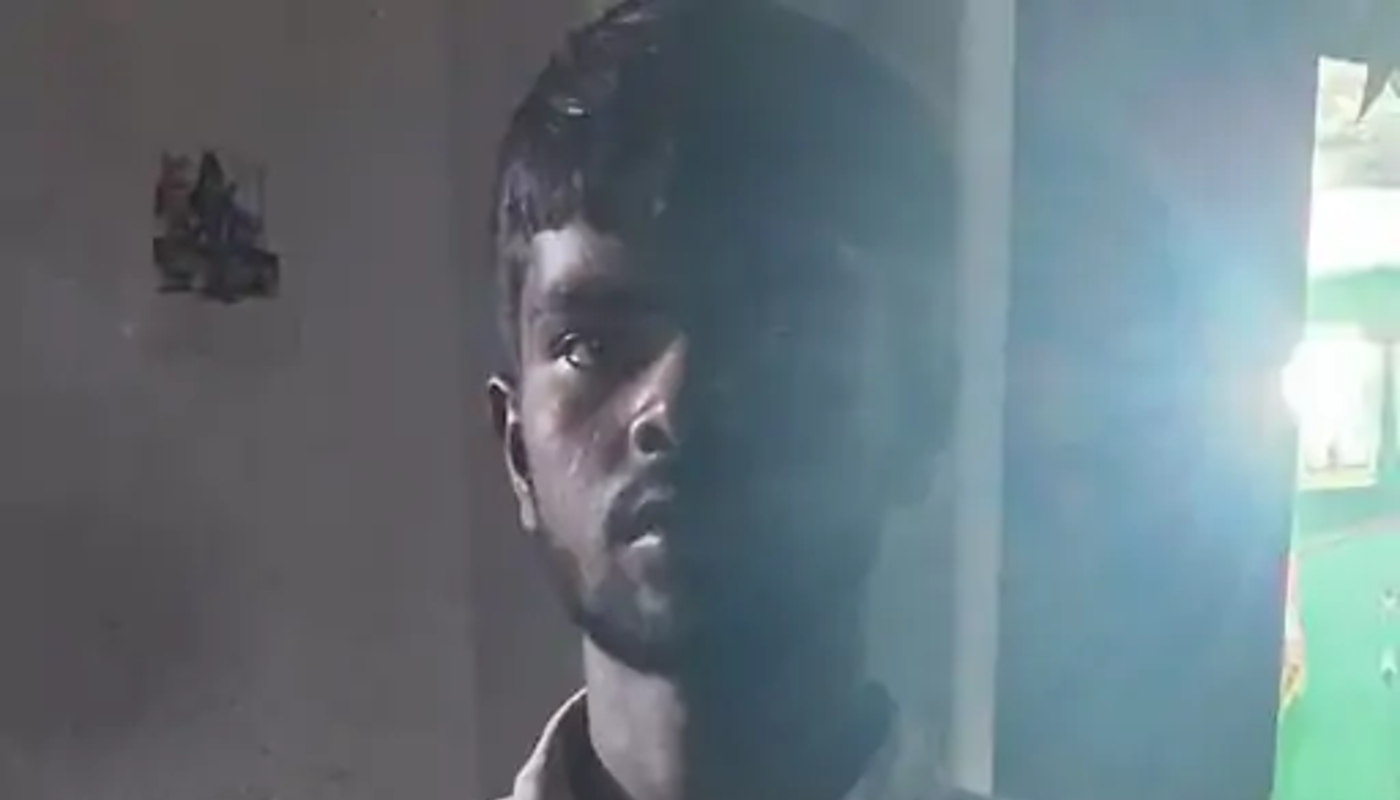
Hindus were attacked in Satua village under Giriyak block of Nalanda district of Bihar during Diwali celebrations. The incident resulted in several injuries, with three of the Hindu victims receiving treatment at Bihar Sharif Sadar Hospital. Due to the heightened tensions in the village, police forces were deployed to maintain order. According to Nitish Kumar, a member of the victim’s family, on 20 October 2025, evening, around 7 PM, they were returning to Satua after shopping at Giriyak market. At that time, children in the village were celebrating the festival by bursting crackers in front of their homes. A group of Muslims, including Alam Khan and Farhan Khan, sons of Usman Khan; Raza Ashrafi, son of Abdul Samad Khan; Moin Khan, son of Nisar Khan; and Shahbaz, son of Javed Khan, suddenly attacked them. The attackers used swords, bricks, and stones and threatened villagers, saying, “No one will burst crackers, or heads will be separated from bodies.” When the victims protested, the attackers intensified their assault. Several people were seriously injured in the attack, including Nitish Kumar’s brothers Bunty Kumar and Manish Kumar, Chandan Kumar, Doma Chaudhary (son of Parmeshwar Chaudhary), and Mahendra Chaudhary. The injuries included broken knees, leg wounds, and severe head trauma. Giriyak Police Station in-charge Shrikant Kumar stated that complaints had been filed by both communities. One side lodged an FIR naming five individuals and five to six unidentified persons, while the other side named three people. Police forces remained deployed in Satua village, and the situation was under control.
Case Images
Why it is Hate Crime ?
The primary category in this case is: Attack not resulting in death. The first subcategory under this is: Attacked for Hindu identity. In several cases, Hindus are attacked merely for their Hindu identity without any perceived provocation. A classic example of this category of religiously motivated hate crime is a murder in 2016. 7 ISIS terrorists were convicted for shooting a school principal in Kanpur because they got ‘triggered’ seeing the Kalava on his wrist and tilak that he had put. In this, the Hindu victim had offered no provocation except for his Hindu religious identity. The motivation for the murder was purely religious, driven by religious supremacy. Such cases where Hindus are targeted merely for their religious identity would be documented as a hate crime under this category. The second subcategory under this is: Communal clash/attack. Communal clash is a form of collective violence that involves clashes between groups belonging to different religious identities. For a communal clash between Hindus and non-Hindus to qualify as a religiously motivated hate crime, the trigger of the violence itself would have to be anti-Hindu in essence. For example, if there is a Hindu religious procession that comes under attack from a non-Hindu mob and after the initial attack, Hindus retaliate in self-defence, leading to a communal clash between the two religious communities. While at a later stage, both communities are involved in the clash/violence, the initial trigger of the violence was by the non-Hindu mob against the Hindus and therefore, it could safely be termed as an anti-Hindu violence. Further, the trigger would also have to be religiously motivated. In the cited example, the attack by the non-Hindu mob was against religious processions and therefore, can be concluded to be religiously motivated. In some cases, the trigger may be non-religious, however, it develops into religious violence against Hindus at a later stage. In such cases too, the foundational animosity towards Hindus becomes the motivating factor of the crime and therefore, it would be classified as a religiously motivated hate crime against Hindus under this category. Another primary category in this case is: Hate speech against Hindus. The subcategory under this is: Violent threats. Violent threats, explicit, implicit or implied, is the most dangerous form of hate speech since it goes beyond discriminatory and prejudicial language to express the intent of causing harm to an individual or a group of people based on their religious identity and faith. There could be several different kinds of threats that are issued to Hindus based on religious animosity. An explicit threat would mean the direct threat of violence towards an individual Hindu, a group of Hindus or Hindus at large. Physical violence, death threats, threats of destruction of property belonging to Hindus and threats of genocide would mean explicit threats against Hindus for their religious identity. Implicit threats may not be a direct threat but implied through the use of symbols of actions – for example – in the Nupur Sharma case, other than explicit threats, there were also implicit threats when Islamists took to the streets to burn and beat her effigies. It implies that they want to do the same to Nupur Sharma – thereby is considered an implicit threat. Violent threats can be delivered in person, through letters, phone calls, graffiti, or increasingly through social media and other online platforms. It would be important to understand that a threat – explicit or implicit, online or offline – to an individual who happens to be a Hindu does not qualify as a religiously motivated threat. Such a threat, while vile and dangerous, could be owing to non-religious reasons and/or personal animosity. To qualify as a religiously motivated threat, it would need to exhibit an indication that the individual is being targeted for religious reasons and/or owing to his/her religious identity as a Hindu. This case has been added to the Hinduphobia Tracker because it represents a clear instance of targeted violence against Hindus, motivated by religious animosity, and marked by both physical assault and explicit violent threats. The attack in Satua village during Diwali celebrations exemplifies how Hindus were assaulted solely for their religious identity and for observing a traditional festival custom — bursting crackers. The violence began when Hindu children were innocently bursting firecrackers in front of their homes, a benign and customary form of Diwali celebration that did not provoke anyone. Yet, this simple expression of joy and faith triggered the inherent animosity and sense of religious supremacy harboured by the Muslim assailants, who perceived even the sound of Hindu festivity as an affront. Their aggression stemmed not from any real provocation but from deep-seated hostility toward Hindu religious expression itself. Hindus were thus attacked solely for practising their faith. The attackers’ focus on Hindu identity reflects a broader pattern of anti-Hindu violence across India, where even peaceful religious observances are met with intolerance and aggression. What unfolded in Satua was not a spontaneous community clash but a deliberate assault targeting Hindus for celebrating Diwali. The perpetrators used swords, bricks, and stones, injuring several people, including children. Their threat- “No one will burst crackers, or they would be beheaded”- carried the unmistakable echoes of the Islamist chant “Sar Tan Se Juda,” a slogan synonymous with religiously motivated beheadings. This phrase, meaning “beheading for blasphemy,” has become a rallying cry for Islamists who seek to justify violence against non-Muslims, particularly Hindus, under the pretext of defending religious sentiments. The “Sar Tan Se Juda” threat represents the most severe form of hate speech, conveying both intent and ideology. It has been invoked in numerous incidents leading to the murders of Hindus such as Kanhaiya Lal in Udaipur and Umesh Kolhe in Amravati, following Islamist outrage over alleged blasphemy. Originating from radical outfits in Pakistan, this chant has spread across regions and has been weaponised in India to terrorise Hindus, silence dissent, and criminalise Hindu expression. Its invocation in Satua signifies the same mindset — a violent assertion of religious supremacy and an attempt to suppress Hindu visibility. The explicit nature of the threat shows that the attackers were driven not by any personal grievance but by animosity toward Hindus as a group. Their actions targeted the very heart of Hindu practice during Diwali — the bursting of crackers symbolising the victory of light over darkness. Preventing Hindus from celebrating Diwali in their own village was both a symbolic and physical act of subjugation, designed to intimidate the community and discourage open expressions of Hindu faith. Moreover, the assault caused serious injuries. Children and other bystanders were terrorised, reinforcing that the intent was not individual retaliation but the collective intimidation of Hindus. Such acts aim to impose fear and restrict Hindus from celebrating their religion publicly, perpetuating a climate of suppression. Documenting this case is crucial because it captures how even the most benign Hindu customs, like children bursting crackers during Diwali, are met with extremist hostility, exposing an entrenched pattern of religious hatred. The combination of premeditated assault, sar tan se juda threats, and targeted disruption of Hindu practices makes this a textbook example of a religiously motivated hate crime driven by anti-Hindu prejudice. Disclaimer: The number of perpetrators in this incident has been recorded as 11, based on the FIR filed, which names five individuals and references six unidentified persons.


Case Status
Complaint registered


Perpetrators Details
Perpetrators
Muslim Extremists
Perpetrators Range
From 10 to 100
Perpetrators Gender
male
 Sources




