Annual Mata Jagran forcefully stopped in Lutyens Delhi apartment by MP Saket Gokhale, residents threatened
 Delhi, Delhi, India
  8 November, 2024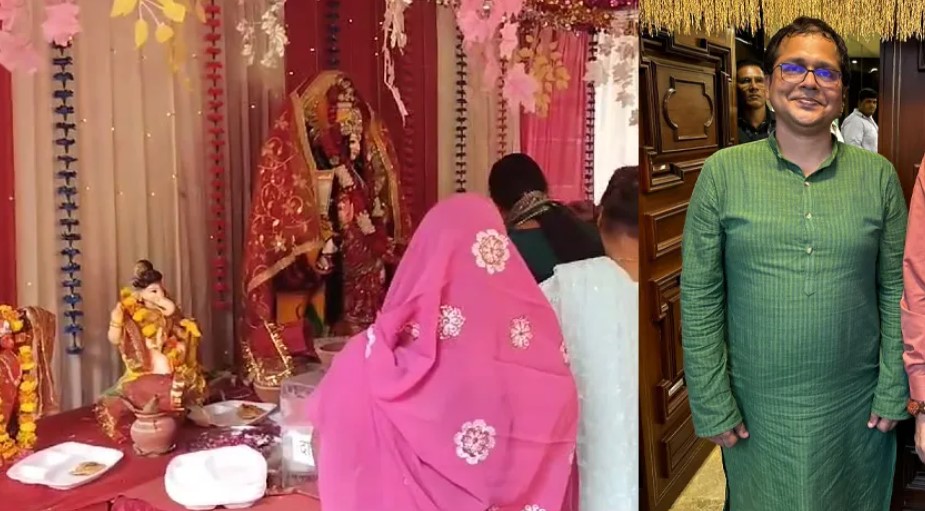
Case Summary
On Saturday, November 9, 2024, police in New Delhi’s capital forcibly halted a Durga Mata Jagran event, which was set to begin on Dr Vishwambhar Das Marg. This action was taken on the orders of Saket Gokhale, a Member of Parliament from the Trinamool Congress (TMC) party. Devotees pleaded with Gokhale, appealing to his understanding of their faith, but he remained unmoved. Eventually, the attendees were dispersed, leaving the pandal silent for the entire night. The event was organized by the aides assigned to ministers and MPs. Circumstances forced the attendees to conclude the rituals with just an aarti, without bhajans. MS Flats residents told OpIndia that they had organized Durga Puja at the same location for over two decades. The celebration, beginning during Navratri, lasts 35 days, during which residents observe fasting. A feast (bhandara) was scheduled for Sunday, following the Jagran on Saturday, and the idol immersion was to take place on Monday. Residents, including women, children, and the elderly, gathered on Saturday for the Jagran that started around 5 PM. The Jagran had only been underway for 15 minutes when the police arrived at the spot, and ordered the immediate shutdown of the religious event. When questioned, the police stated that MP Saket Gokhale had raised objections and asked to stop it. Some attendees saw this as an insult to their faith, but when they protested, the police threatened to send them to jail. Scared of police action, they switched off the music system. Devotees even pleaded to clap and sing bhajans without the use of loudspeakers, but the police did not even allow it. The cops dispersed the crowd forcing them to leave the pandal deserted overnight.
Why it is Hate Crime ?
Based on the details, this case has been placed under the hate tracker's prime category- Restriction/ban on Hindu practices. Further, within this category, two sub-categories have been chosen here. The first is- Restriction on expression of Hindu identity. An example of the state-affected prejudicial and targeted orders against the Hindu community would be a government denying the right of a Hindu or a group of Hindus to hold a religious procession owing to the animosity of non-Hindu groups. Denial of the religious right of the Hindus to assuage the non-Hindu group which harbours animosity to a point where it could lead to violence against Hindus is not only a failure of law and order but is a prejudicial order against Hindus, denying them their fundamental rights to express their religious identity. An example of a hate crime against Hindus by a non-Hindu would be a non-Hindu institution forcing its Hindu employees to abandon religious symbols that a Hindu would wear as an expression of faith owing to inherent prejudice against the faith professed by the victim or a non-Hindu group of people restricting a Hindu group from constructing a place of worship simply because the demography of the area in which the temple is being built is dominated by non-Hindus. Such actions are driven by religious animosity and/or prejudice against Hindus and their faith and would therefore be categorized as a hate crime. The second sub-category under which this case has been placed is- Administration restricting religious practice. In several cases, it is seen that the administration/state disallows a religious practice owing to prejudicial orders and concerns, targeted specifically against the Hindu community. Such restriction/prohibition would be considered documented as a hate crime because the orders are often a result of pressure by groups that harbour animosity towards Hinduism and Hindus. Often, the restriction by the authorities is driven by bias, hostility, or prejudice against the specific community being stopped from holding a religious practice, by pressure groups that harbour animosity towards Hindus, intrinsic to their faith. Since practices are intrinsic to the faith of the Hindus, such prejudicial restriction is considered a curtailing of the fundamental rights of the Hindu community. In several cases, for example, the authorities ban a Hindu religious practice due to pressure from groups opposed to the religion. In other instances the prohibition is selectively enforced against one religious group (Hindus) while others are allowed to proceed. There are still other cases where the authorities preemptively restrict a religious practice by Hindus because those who hold animosity towards Hindus may get “provoked” leading to them being violent, thereby assuaging the sentiments of those who hold animosity towards Hindus by curtailing the religious rights of Hindus. Such acts and orders are prejudiced, indicating discriminatory motives owing to the capitulation to groups that harbour animosity towards Hindus and therefore, would be categorized as a religiously motivated hate crime since the original pressure leading to the order itself is a result of hatred/bias/prejudice/religious hate against Hindus. Durga Mata Jagran was an important religious event for the local Hindu community, which had been celebrating it for over two decades. The abrupt interruption of this event, especially following the plea of the devotees to express their religious devotion through bhajans and clapping, signifies an infringement on their right to freely practice their religion. The police, under the directive of a political figure- Saket Gokhale, not only curtailed the physical expression of their faith by shutting down the event but also imposed an atmosphere of fear by threatening attendees with arrest. This action undermines the fundamental right to religious freedom and highlights a clear bias against Hindu religious practices, restricting the community from participating in long-established traditions. The forced cessation of the Jagran and the lack of permission to perform even a toned-down version of the rituals demonstrate an overt attempt to limit the expression of Hindu religious identity and practices. Since the arbitrary action taken against the Hindu devotees was prejudicial to the rights of Hindus and stems from animosity and prejudice against Hindu beliefs, this case is being categorised as a religiously motivated hate crime.


Case Status
Unknown


Perpetrators Details
Perpetrators
Others
Perpetrators Range
One Person
Perpetrators Gender
male
 Sources




