Muslim mob obstruct construction of a road meant for facilitating Chhath puja claiming the land belongs to Mosque
 Bhagalpur, Bihar, India
  5 November, 2024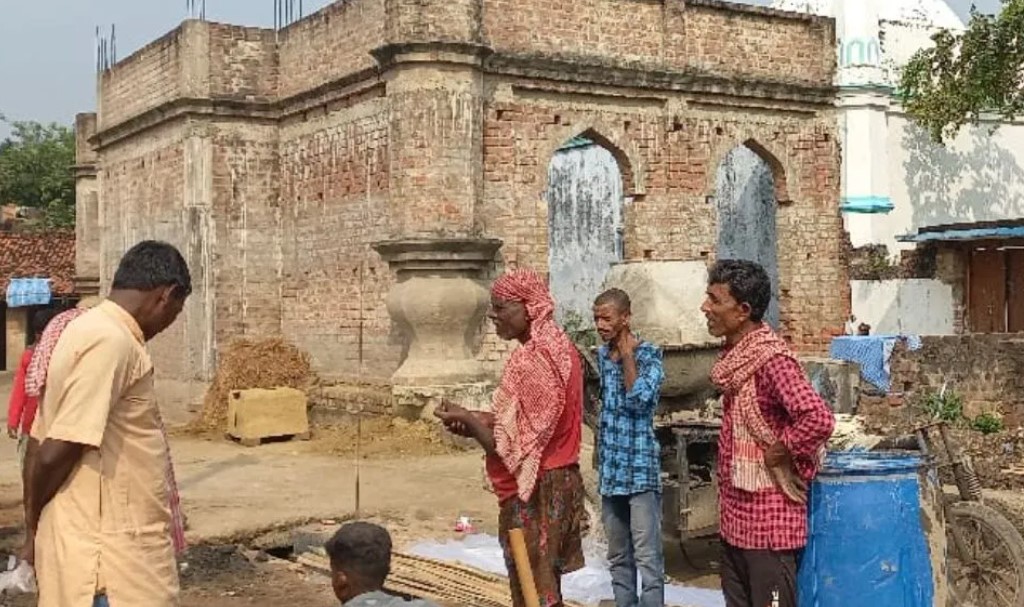
Case Summary
In Bhagalpur, Bihar, tensions arose when Hindus and Muslims clashed over road construction intended for the Chhath festival in Kurma Panchayat, Rasalpur police station area. The road was being built for Chhath devotees’ convenience, but members of the Muslim community opposed the construction, claiming the land belonged to a mosque. When police requested proof of ownership, the opposing group could not provide documentation. They cited disturbances caused by DJ music during idol immersions and stated that such activities disrupt their namaz. Allegedly, they have even opposed funeral processions through the area. Following intervention by local police and negotiations between both parties, construction resumed peacefully.
Why it is Hate Crime ?
This case has been added to the tracker under the prime category- Restriction/ban on Hindu practices. Under this, the sub-category selected is- Restriction on expression of Hindu identity. An example of the state-affected prejudicial and targeted orders against the Hindu community would be a government denying the right of a Hindu or a group of Hindus to hold a religious procession owing to the animosity of non-Hindu groups. Denial of the religious right of the Hindus to assuage the non-Hindu group which harbours animosity to a point where it could lead to violence against Hindus is not only a failure of law and order but is a prejudicial order against Hindus, denying them their fundamental rights to express their religious identity. An example of a hate crime against Hindus by a non-Hindu would be a non-Hindu institution forcing its Hindu employees to abandon religious symbols that a Hindu would wear as an expression of faith owing to inherent prejudice against the faith professed by the victim or a non-Hindu group of people restricting a Hindu group from constructing a place of worship simply because the demography of the area in which the temple is being built is dominated by non-Hindus. Such actions are driven by religious animosity and/or prejudice against Hindus and their faith and would therefore be categorized as a hate crime. The other primary category is 'attack not resulting in death' under the sub-category, 'attacked for crossing Muslim area'. One of the reasons that Hindus get attacked unprovoked specifically by Islamists is for crossing ‘Muslim areas’. Essentially, Muslim mobs often attack Hindus crossing or present in certain areas which have a majority Muslim population. It has often been cited as one of the reasons to blame Hindus for attacks against themselves, signalling that Hindus displaying religious symbols, taking our religious processions or crossing any area which is dominated by Muslim residents is a provocation in and of itself. These areas are mostly ghettoized areas where mobs mobilize quickly to attack Hindus for a variety of reasons like playing music during a religious procession, crossing a mosque, wearing a tilak or any other religious symbol in a Muslim-dominated area, praying at a local temple in that area etc. There have been cases where the few local Hindus of that area have been attacked on their way to the Temple for prayers as well, simply because the area is considered a Muslim-dominated area. Several times, it is entirely possible that the immediate trigger for the violence against Hindus was non-religious in nature, however, the violence became religiously motivated in nature because the area was Muslim dominated and the residents on the whole harboured animosity towards Hindus, evidenced from the actions of the mob, the slogans, and the nature of the attack. Such crimes are motivated by the religious identity of the victims and are therefore classified as hate crimes under this category. In this case, a road was being constructed to facilitate access for Hindu devotees celebrating Chhath, an important festival in the region. The opposition to this road work by members of the Muslim community—citing the land as belonging to a mosque without providing documentation to support their claim—illustrates an attempt to restrict public expression of Hindu religious identity. Further, the Muslims in the area also raised objections against idol immersion and festive activities that accompany Hindu celebrations, arguing that such expressions disrupt their religious practices. It is pertinent to note here that the Hindus had not demanded that the Muslim devotees stop performing Namaz. In fact, it was the Muslims who had tried to impose their religious considerations on the Hindus by attempting to stop them from playing music during idol immersion, a longstanding tradition in Hindu religious observances. While these activities are short-lived and meant for celebration, the resistance against them, based on the claim that they disturb religious observance, can be seen as an effort to restrict Hindu religious expression in public spaces. Since religious intolerance is the primary purpose behind this incident, this case has been added to the hate tracker.


Case Status
Unknown


Perpetrators Details
Perpetrators
Muslim Extremists
Perpetrators Range
Unknown
Perpetrators Gender
unknown
 Sources




