Man caught desecrating a Hindu temple, Islamists subvert truth to blame Hindus for making Muslim man chant 'Jai Shri Ram'
 Bhimavaram, Andhra Pradesh, India
  31 October, 2024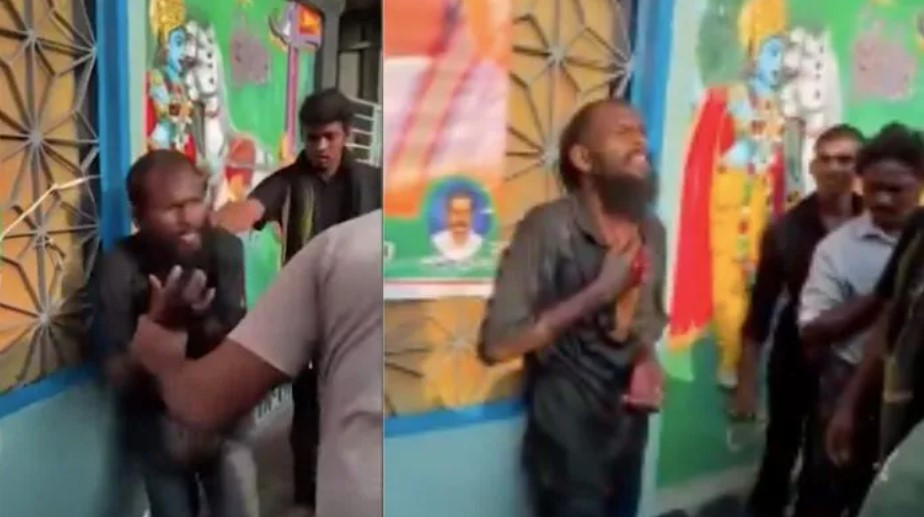
Case Summary
Islamists took to X to circulate a video with claims that a Muslim man in Bheemavaram, Andhra Pradesh, was 'harassed' by Hindu 'extremists' who allegedly forced him to chant "Jai Shri Ram." An X user, Mohammed Yousufuddin, shared the video, asserting that the man was targeted solely for his religious identity. The video was part of an effort to portray Muslims as victims and malign Hindus by spreading misinformation. Several other Islamists made similar claims. “A Muslim man was beaten and forcibly made to chant jai shri ram by a group of people including woman in Andhra pradesh’s Bheemavaram. A cop can also be seen in the video,” wrote one Saba Khan. While Islamists tried to depict the Muslim man as being harassed by Hindus, portraying him as an innocent victim, the truth is that the man was allegedly attempting to desecrate the Hindu temple in Bheemavaram and was thus caught by the Hindus who cornered him. The accused then began chanting the Jai Shri Ram slogan. He was also paraded by locals on the accusations of desecrating religious places in Bhimavaram, Andhra Pradesh. Thus, contrary to the insinuation that the man was attacked because of his religious identity or that he was innocent is false as he was allegedly involved in desecrating the Hindu temple.
Why it is Hate Crime ?
This case has been added to the tracker under two prime categories, based on the details. The first category relevant here is- Attack on Hindu religious symbols. Under this the first sub-category selected is- Attack on Temples. In Hinduism, a temple is the abode of the Deity. The Deity in the Temple is consecrated, thereby, making it a real, breathing entity. Hindus believe that not just the Deity but the temple premises itself are sacred to Hindus since Hindus hold the faith that the entire Temple space is an amalgamation of the divine energy of the deity. Given the central significance of Temples in Hindu Dharma, any attack against a Hindu Temple or its peripheral premises is an attack on the faith itself and is born out of animosity towards the faith, of which, the Temple is a central tenet. Any manner of attack against a Temple and/or its premises would therefore be considered a religiously motivated hate crime. The second sub-category chosen here is- Desecration of Hindu religious symbol. Icons and symbols or a religious representation of a spiritual ideal are widely revered in Hinduism. Iconography is of vital significance in the Hindu milieu. It helps connect people’s spiritual beliefs with the real world. Iconography within the Hindu faith takes several shapes and forms. Murtis are of most significance to Hindus, to which daily rituals, prayers and offerings are done. Besides the murtis, there are several other symbols which have deep significance in the Hindu faith – the Om and Swastika for example. Since these Hindu religious symbols hold paramount importance in Hinduism, any desecration of symbols, icons, murtis, religious representations and manifestations, is driven by animosity towards the faith itself which manifests itself through these murtis, icons and symbols. Therefore, any desecration of these Hindu religious symbols and representations is considered religiously motivated hate crimes under this category. Further, as per the details, the second prime category under which this case has been placed is- Hate speech against Hindus and within this, the sub-category selected is- Anti Hindu subversion and prejudice. Hate speech is defined as any speech, gesture, conduct, writing, or display that is prejudicial against a specific individual and/or group of people, which is leading to or may lead to violence, prejudicial action or hate against that individual and/or group. Media plays a specific and overarching reach in perpetuating prejudicial attitudes towards a community owing to unfair, untrue coverage and/or misrepresentation/misinterpretation, selective coverage and/or omission of facts of/pertaining to issues affecting a specific religious group. This type of bias can dehumanise the victim group, making it easier for others to justify harmful actions against them, which aligns with the objectives of hate speech laws aimed at preventing such harm. It is often observed that the media takes a prejudicial stand against the Hindu community driven by their need to shield the aggressor community which happens to be a numeric minority, however, is the one perpetrating violence against Hindus. For example, the media is often quick to contextualise religiously motivated crimes against Hindus, omit or misrepresent facts that point towards religiously motivated hate crimes, justify and/or downplay religiously motivated hate crimes or simply present fake news to stereotype Hindus. Such media bias leads to the denial of persecution and is often used to dehumanise Hindus, leading to justification for violence against them. For example, the media covered several fake allegations of Hindus targeting Muslims and forcing them to chant Jai Shree Ram. Most of these cases were proved false and fabricated after police investigation. These fake news reports were subsequently never retracted or clarified. Such fake news led to the justification of violence and dehumanisation of Hindus based on the argument that since Hindus targeted Muslims and forced them to chant Jai Shree Ram, the dehumanisation of Hindus and violence against them was par for the course and merely a retaliation. Such media bias leads to prejudicial portrayal of Hindus and offers a justification for violence against them and therefore, is considered hate speech under this category. This case can be classified as a religiously motivated hate crime due to the involvement of desecrating a Hindu temple, which is a direct attack on Hindu religious spaces and symbols. The accused's alleged attempt to desecrate the temple not only undermines the sanctity of a place of worship but also reflects a broader pattern of hostility against Hindu religious practices. Furthermore, the subsequent portrayal of the victim as an innocent individual being harassed for his religious identity is a form of anti-Hindu prejudice, as it distorts the true nature of the incident to misrepresent Hindus as aggressors. This manipulation of the narrative, coupled with the desecration of the religious site, demonstrates both an attack on Hindu religious symbols and a broader effort to marginalize and undermine Hindu religious expression, making it a religiously motivated hate crime.


Case Status
Unknown


Perpetrators Details
Perpetrators
Muslim Extremists
Perpetrators Range
One Person
Perpetrators Gender
male
 Sources




