Minor Dalit domestic help beaten to death by Muslim couple, media outlets give it a ‘Diwali’ spin
 Chennai, Tamil Nadu, India
  2 November, 2024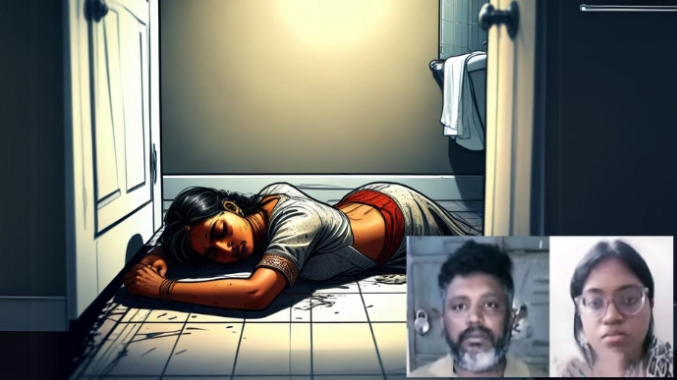
Case Summary
Chennai Police arrested Mohammed Nishad and his wife Nasia for the murder of their 15-year-old maid, who had suffered extreme abuse, including cigarette burns and branding with a hot iron pan. The victim’s body was found in the bathroom of the couple’s residence in Mehta Nagar, under the Aminjikarai police jurisdiction. The young girl, originally from Tanjavur, had been working for the couple to help support her widowed mother. She was brought to Nishad’s house by a brother-sister duo for domestic work around a year and a half prior. Reports revealed that 35-year-old Nishad and his 30-year-old wife subjected the girl to severe abuse for several days, often beating her and burning her with cigarettes and an iron pan. Marks on her neck indicated strangulation. On the day of her death, she was brutally beaten by the couple. Afterwards, she went to the bathroom, where she succumbed to her injuries. Following her death, the couple locked the house and fled to a friend’s place. The police were informed by the couple’s lawyer and recovered the body, which was sent for postmortem at Kilpauk Medical College, revealing extensive injuries. In addition to Nishad and his wife, police detained four others, including the individuals who had arranged her employment and the friend who sheltered the couple. A case was registered under multiple sections of the Bharatiya Nayay Sanhita (BNS) and POCSO Act. Some media outlets, including Times of India and Hindustan Times, portrayed the tragic case of a murdered 15-year-old maid in Chennai with a focus on the incident occurring during Diwali, despite the accused, Mohammed Nishad and his wife Nasia, being identified as Muslims. Times of India highlighted "Diwali" in its social media post, stating, “A 15-year-old domestic help died on #Diwali after being brutally assaulted by her employers," but omitted the names of the accused, focusing instead on the timing of the incident. Similarly, Hindustan Times initially refrained from mentioning the accused by name in the opening sections of its report, noting the incident’s occurrence on Diwali. The HT report included the names of the accused in a separate section, leading to criticism that the emphasis on Diwali overshadowed important case details.
Why it is Hate Crime ?
This is case is being to the secondary category 'anti-Hindu subversion and prejudice' under the primary category 'hate speech against Hindus'. Hate speech is defined as any speech, gesture, conduct, writing, or display that is prejudicial against a specific individual and/or group of people, which is leading to or may lead to violence, prejudicial action or hate against that individual and/or group. Media plays a specific and overarching reach in perpetuating prejudicial attitudes towards a community owing to unfair, untrue coverage and/or misrepresentation/misinterpretation, selective coverage and/or omission of facts of/pertaining to issues affecting a specific religious group. This type of bias can dehumanise the victim group, making it easier for others to justify harmful actions against them, which aligns with the objectives of hate speech laws aimed at preventing such harm. It is often observed that the media takes a prejudicial stand against the Hindu community driven by their need to shield the aggressor community which happens to be a numeric minority, however, is the one perpetrating violence against Hindus. For example, the media is often quick to contextualise religiously motivated crimes against Hindus, omit or misrepresent facts that point towards religiously motivated hate crimes, justify and/or downplay religiously motivated hate crimes or simply present fake news to stereotype Hindus. Such media bias leads to the denial of persecution and is often used to dehumanise Hindus, leading to justification for violence against them. For example, the media covered several fake allegations of Hindus targeting Muslims and forcing them to chant Jai Shree Ram. Most of these cases were proved false and fabricated after police investigation. These fake news reports were subsequently never retracted or clarified. Such fake news led to the justification of violence and dehumanisation of Hindus based on the argument that since Hindus targeted Muslims and forced them to chant Jai Shree Ram, the dehumanisation of Hindus and violence against them was par for the course and merely a retaliation. Such media bias leads to prejudicial portrayal of Hindus and offers a justification for violence against them and therefore, is considered hate speech under this category. In this case, the media outlet gave the case a 'diwali' spin, insinuating that on the pious festival of Diwali, such heinous and illegal acts were being done. However, the perpetrators were practising Muslims and therefore, the piety of Diwali holds no significance to the perpetrators. By connecting the murder to Diwali and not mentioning the Muslim identity of the perpetrators, the media houses potentially misled people into believing that the perpetrators were Hindus. In fact, when the crime itself had nothing to do with Diwali, dragging in one of the biggest festival of Hindus only indicates prejudice against the faith. This case is therefore being added as an incident of hate speech against Hindus.


Case Status
Arrested


Perpetrators Details
Perpetrators
Others
Perpetrators Range
N/A
Perpetrators Gender
both
 Sources




