Hindu faith under attack: Miscreants vandalise idol of Maa Kali in West Bengal's Cooch Behar
 Cooch Behar, West Bengal, India
  21 September, 2025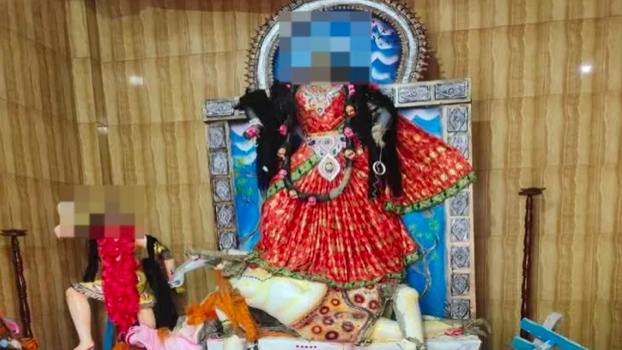
Case Summary
A revered idol of Maa Kali in Mansai village, under Barokodali-2 Panchayat of the Tufangaj Assembly constituency in Cooch Behar district, was vandalised by unknown miscreants. The head of the Murti was broken in the attack, leaving villagers anguished and outraged. Shaken by this blatant act of Hindu hate, locals stated that this was not an isolated case, as similar incidents had occurred in the past as well. BJP MLA Malati Rava Roy, who visited the site to take stock of the situation, was threatened by Trinamool Congress (TMC) cadres during her visit. Speaking to the media, she strongly condemned the desecration, stressing that this was not an isolated incident. She stated that several murtis in the region have been similarly targeted, pointing to a pattern of systematic attacks on Hindu religious symbols under the ruling party’s watch. The act triggered widespread anger among locals, who feared growing intolerance and political intimidation in the area. Reports suggest that the incident is part of a wider trend of assaults on Hindu places of worship across West Bengal, with BJP leaders accusing the TMC of either complicity or deliberate indifference. Malati Rava Roy demanded swift action against the culprits and accused the TMC authorities of failing in their duty to safeguard religious sites, cautioning that continued neglect could stoke communal tensions.
Why it is Hate Crime ?
The primary category in this case is: Attack on Hindu religious representations. The subcategory under this is: Desecration of Hindu religious symbol. Icons and symbols or a religious representation of a spiritual ideal are widely revered in Hinduism. Iconography is of vital significance in the Hindu milieu. It helps connect people’s spiritual beliefs with the real world. Iconography within the Hindu faith takes several shapes and forms. Murtis are of most significance to Hindus, to which daily rituals, prayers and offerings are done. Besides the murtis, there are several other symbols which have deep significance in the Hindu faith – the Om and Swastika for example. Since these Hindu religious symbols hold paramount importance in Hinduism, any desecration of symbols, icons, murtis, religious representations and manifestations, is driven by animosity towards the faith itself which manifests itself through these murtis, icons and symbols. Therefore, any desecration of these Hindu religious symbols and representations is considered religiously motivated hate crimes under this category. This case has been added to the Hinduphobia Tracker because it represents not merely the physical destruction of sacred artefacts but a direct assault on the faith, identity, and security of Hindus. The vandalism of the idol of Goddess Kali is emblematic of a deep-rooted animosity that manifests itself through repeated attacks on temples and religious symbols. In the Hindu worldview, the temple is not a passive structure but the abode of the deity, a consecrated space that embodies divine energy. To strike at this space, or to desecrate its consecrated icons, is to assault the faith itself. The damage to the idol was therefore not incidental acts of mischief but religiously motivated crimes designed to terrorise the Hindu community and delegitimise their right to practice and preserve their faith. The deliberate timing of the vandalism, just ahead of Navatari or Durga Puja, underscores the calculated nature of the assault. Attacks on the goddess's idol at such a juncture are not random but deliberately intended to demoralise Hindus, disturb preparations, and instil fear during a sacred occasion. By shattering the goddess’s form, the perpetrators seek not only to desecrate religious icons but to symbolically fracture the collective spirit of the Hindu population. The words of the devotee who described it as “breaking our spirit” reflect this deeper reality—that each broken idol represents an attempt to extinguish the continuity of Hindu life in the region. Notably, although the perpetrators remain unidentified, the act was clearly motivated by religious hostility towards Hindus and their faith. Consequently, this case has been added to the hate crime database of the Hinduphobia Tracker.


Case Status
Unknown


Perpetrators Details
Perpetrators
Unknown
Perpetrators Range
Unknown
Perpetrators Gender
unknown
 Sources




