Hindu villagers targeted in conversion plot disguised as healing meeting, posters and pamphlets insulting Hindu deities seized
 Hazaribagh, Jharkhand, India
  7 September, 2025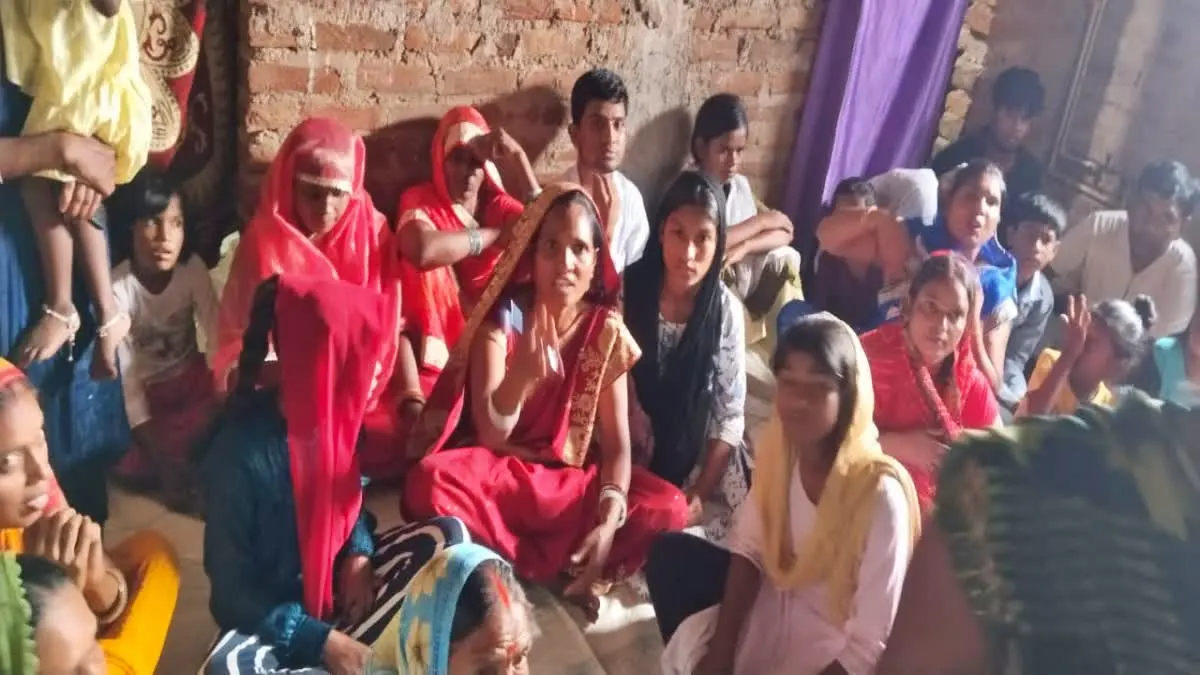
Case Summary
A conversion attempt, disguised as a healing meeting, was uncovered in Chhadwa village, under the Romi Panchayat of Katkamsandi block in Hazaribagh district, Jharkhand. The incident unfolded at the home of Asha Devi and her husband Ram Sharma, where a religious gathering aimed at conversion sparked chaos. Hindu activists intervened and disrupted the meeting, leading to heated arguments between villagers and outsiders who had come to attend. The police arrived at the scene, pacified both sides, and warned of strict action against anyone engaging in illegal conversions. According to villagers, the gatherings had been taking place at Asha Devi’s house for over a year, drawing attendees from multiple villages, including Asdhir, Romi, Hedlag, Dand, Tilra, Kanchanpur, Hudhuhu, and Mandai. The meeting was led by Sheela Devi of Mandai and Tulsi Ravidas of Hudhuhu. Villagers stated that a Bible, along with misleading posters and pamphlets insulting Hindu deities, was seized from the house, intensifying the confrontation. Ved Prakash Pandey, Station House Officer of Pelawal, stated that such activities would not be tolerated and assured action against any attempt to disturb peace. Bharatiya Janata Party MP from Hazaribagh, Manish Jaiswal, criticised the district administration for its laxity and warned of ongoing efforts to lure Hindus into conversion. He emphasised the need for public awareness to safeguard religious integrity, adding that conversions carried out through inducement or intimidation are illegal.
Why it is Hate Crime ?
The primary category in this case is: Predatory Proselytisation. The subcategory under this is: Attempting to convert/converting by denigrating Hinduism. In several cases, Hindus are converted or an attempt is made to convert Hindus by denigrating their faith, Hinduism. In such cases, the Hindus associate with the non-Hindu perpetrators often by choice and then, the attempt to convert them by insulting their faith, showing the faith down etc begins. An example of this would be a non-Hindu gathering where the Hindus are attending the gathering of their own free will. However, once they attend the gathering, there is an explicit attempt to convert them by abusing their faith and hailing the faith of the perpetrator. The denigration of the Hindu faith is often based on misrepresentation of the Hindu faith, its doctrine and scriptures and insult to espoused traditions if not blatant lies about Hindu beliefs and ways. Such conversions or attempts at conversions are driven by animosity towards the Hindu faith and are therefore documented as religiously motivated hate crimes. Another subcategory under this is: Proselytisation by grooming, brainwashing, manipulation or subtle indoctrination. The tertiary category under this is: Pattern of targeting Hindus. Religious brainwashing essentially means the often subtle and forcible indoctrination to induce someone to give up their religious beliefs to accept contrasting, regimented ideas. Religious grooming or brainwashing also involves propaganda and manipulation. It involves the systematic effort, driven by religious malice and indoctrination, to persuade “non-believers’ to accept allegiance, command, or doctrine to and of a contrasting faith. Cases of such grooming or brainwashing are far more nuanced than direct threats, coercion, inducement and violence. In such cases, it is often seen that there is repeated, subtle and continual manipulation of the victim to induce disaffection towards their own faith and acceptance of the contrasting faith of the perpetrator. While subtle indoctrination is widely acknowledged as predatory, an element which is often understated in such conversions or the attempts of such conversion is the role of loyalty and trust which might develop between the perpetrator and the victim. Fiduciary relationships are often abused to affect such religious conversion. For example, an educator transmitting religious doctrine of a competing faith to a Hindu student. The Hindu student is likely to accept what the teacher is transmitting owing to the existence of the fiduciary relationship. The exploitation of the fiduciary relationship to religiously indoctrinate victims would also be included in this category. Since the underlying animosity towards the victim’s faith forms the basis of predatory proselytisation, such cases are considered religiously motivated hate crimes. This case has been included in the Hinduphobia Tracker because it demonstrates a clear instance of predatory proselytisation carried out through brainwashing. Hindu deities were denigrated. Details revealed how organised gatherings, operating under the pretext of religious healing, were used as a cover to lure economically vulnerable Hindus away from their faith. These meetings had been ongoing for over a year, drawing attendees from several villages, and were led by individuals who actively sought to exploit the villagers’ hardships by offering material and emotional inducements. Such tactics, commonly used in missionary-driven proselytisation, specifically prey upon poverty and vulnerability to weaken cultural resilience and undermine traditional belief systems. The recovery of pamphlets and posters insulting Hindu deities further illustrates the deliberate denigration of Hinduism as part of the conversion attempt. This method seeks to instil shame and disaffection in Hindus towards their own faith while simultaneously portraying another religion as superior, thereby coercing attendees into abandoning their cultural and spiritual roots. The presence of these materials highlights how misinformation and disrespect towards Hindu traditions are employed as psychological tools of persuasion, reinforcing animosity towards the faith itself. This case also reflects a deeper and more troubling trend: a systematic effort to target Hindu communities through grooming, indoctrination, and manipulation. The persistence of these gatherings over a prolonged period indicates that this was not an isolated event but part of a coordinated programme to undermine Hindu identity at the grassroots level. Such operations are calculated to erode cultural confidence, using religious propaganda to gain influence and control over socially and economically disadvantaged populations. The organisers’ approach, cloaked in community outreach and healing, is a well-established tactic that masks an underlying campaign of religious hostility. Documenting this incident in the Hinduphobia Tracker is vital because it underscores the ongoing strategy of dismantling Hindu belief systems through covert psychological manipulation and open disrespect for Hindu traditions. It also provides evidence of how targeted campaigns, executed in rural and marginalised communities, form a deliberate and structured pattern of religious aggression aimed at weakening Hindu society’s spiritual and cultural foundation. Disclaimer: It is important to clarify that none of the media sources covering this case have specified the exact date on which the incident happened. Therefore, for documentation purposes, we have recorded the date based on when the incident was reported in the media.


Case Status
Unknown


Perpetrators Details
Perpetrators
Christian Extremists
Perpetrators Range
From 2 To 5
Perpetrators Gender
both
 Sources




