Cow’s severed tail found hanging at temple gate, Hindus assert that act was carried out purposely to disrupt Ganpati Visarjan celebrations
 Indore, Madhya Pradesh, India
  5 September, 2025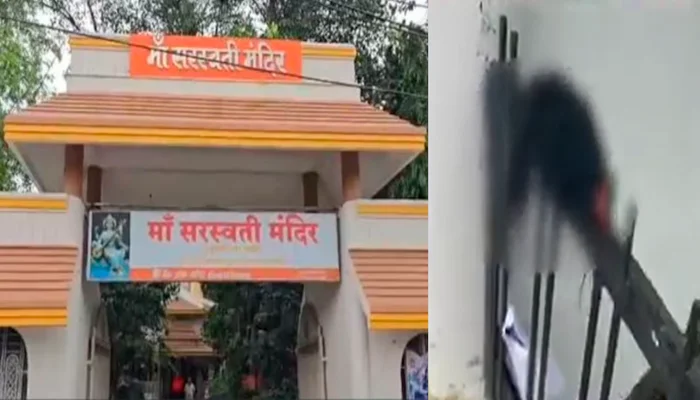
Case Summary
In Indore, Madhya Pradesh, communal tensions erupted when a cow’s severed tail was found hanging on the boundary wall of a Hindu temple. According to reports, on the morning of September 6, a cow's severed tail was found hanging at the main gate of the Saraswati Mata mandir in the Tulsi Nagar area. This led to shock and unrest within the Hindu community, escalating communal tensions in the area. Members of Bajrang Dal and Gau Raksha Samiti, Hindu organisations, also gathered at the site and stated that such an act was deliberately carried out to insult Hindu religious sentiments, particularly to disrupt Ganpati Visarjan celebrations. They pointed out that such incidents occur more often during Hindu religious festivals and disturb the communal harmony. The police promptly arrived at the site and cordoned off the locality to prevent escalation. They registered a complaint and began scanning CCTV footage to identify the culprits. Police assured that the accused would be identified soon and appropriate action would be taken.
Why it is Hate Crime ?
This case has been added to the tracker under the primary category- Attack on Hindu Religious Representations. The subcategory selected is- Defiling Religious Customs. Sanatan Dharma is not a religion of one book, which is to say that while it has religious scriptures that form the central tenets of the faith, there are several traditions followed through thousands of years, mostly passed from generation to generation orally. There are several such customs and traditions that are followed by various Hindus and Hindu sects. Defiling of these traditions and customs is a breach of an individual or group’s religious practices. Such practices can range from dietary restrictions like not eating non-vegetarian food for a certain period of the year, not eating non-vegetarian food at all, not eating beef since the cow is considered holy in Hinduism, the sanctity of religious customs followed in the house (like many ISCKON devotees), etc. Any malicious action leading to the breach of such traditions or defilement of these traditions owing to animosity towards the faith or for the sake of activism stems not only from the lack of faith in the religion itself but also from disregard for the faith of the devotees who follow the customs/traditions and implicit bias against the faith, the tradition itself. Since these specific traditions are central to the faith of the devotees of that specific sect of Hindus, any non-compliance with these traditional rules would be considered a religiously motivated hate crime. The other subcategory selected is- Breaking rules of place of worship. Sanatan Dharma is not a religion of one book, which is to say that while it has religious scriptures that form the central tenets of the faith, there are several traditions followed through thousands of years, mostly passed from generation to generation orally. One of these oral traditions or written traditions is the rules of specific temples. Certain temples have rules which are traditional rules, dependent on the worship of the presiding deities. These rules and traditions have been followed for thousands of years whether they find scriptural mention or not. Such traditions are based on the nature and rules of worship of the presiding deity of that temple. Any non-compliance of these traditions owing to animosity towards the faith or for the sake of activism stems not only from the lack of faith in the presiding deity but also disregard for the faith of the devotees of that deity/temple and implicit bias against the faith, the tradition and the deity itself. Since these specific traditions are central to the faith of the devotees of that specific temple and presiding deity, any non-compliance with these traditional rules would be considered a religiously motivated hate crime. The third subcategory selected is- Attack on Temples. In Hinduism, a temple is the abode of the Deity. The Deity in the Temple is consecrated, thereby, making it a real, breathing entity. Hindus believe that not just the Deity but the temple premises itself are sacred to Hindus since Hindus hold the faith that the entire Temple space is an amalgamation of the divine energy of the deity. Given the central significance of Temples in Hindu Dharma, any attack against a Hindu Temple or its peripheral premises is an attack on the faith itself and is born out of animosity towards the faith, of which, the Temple is a central tenet. Any manner of attack against a Temple and/or its premises would therefore be considered a religiously motivated hate crime. The fourth sub-category selected here is- Desecration of Hindu religious symbol. Icons and symbols or a religious representation of a spiritual ideal are widely revered in Hinduism. Iconography is of vital significance in the Hindu milieu. It helps connect people’s spiritual beliefs with the real world. Iconography within the Hindu faith takes several shapes and forms. Murtis are of most significance to Hindus, to which daily rituals, prayers and offerings are done. Besides the murtis, there are several other symbols which have deep significance in the Hindu faith – the Om and Swastika for example. Since these Hindu religious symbols hold paramount importance in Hinduism, any desecration of symbols, icons, murtis, religious representations and manifestations, is driven by animosity towards the faith itself which manifests itself through these murtis, icons and symbols. Therefore, any desecration of these Hindu religious symbols and representations is considered religiously motivated hate crimes under this category. This incident constitutes a hate crime as it involved the deliberate placement of a cow’s severed tail at the boundary wall of a Hindu temple. The act represented a direct violation and defilement of the sanctity of the Saraswati Mata Mandir. Placing the cow’s severed tail at the temple’s main gate was a blatant act of religious hatred, intended to provoke Hindus and mock their deeply held beliefs. Such actions reflect a profound disregard for the Hindu faith and its practices, stemming from underlying animosity towards Hinduism. This incident exemplifies an intentional effort to insult religious sentiments and cannot be viewed merely as a breach of law and order but as a calculated attempt to dishonour Hindu religious customs and the sanctity of temple premises. The act highlights the perpetrators' deliberate effort to hurt Hindu religious sentiments. The action was intended to defile the sanctity of the temple and provoke religious outrage. In Hindu Dharma, a temple is not just a structure but the living abode of the deity, and any attempt to desecrate it is a direct attack on the Hindu faith itself. The choice of a cow’s tail was also deliberate and reflects a clear religious animosity. In Hinduism, the cow is considered sacred and revered as a symbol of life and nurturing. Historically, cow slaughter and the deliberate desecration of cow-related symbols have been used by non-Hindus to deliberately insult and intimidate the Hindu community. Such acts have been employed to humiliate Hindus, desecrate their religious shrines, and disrupt religious observances. This reflects a historical pattern of using cow-related desecration as a means to impose superiority over Hindus and demean their faith, customs, and sacred spaces. It is also important to mention that, though the perpetrators remain unknown, the act stemmed from intrinsic animosity against Hinduism. Thus, despite the perpetrators remaining unknown, this case warrants inclusion in the tracker.


Case Status
Complaint registered


Perpetrators Details
Perpetrators
Unknown
Perpetrators Range
Unknown
Perpetrators Gender
unknown
 Sources




