Hindu temple targeted and idols of Hindu deities desecrated by miscreants in Bihar
 Begusarai, Bihar, India
  2 September, 2025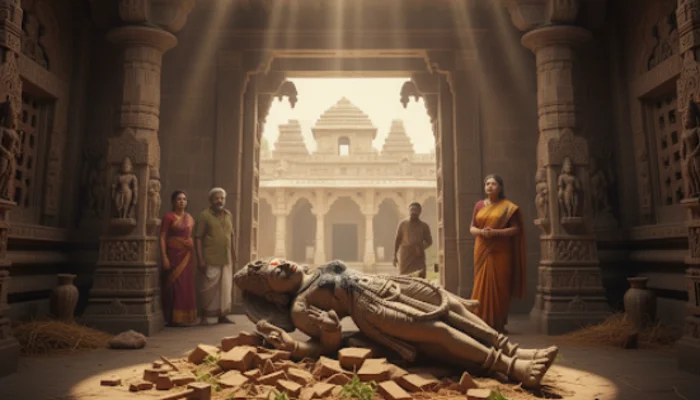
Case Summary
In the Dafarpur Panchayat area of Begusarai district, Bihar, a Hindu temple named Mahakaal Dham was targeted, and three idols of Hindu deities were desecrated by some unknown miscreants. According to media reports, the vandalism was discovered on 4th September 2025, a day after the incident, when the temple priest, Baban Sah, arrived to perform the daily puja and found the idols desecrated. The idols of Panchmukhi Hanuman, Kaal Bhairav and Shani Bhagwan were damaged by the miscreants, which the villagers regarded as a direct attack on their faith, as the temple was built through collective donations from the Hindu community. News of the desecration quickly spread in the area, and villagers from Dafarpur, Kamalpur, Abbupur and Chhatauna gathered at the temple as a sign of protest. The police were immediately informed, and they promptly arrived at the site and began an investigation. The police held discussions with Mahant Ram Priya Das and other community leaders, and assured them that the culprits would not be spared and that the incident was being probed from every angle. The administration remained present at the site to ensure peace in the area. The desecration provoked outrage among local Hindu devotees and political groups, with BJP workers staging protests at the temple premises, demanding swift action. Leaders from the BJP Yuva Morcha described the act as an insult to religious sentiments. Village head Ranjit Kumar appealed to the villagers to maintain peace and harmony in the wake of the incident.
Why it is Hate Crime ?
This case has been added to the tracker under the primary category of - Attack on Hindu religious representations. Within it, the sub-category selected is - Desecration of Hindu religious symbol. Icons and symbols or a religious representation of a spiritual ideal are widely revered in Hinduism. Iconography is of vital significance in the Hindu milieu. It helps connect people’s spiritual beliefs with the real world. Iconography within the Hindu faith takes several shapes and forms. Murtis are of most significance to Hindus, to which daily rituals, prayers and offerings are done. Besides the murtis, there are several other symbols which have deep significance in the Hindu faith – the Om and Swastika for example. Since these Hindu religious symbols hold paramount importance in Hinduism, any desecration of symbols, icons, murtis, religious representations and manifestations, is driven by animosity towards the faith itself which manifests itself through these murtis, icons and symbols. Therefore, any desecration of these Hindu religious symbols and representations is considered religiously motivated hate crimes under this category. The other sub-category selected is - Desecration of Hindu religious symbol. The other sub-category selected is - Attack on temples. In Hinduism, a temple is the abode of the Deity. The Deity in the Temple is consecrated, thereby, making it a real, breathing entity. Hindus believe that not just the Deity but the temple premises itself are sacred to Hindus since Hindus hold the faith that the entire Temple space is an amalgamation of the divine energy of the deity. Given the central significance of Temples in Hindu Dharma, any attack against a Hindu Temple or its peripheral premises is an attack on the faith itself and is born out of animosity towards the faith, of which, the Temple is a central tenet. Any manner of attack against a Temple and/or its premises would therefore be considered a religiously motivated hate crime. This case has been added to the tracker as the perpetrators deliberately targeted a Hindu temple and desecrated idols of Hindu deities. The temple as an institution holds immense spiritual importance in the Hindu faith. For Hindus, temples are not mere physical structures; they are sanctified spaces believed to embody the divine presence of Hindu deities. Acts of violence against such spaces are not isolated incidents of destruction but reflect underlying hostility towards Hindu beliefs and identity. The attack specifically involved the deliberate desecration of idols of Hindu deities. The sacred idols of Panchmukhi Hanuman, Kaal Bhairav and Shani Bhagwan were desecrated by the attackers. In Hinduism, idols of Hindu deities are not just artistic representations but are deeply revered manifestations of the divine. Their desecration is seen as a direct affront to the religious sentiments of Hindus and an act of profound disrespect. Such acts of violence against Hindu temples and their idols are not just an attack on temple property; they are acts of violence against the religious beliefs of the Hindu community that derive spiritual, cultural, and social meaning from that temple space. Furthermore, the psychological impact of such attacks is immense. Devotees who visit temples seek solace, peace, and a sense of connection with the divine. When these sacred temples are targeted and desecrated, it shatters the sense of security and belonging that the Hindu community derives from its religious institutions. The pain caused by the desecration of temple idols is not limited to physical damage; it is a wound to the collective psyche of the Hindu community. In this case, although the perpetrators are unknown, the action stemmed from hatred against Hinduism and resulted in the desecration of the sacred Hindu idols. Therefore, this case is being categorised under the hate crime database.


Case Status
Complaint filed


Perpetrators Details
Perpetrators
Unknown
Perpetrators Range
Unknown
Perpetrators Gender
unknown
 Sources




