Tribal Hindu woman deceived into relationship by married Muslim man disguised as Hindu; tortured to convert to Islam
 Hazaribagh, Jharkhand, India
  26 June, 2023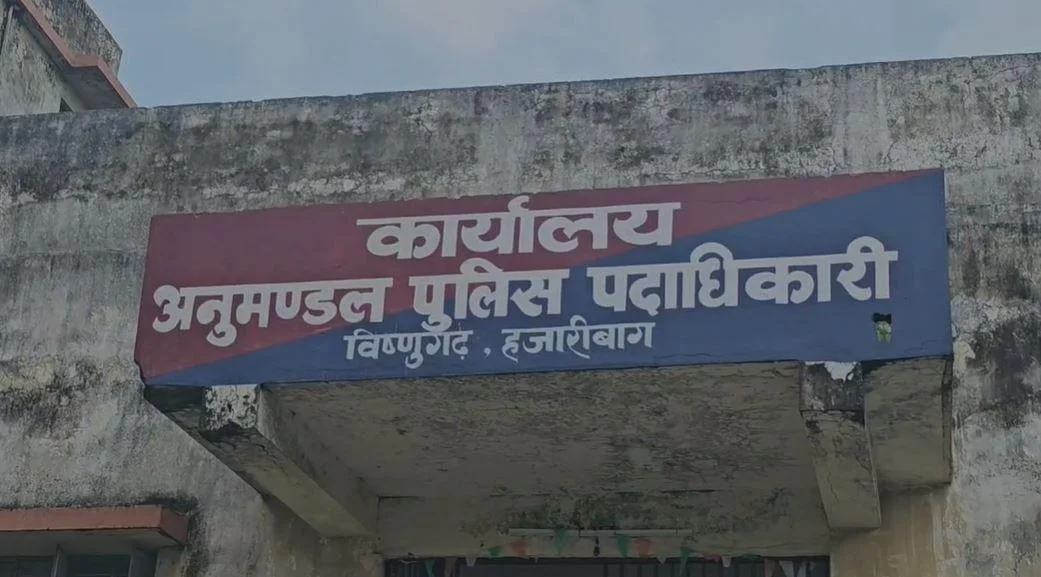
Case Summary
A 22-year-old tribal woman named Rosmi Mes from Assam was deceived, confined, and pressured to convert by a Muslim man named Ahmed Raza in Vishnugarh, Hazaribagh district, Jharkhand. In 2023, Ahmed concealed his identity and introduced himself as Rahul on Instagram, befriending Rosmi and gradually winning her trust. After building this false relationship, he lured her away from her home. She ran away with the accused in June 2023. Only later did Rosmi discover that his real name was Ahmed Raza, that he was a Muslim, and that he was already married and had two children. By that time, she was already trapped in his control. Rosmi stated that once she was taken to Jharkhand, Ahmed forced her into marriage and began pressuring her to convert. She revealed that Ahmed’s family members, his mother Dilnaz Khatoon, his brothers Abdul Qadir and Wasim, and his sister Rani Khatoon, also participated in her confinement and intimidation. She was locked inside their house, denied all contact with her family in Assam, and threatened whenever she resisted. For nearly two years, she was subjected to physical and sexual abuse, and during this period, she gave birth to a son. Rosmi emphasised that the psychological coercion was constant, with Ahmed and his family repeatedly pressuring her to abandon her faith and accept Islam. She was never allowed to leave, and each attempt to resist was met with threats. Eventually, she managed to escape their control and reached the Vishnugarh police station, where she submitted a detailed written complaint narrating the entire ordeal. Hindu organisations demanded justice and urged the Chief Minister of Jharkhand to ensure her safety. They have also highlighted the need for stronger protection of tribal women who are often targeted in similar ways. Despite the seriousness of the charges, no arrests were made. The police sent Rosmi back to her family in Assam, while an investigation was initiated.
Why it is Hate Crime ?
The primary category in this case is: Crimes against women in relationships and other sexual crimes. The first subcategory under this is: Man pretends to be Hindu. The tertiary category under this is: Name Changed. When a non-Hindu man pretends to be a Hindu to deceive a Hindu woman into a relationship, the act is seen as triggered by malafide intentions. In some cases, the woman eventually accepts the man’s original religious identity and converts after the man’s identity is revealed. These cases could be argued as cases of religious brainwashing and a result of the pressure a woman feels after getting into a relationship with a man. The woman, it can be argued, also changed her religious identity because of the stigma she believes she might face if she chooses to walk out of a deceptive relationship. However, for the purpose of documenting hate crimes, the cases in this subcategory are limited to those where there is explicit violence aimed at religious conversion against the wishes of the victim (force-feeding beef, blackmailing with intimate videos, rape on refusal to convert, etc), or if the woman herself complains of the man’s religious deception. In such cases, it is established that the deception of the non-Hindu man had a specific aim of religious conversion or targeting of the victim due to her Hindu religious identity, therefore, making it a religiously motivated hate crime. The second subcategory under this is: Forced conversion after marriage. In such cases, a non-Hindu man marries a Hindu woman, and the force/pressure to convert to Islam begins after marriage. In such cases, typically, two patterns emerge. First, when the relationship is consensual, and the religious identity of the perpetrator is known to the Hindu woman in the relationship. The marriage could be under the Special Marriages Act, where neither parties are required to convert their religion for the marriage to be considered legitimate. While the victim in such cases enters matrimony assuming that religious identity is not a barrier, the non-Hindu man starts to pressure the woman to convert to Islam after marriage. The second is when the woman gets into a marriage with the man pretending to share her faith. Later, when the truth is revealed, the man starts pressuring the woman to convert her religion and give up her religious identity. In both situations, there is application of force by the perpetrator, including the denial of the woman’s religious rights. Some of the means by which the woman is forced/pressured to convert include force-feeding beef, being forced to read the Kalma, being forced to wear a hijab, forced to undergo Halala, etc. There are several instances where, after marriage, the woman voluntarily converts to Islam. Such cases are often argued to be a result of religious brainwashing, however, for the purpose of documenting religiously motivated hate crimes, in the absence of the victim complaining of forced conversion, such cases do not form a part of the database. This case illustrates how coercive conversions constitute not simply personal deception but a targeted form of violence rooted in religious hostility. Ahmed Raza did not merely mislead Rosmi Mes for companionship; he deliberately assumed a Hindu identity, calling himself Rahul, to bypass her natural caution and enter her life. This calculated deception was not an incidental lie but a premeditated strategy, reflecting an intent to erase her Hindu identity from the outset. Once Rosmi was in his control, the focus of abuse shifted from personal betrayal to the systematic dismantling of her religious and cultural self. The confinement, threats, and violence she endured were all tied to the pressure of giving up her Hindu faith. Ahmed’s family actively joined in this coercion, demonstrating that the attack was not confined to one individual’s misconduct but embedded within a wider network that viewed her conversion as necessary. This collective involvement, coupled with her isolation from her community, shows that the crime was designed to break both the individual and the religious continuity she represented. Unlike ordinary crimes driven by anger, lust, or greed, hate crimes seek to diminish the dignity of an entire group by targeting one of its members. Here, Rosmi was chosen not just as a woman but as a Hindu woman, with her faith standing at the core of the coercion. Her suffering was instrumentalised to send a message that Hindu identity can be broken, appropriated, and subordinated. The hate element lies in this ideological drive, where the perpetrator’s goal was not simply to dominate a person but to extinguish her faith, thereby striking at the broader community she belonged to. Disclaimer: Media reports state that the victim’s ordeal began when she met the accused in 2023 and ran away with him in the month of June, though no exact date or month is provided. To document this case, we have used an indicative date— June 27, 2023—as a placeholder to represent the beginning of her suffering. While media coverage of the incident emerged on August 27, 2025, the Hinduphobia Tracker records the incident based on when the victim’s ordeal began, not when it was reported.
Victim Details
Total Victim
1
Deceased
0
Gender
- Male 0
- Female 1
- Third Gender 0
- Unknown 0
Caste
- SC/ST 1
- OBC 0
- General 0
- Unknown 0
Age Group
- Minor 0
- Adult 1
- Senior Citizen 0
- Unknown 0


Case Status
Complaint filed


Perpetrators Details
Perpetrators
Muslim Extremists
Perpetrators Range
From 2 To 5
Perpetrators Gender
both
 Sources




