Hindu temple vandalised, idol and flag desecrated by Muslims in Bhagalpur, Bihar
 Bhagalpur, Bihar, India
  27 June, 2025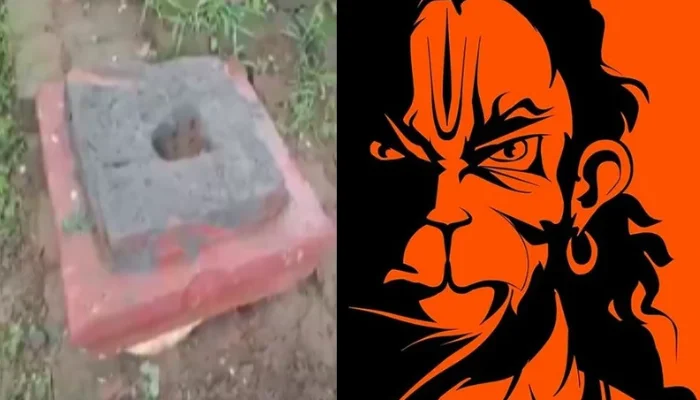
Case Summary
In Tamauni village, Bhagalpur, Bihar, a Hindu temple dedicated to Lord Hanuman was targeted by Muslim miscreants. According to media reports, the temple is an ancient religious site. The Muslim perpetrators vandalised the temple idol, the pindi (a sacred representation of Hanuman), and the flag of Lord Hanuman. Sacred Tulsi plants were also uprooted. Following this, the local Hindu residents approached the police and demanded action against the perpetrators. Villagers explained that the temple had been constructed on government land, and members of the Muslim community wanted to illegally encroach upon the site. As a result, they attempted to desecrate and damage the temple in order to seize the temple land. The local Hindu villagers also stated that this was the fifth deliberate attack on the site. Following the incident, tension prevailed in the village. Police maintained constant patrols, and villagers continued to demand stringent action against those responsible for the attack.
Why it is Hate Crime ?
This case has been added to the tracker under the primary category- Attack on Hindu religious representations. Within this, the subcategory selected is- Desecration of Hindu religious symbol. Icons and symbols or a religious representation of a spiritual ideal are widely revered in Hinduism. Iconography is of vital significance in the Hindu milieu. It helps connect people’s spiritual beliefs with the real world. Iconography within the Hindu faith takes several shapes and forms. Murtis are of most significance to Hindus, to which daily rituals, prayers and offerings are done. Besides the murtis, there are several other symbols which have deep significance in the Hindu faith – the Om and Swastika for example. Since these Hindu religious symbols hold paramount importance in Hinduism, any desecration of symbols, icons, murtis, religious representations and manifestations, is driven by animosity towards the faith itself which manifests itself through these murtis, icons and symbols. Therefore, any desecration of these Hindu religious symbols and representations is considered religiously motivated hate crimes under this category. The other subcategory selected is- Attack on Temples. In Hinduism, a temple is the abode of the Deity. The Deity in the Temple is consecrated, thereby, making it a real, breathing entity. Hindus believe that not just the Deity but the temple premises itself are sacred to Hindus since Hindus hold the faith that the entire Temple space is an amalgamation of the divine energy of the deity. Given the central significance of Temples in Hindu Dharma, any attack against a Hindu Temple or its peripheral premises is an attack on the faith itself and is born out of animosity towards the faith, of which, the Temple is a central tenet. Any manner of attack against a Temple and/or its premises would therefore be considered a religiously motivated hate crime. The other subcategory selected is- Encroachment or illicit takeover of temple land/ land near temple. In Hinduism, a temple is the abode of the Deity. The Deity in the Temple is consecrated, thereby, making it a real, breathing entity. Hindus believe that not just the Deity but the temple premises itself are sacred to Hindus since Hindus hold the faith that the entire Temple space is an amalgamation of the divine energy of the deity. Not only the Temple but the Temple premises in its entirety are considered sacred by Hindus. In several cases, the premises of the Temple and/or religious centre are illicitly taken over by institutions belonging to other faiths – like the Waqf board or the Church. Other times, the temple property, land or the property of religious centres are illicitly encroached by non-Hindu groups. Any illicit take over or encroachment is a crime an initio, however, when non-Hindu groups illicitly take over or encroach the sacred land of Hindus, it is an affront to the Hindu community and is therefore classified as a religiously motivated hate crime under this category. This case is being added to the hate crime database as the Muslim perpetrators deliberately targeted a Hindu temple. Hindu temples hold immense significance within the Hindu community. They are the abode of divine Hindu deities and are highly revered by the Hindu devotees. Temples are sanctified spaces where devotees connect with the divine, celebrate festivals, and uphold their traditions. Therefore, an attack on a Hindu temple is not a random act; rather, it is a deliberate act rooted in religious animosity. Such acts directly target the heart of Hindu belief and culture. The Muslim perpetrators also vandalised idols, the sacred pindis, uprooted sacred Tulsi plants and desecrated religious flags. Idols, pindis, and religious flags are very sacred religious symbols that are considered highly sacred by Hindus. The act of desecrating such religious symbols strikes at the spiritual well-being and religious identity of the Hindu community. These acts are intended not only to destroy property but to wound the sentiments of Hindus, undermine their faith, and instil fear and distress, making it a religiously motivated crime against Hindus. Furthermore, the Muslim perpetrators sought to seize temple land through repeated desecration and intimidation; this was not merely a dispute over property. It was a direct assault on the sanctity of a Hindu religious site and an attempt to erase the community’s spiritual presence from the area. Temple lands are sacred not only for their religious function but because they serve generations of devotees and preserve the continuity of faith. Attempting to take over temple land through such acts shows calculated religious hostility and a disregard for Hindu tradition and their places of worship. In summary, this incident goes beyond vandalism; it is a hate crime against Hindus, driven by religious animosity and the deliberate targeting of their places of worship and symbols of faith. The repeated attacks, desecration of idols and flags, and intentions to usurp temple land all exemplify a systematic effort to harm the Hindu community and undermine its religious and cultural heritage. Since this case meets multiple parameters of a religiously motivated crime, it is being added to the hate crime database.


Case Status
Complaint filed


Perpetrators Details
Perpetrators
Muslim Extremists
Perpetrators Range
Unknown
Perpetrators Gender
unknown
 Sources




