Indian actor spews hate against Hinduism, equates Sanatan Dharma with dictatorship
 Chennai, Tamil Nadu, India
  2 August, 2025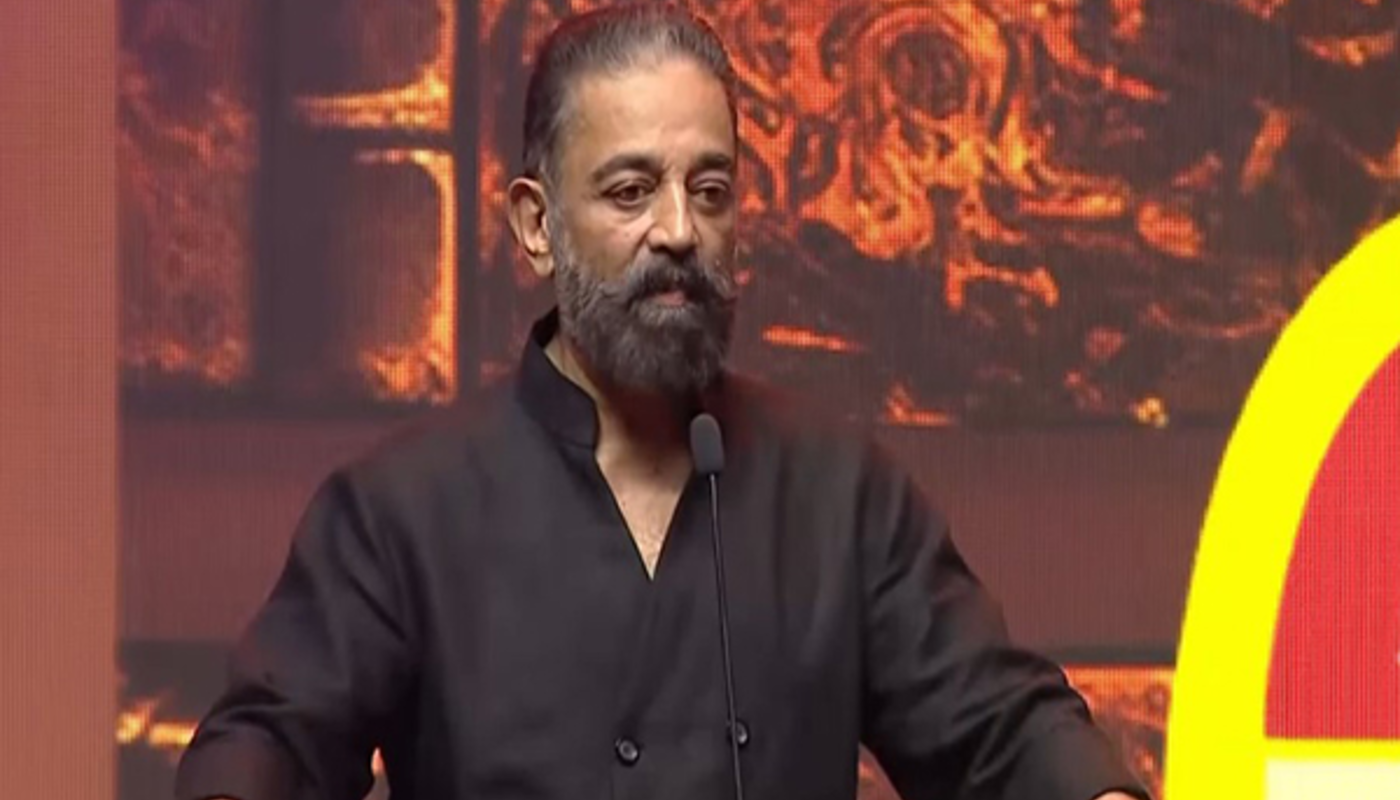
Case Summary
At an event hosted by the Agaram Foundation in Chennai, actor and Rajya Sabha MP Kamal Haasan launched a sharp verbal attack on Sanatan Dharma, equating it with dictatorship. Addressing the audience on August 03, 2025, Haasan declared, “Education is the only weapon that can break the chains of dictatorship and Sanatan,” directly naming the Hindu civilizational tradition as something to be dismantled. He went further to disparage Hindus by claiming that educated minorities could be defeated by what he termed “Majority Fools (Moodargal).” His remark implied that the collective voice of the majority (Hindus), when lacking his definition of knowledge, posed a threat to progressive change. The central thrust of his address was that Sanatan Dharma, like authoritarianism, must be overcome, and education is the means to do so. Haasan’s comments framed Sanatan not as a cultural or religious identity but as an oppressive force on par with dictatorship. The choice to name it alongside totalitarian rule revealed a deep hostility to the civilisational ethos followed by millions of Hindus in India and beyond. His appeal to replace it through education was couched as a call to arms, urging his listeners not to take up anything else but knowledge as their chosen weapon. Though he praised the Agaram Foundation and discussed educational reform, including the limitations caused by NEET, his remarks were anchored in a political and ideological agenda that cast Hindu tradition as a system to be destroyed. His comparison of social service to a ‘crown of thorns’ and his call to redefine leadership through silent revolution further positioned his speech not just as a plea for reform but as an open ideological challenge to the foundational faith of the land.
Why it is Hate Crime ?
The primary category in this case is: Hate speech against Hindus. The subcategory in this case is: Anti-Hindu slurs, mocking faith. Anti-Hindu slurs and the deliberate mocking of the Hindu faith owing to religious animosity involve the usage of derogatory terms, stereotypes, or offensive references to religious practices, symbols, or figures. One of the common anti-Hindu slurs used against Hindus is “cow-worshipper” and “cow piss drinker”. The intention of using this term is to demean and mock Hindus as a group and their religious beliefs since Hindus consider the cow holy. Additionally, some symbols and the slurs attached to them have a historical context that exacerbates the insult, hate, stereotyping, dehumanisation and oppression against Hindus. Cow worship has been used for centuries to denigrate Hindus, insult their faith and oppress Hindus specifically as a religious group. There has been overwhelming documentation about how cow slaughter has been used to persecute Hindus with cow meat being thrown in temples and places of worship. There has also been overwhelming documentation where cow meat (beef) has been force-fed to Hindus to either forcefully convert them to Islam or denigrate their faith. Apart from cow worship, the Swastika – which holds deep religious significance for the Hindus – has also been misinterpreted and distorted to use as a slur against Hindus. Similarly, the worship of the Shivling has been used by supremacist ideologies and religions to denigrate Hindus owing to religious animosity. Such slurs and denigration stem out of inherent animosity and hate towards Hindus and their faith, therefore, it is categorised as hate speech targeted at Hindus specifically owing to their religious identity. Kamal Haasan’s speech at the Agaram Foundation event in Chennai qualifies as a case of targeted hate speech against Hindus, rooted in a long-standing tradition of religious vilification. His statement equating "Sanatan" with dictatorship was not a stray comment but a deliberate invocation, aimed squarely at dismantling the Hindu civilisational ethos. Sanatan Dharma is an endonym for the faith professed by Hindus. The term has its roots in Sanskrit and can be roughly stated to be "Eternal Dharma" - the ongoing, ancient, continuing faith of Hindus. Sanatan Dharma (as a traditional endonym) finds scriptural sanctity in ancient texts like Manusmriti and Mahabharat. Therefore, denying the existence of Sanatan Dharma is essentially denying the existence of the Hindu faith itself. When the existence of the faith itself is denied, it delegitimises the faith of Hindus and dehumanises them, leaving them vulnerable to prejudicial attacks against their faith and attacks against them as individuals/groups owing to their religious identity, which is being delegitimised and denied. Haasan’s framing of education as a “weapon” to break Sanatan is a direct call to reprogram belief systems, suggesting that the religious foundations of millions are something to be destroyed, not understood or respected. His assertion that “majority fools” can overpower knowledge not only disrespects the democratic voice of the Hindu majority but also echoes the supremacist mindset that treats non-conformity with disdain. It labels Hindus as unthinking, backwards masses, in need of intellectual salvation delivered by a self-appointed enlightened few. This is precisely the mechanics of hate speech: reduce the existing system to ashes by ridiculing it, then offer your version of moral and intellectual superiority as the only way forward. It is the same framework that has historically mocked cow worship, desecrated temples with slaughter, and treated sacred symbols like the Shivling and Swastika with contempt. Kamal Haasan’s attack on Sanatan Dharma follows this historical trajectory of slander, misrepresentation, and cultural denigration. Such speech does not take place in a vacuum. It fuels a growing climate of Hinduphobia, legitimises anti-Hindu prejudice, and emboldens those who seek to erase indigenous belief systems under the guise of progress or reform. By invoking “Sanatan” as a scourge to be eradicated, Haasan participated in an old, insidious form of hate; the kind that mocks faith to mask ideological hostility. His remarks meet every definitional threshold of targeted hate speech and represent a clear case of religious incitement directed at Hindus.


Case Status
Unknown


Perpetrators Details
Perpetrators
Christian Extremists
Perpetrators Range
One Person
Perpetrators Gender
male
 Sources




