Attack on Hindu identity: Former chief minister labelled Hindutva and Sanatan dharma as terrorist ideologies
 Maharashtra, India
  30 July, 2025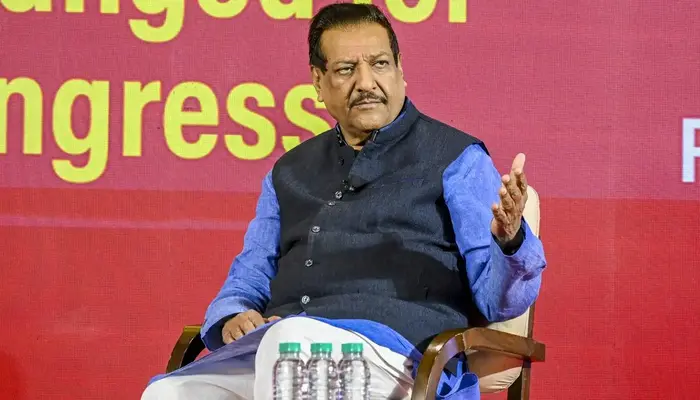
Case Summary
Former Maharashtra Chief Minister Prithviraj Chavan, reacting to the verdict in the 2008 Malegaon bomb blast case, said that the outcome of the case was predictable and followed the direction in which the investigation had been steered. He further urged all to refrain from using the term "saffron terrorism". Instead, he asked to use the terms like "Hindutvavadi terrorism" or "sanatani terrorism". Chavan began by highlighting that the Malegaon blast occurred 17 years ago and caused the deaths of six people while injuring over 100 others. He noted that from the very beginning, he was certain of the eventual verdict, and that it came as no surprise. He asserted that the case had moved in a predetermined direction and concluded as expected. He said that the court delivered its judgment based solely on the arguments presented by the National Investigation Agency (NIA), which had failed to produce sufficient evidence against the accused. Chavan remarked that there were unanswered questions about how the explosives reached the site, who conspired to orchestrate the attack, and who procured the RDX. He openly questioned the role of the NIA, stating that under the leadership of Union Home Minister Amit Shah, investigative agencies are expected to function in a manner that leads to such outcomes. Chavan raised serious concerns about the direction and independence of these agencies, and directly held Shah accountable for the pattern of acquittals in sensitive cases. Importantly, Chavan made a clear appeal regarding the terminology used to describe the incident. He urged people not to use the phrase "saffron terrorism", explaining that the saffron flag holds historical and spiritual significance in Maharashtra. It is the colour of Chhatrapati Shivaji Maharaj’s flag and also of the Warkari tradition, which is deeply revered across the state. Instead, he suggested that the terms "Hindutvavadi terrorism" or "Sanatani terrorism". He also extended this appeal to Congress party members, requesting them to avoid equating saffron with acts of violence or terror. Also, hitting back at Chief Minister Devendra Fadnavis, who said there never was any Hindutva or saffron terror, he asked, “Who was Nathuram Godse then? Who killed Comrade Pansare or Narendra Dabholkar? While terror has no colour, acts of terror need to be recognised. What is the colour of terror in Manipur?” The Malegaon 2008 blast case, which involved a deadly explosion near a mosque and led to six deaths and over a hundred injuries, was mired in controversy from the very beginning. The initial investigation by the Maharashtra ATS aggressively pursued a narrative implicating members of Hindu organisations, particularly targeting individuals like Sadhvi Pragya Singh Thakur and Lt Col Prasad Purohit. The charges rested on flimsy evidence—no forensic link to the alleged vehicle, no proof of possession of explosives, and procedural lapses such as contaminated samples and missing site documentation. After years of legal battle, a special NIA court ultimately acquitted all the accused, underlining the absence of credible evidence and flawed investigation. Beyond legal shortcomings, the case was used as a political tool to construct and propagate the notion of “saffron terror.” During the UPA regime, Congress leaders like Digvijay Singh, P Chidambaram, and Sushilkumar Shinde pushed the idea that Hindu nationalist groups were orchestrating acts of terror. The term "saffron terror" was weaponised to malign Hindutva, the RSS, and affiliated organisations, equating cultural identity with terrorism. This narrative even reached international platforms, with Rahul Gandhi describing Hindu groups as a greater threat than Islamist outfits during diplomatic conversations.
Why it is Hate Crime ?
This case has been added to the tracker un the primary category of - Hate speech against Hindus. The sub-category selected here is - Anti-Hindu slurs, mocking faith. Anti-Hindu slurs and the deliberate mocking of the Hindu faith owing to religious animosity involve the usage of derogatory terms, stereotypes, or offensive references to religious practices, symbols, or figures. One of the common anti-Hindu slurs used against Hindus is “cow-worshipper” and “cow piss drinker”. The intention of using this term is to demean and mock Hindus as a group and their religious beliefs since Hindus consider the cow holy. Additionally, some symbols and the slurs attached to them have a historical context that exacerbates the insult, hate, stereotyping, dehumanisation and oppression against Hindus. Cow worship has been used for centuries to denigrate Hindus, insult their faith and oppress Hindus specifically as a religious group. There has been overwhelming documentation about how cow slaughter has been used to persecute Hindus with cow meat being thrown in temples and places of worship. There has also been overwhelming documentation where cow meat (beef) has been force-fed to Hindus to either forcefully convert them to Islam or denigrate their faith. Apart from cow worship, the Swastika – which holds deep religious significance for the Hindus – has also been misinterpreted and distorted to use as a slur against Hindus. Similarly, the worship of the Shivling has been used by supremacist ideologies and religions to denigrate Hindus owing to religious animosity. Such slurs and denigration stem out of inherent animosity and hate towards Hindus and their faith, therefore, it is categorised as hate speech targeted at Hindus specifically owing to their religious identity. The other sub-category relevant is- Anti Hindu subversion and prejudice, and within it, the tertiary category selected is- Anti-Hindu Fake News or Downplaying. Hate speech is defined as any speech, gesture, conduct, writing, or display that is prejudicial against a specific individual and/or group of people, which is leading to or may lead to violence, prejudicial action or hate against that individual and/or group. Media plays a specific and overarching reach in perpetuating prejudicial attitudes towards a community owing to unfair, untrue coverage and/or misrepresentation/misinterpretation, selective coverage and/or omission of facts of/pertaining to issues affecting a specific religious group. This type of bias can dehumanise the victim group, making it easier for others to justify harmful actions against them, which aligns with the objectives of hate speech laws aimed at preventing such harm. It is often observed that the media takes a prejudicial stand against the Hindu community driven by their need to shield the aggressor community which happens to be a numeric minority, however, is the one perpetrating violence against Hindus. For example, the media is often quick to contextualise religiously motivated crimes against Hindus, omit or misrepresent facts that point towards religiously motivated hate crimes, justify and/or downplay religiously motivated hate crimes or simply present fake news to stereotype Hindus. Such media bias leads to the denial of persecution and is often used to dehumanise Hindus, leading to justification for violence against them. For example, the media covered several fake allegations of Hindus targeting Muslims and forcing them to chant Jai Shree Ram. Most of these cases were proved false and fabricated after police investigation. These fake news reports were subsequently never retracted or clarified. Such fake news led to the justification of violence and dehumanisation of Hindus based on the argument that since Hindus targeted Muslims and forced them to chant Jai Shree Ram, the dehumanisation of Hindus and violence against them was par for the course and merely a retaliation. Such media bias leads to prejudicial portrayal of Hindus and offers a justification for violence against them and therefore, is considered hate speech under this category. Prithviraj Chavan’s statement, in which he urges the use of terms like “Hindutvavadi terrorism” or “Sanatani terrorism”, constitutes a clear case of hate speech against Hindus. His deliberate invocation of religiously loaded terms like “Sanātani terrorism” and “Hindutvavadi terrorism” directly maligns deeply sacred aspects of Hindu identity. “Sanatani” refers to Sanatana Dharma, a foundational term for the Hindu faith itself. Using it in the context of terrorism implicitly equates Hinduism’s core tradition with violent extremism, which is a form of slander, distortion, and group-based vilification that stems from religious animosity. It weaponises Hindu religious identity itself, using it as a slur under the guise of political commentary. Sanatan Dharma is an endonym for the faith professed by Hindus. The term has its roots in Sanskrit and can be roughly stated to be "Eternal Dharma" - the ongoing, ancient, continuing faith of Hindus. Sanatan Dharma (as a traditional endonym) finds scriptural sanctity in ancient texts like Manusmriti and Mahabharat. Therefore, maligning the Sanatan Dharma is essentially maligning the Hindu faith itself. When the faith is vilified, Hindus become vulnerable to prejudicial attacks against their faith and attacks against them as individuals/groups owing to their religious identity, which is being vilified. Despite the court's clear ruling that no evidence was found against the accused, Chavan not only questions the judiciary but also pushes the unproven and now judicially dismissed narrative that links Hindu individuals and by extension Hindu organisations to terrorism. This selective disregard for facts and legal outcomes perpetuates an unfounded stereotype of Hindu involvement in terror activities. It actively subverts the truth and promotes a prejudicial image of Hindus as violent extremists, ignoring judicial findings and established investigative shortcomings. By refusing to accept the acquittal as legitimate and continuing to frame the case as one of “Hindutvavadi” or “Sanatani” terrorism, he propagates a form of anti-Hindu fake news, implying guilt despite the lack of evidence, which fuels group-based suspicion and animosity. Also, Chavan hypocritically separates the Bhagwa flag from Hinduism. The Bhagwa flag is not a neutral cultural symbol—it is a deeply sacred emblem of Hindu Dharma, historically representing sacrifice, knowledge, and spiritual authority. By acknowledging its links to Chhatrapati Shivaji Maharaj and the Warkari tradition but denying its Hindu roots, Chavan attempted to sanitise Hindu symbolism from public discourse while implicitly validating the vilification of Hindutva and Sanātana Dharma. This selective appropriation and denial of Hindu identity is a form of symbolic erasure that targets the religion itself. Chhatrapati Shivaji Maharaj was a devout Hindu king, and the Warkari tradition is an explicitly Hindu bhakti movement centred on Vithoba, an incarnation of Vishnu. By stripping these figures and traditions of their Hindu identity to defend the Bhagwa, while branding terms like Sanatani and Hindutvavadi as terror-linked, Chavan engaged in a duplicitous denial of Hindu religious heritage. This selective framing not only insults the intelligence of the Hindu community but also amounts to symbolic erasure—denigrating Hindu identity while appropriating its cultural capital. Such rhetoric promotes prejudice, reinforces anti-Hindu narratives, and meets the threshold of hate speech targeting Hindus as a religious group. Chavan has also vilified Hindutva. 'Hindutva' is often used as a euphemism to make the targeting of Hindus more palatable. Hindutva is essentially a unifying ideology for Hindus, which became imperative for Hindus to find and preserve their cultural identity, which was being eroded and attacked due to Islamic invasions, British colonisation, and Christian theological impositions and conversions. Hindutva is not a destructive ideology, as some attempt to portray, but one that is used as a unifying edifice for Hindus. Hindutva is also often used as a euphemism to target Hindus on the whole and their religious identity and faith. It is essentially semantic jugglery to confuse Hindus into believing that their own persecution by supremacists is somehow 'justified' because the specific victims espoused an ideology (Hindutva) which deserves the onslaught. The fact that the use of 'Hindutva' is merely to mask animosity towards Hindus was evident from the "Dismantling Global Hindutva" conference held in the USA, where speakers unabashedly spoke about how Hindutva and Hinduism are indistinguishable and therefore, to "dismantle Hindutva" one would have to "dismantle Hinduism". The practices of targeting Hindus and their religious and cultural identity, and justifying that victimisation and dehumanisation by using euphemisms like "Hindutva" stem from inherent animosity and hostility towards Hindus. In sum, Prithviraj Chavan’s statement constitutes a hate crime against Hindus because it weaponises sacred Hindu identifiers like Sanatani and Hindutvavadi by associating them with terrorism, despite the court’s acquittal of all accused due to lack of evidence. This not only slanders an entire religious tradition but also reinforces prejudicial stereotypes, promotes group-based hatred, and perpetuates false narratives that have historically led to the dehumanisation and justification of violence against Hindus.


Case Status
Unknown


Perpetrators Details
Perpetrators
Others
Perpetrators Range
One Person
Perpetrators Gender
male
 Sources




