Court sanctions desecration of temple by allowing preaching of Islam inside premises saying it was not an 'attempt to convert'
 Dharwad, Karnataka, India
  16 July, 2025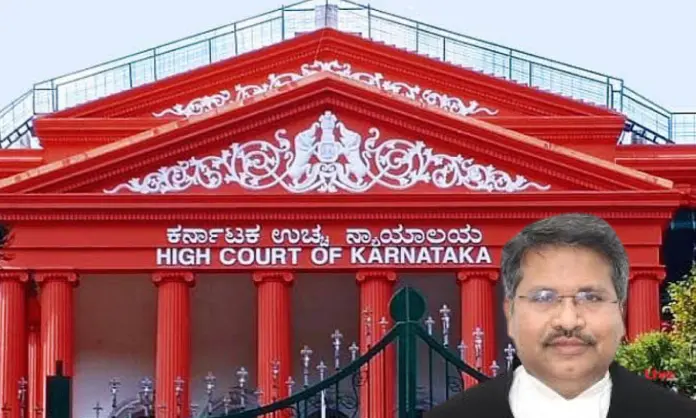
Case Summary
The Karnataka High Court quashed the FIR filed against three Muslim men accused of distributing Islamic pamphlets and promoting their faith inside the Ramatheerth Temple in Jamkhandi. The case arose from an incident on May 4, 2025, when the individuals were seen distributing literature on Islamic teachings within the temple premises and made disparaging remarks about Hinduism in conversations with devotees. Ramesh Mallappa Navi, the complainant in the case, had stated that the men offered inducements such as jobs in Dubai and vehicles, which were interpreted as attempts at religious conversion. On May 4, 2025, around 4:30 p.m., the complainant visited the Ramatheerth Temple in Jamkhandi. During his visit, he noticed a group of individuals distributing pamphlets promoting Islamic teachings and engaging in verbal discussions about their faith. The Muslim accused attempted to convert Hindu devotees by extolling Islam and insulting and belittling Hinduism, calling Hindu deities 'Kafir'. The situation soon escalated, leading to a serious disturbance. The complainant, along with Sri Shrishail Apte and several other devotees present at the time, approached the individuals to question their actions. In response, the group began to make derogatory statements about the Hindu religion. They said things like, “If you remain a Hindu, you will never find God. There is no God except Allah, and all other gods are Kafir.” They further declared their intention to convert the entire world to Islam and warned that anyone who tried to hinder their mission would face grave consequences. They threatened by saying, “We will not spare your lives.” According to the complaint, the individuals were also offering incentives, such as vehicles and job opportunities in Dubai, as a means to lure people into converting to Islam. When asked to identify themselves, the individuals gave their names as Mustafa Murtusaheb Momin, Alisaheb Shabir Alagundi, and Suleman Riyaz Ahemed Galagali. Following the incident, the complainant filed a report, and based on this, the police registered a case. The FIR had invoked Sections 299, 351(2), and 3(5) of the Bharatiya Nyaya Sanhita (BNS), 2023, along with Section 5 of the Karnataka Protection of Right to Freedom of Religion (KPRFR) Act, 2022. However, the accused moved the High Court, seeking quashing of the FIR on the grounds that no coercion or force was employed, and they were only engaging in dialogue. Justice Venkat Naik T of Karnataka HC, while quashing the FIR, ruled that no offence was made out under either the BNS or the KPRFR Act. He reasoned that the FIR did not establish any “attempt to convert” as defined under Section 3 of the KPRFR Act, since there was no direct evidence of coercion, allurement, or misrepresentation. The court observed that under Section 4 of the Act, only the converted person or their immediate family has the standing to file a complaint. The court declared the complainant a third party and held the FIR to be procedurally untenable.
Why it is Hate Crime ?
This case has been added to the tracker under the primary category of: Hate Speech against Hindus. The first subcategory under this is: Anti-Hindu slurs, mocking faith. Anti-Hindu slurs and the deliberate mocking of the Hindu faith owing to religious animosity involve the usage of derogatory terms, stereotypes, or offensive references to religious practices, symbols, or figures. One of the common anti-Hindu slurs used against Hindus is “cow-worshipper” and “cow piss drinker”. The intention of using this term is to demean and mock Hindus as a group and their religious beliefs since Hindus consider the cow holy. Additionally, some symbols and the slurs attached to them have a historical context that exacerbates the insult, hate, stereotyping, dehumanisation and oppression against Hindus. Cow worship has been used for centuries to denigrate Hindus, insult their faith and oppress Hindus specifically as a religious group. There has been overwhelming documentation about how cow slaughter has been used to persecute Hindus with cow meat being thrown in temples and places of worship. There has also been overwhelming documentation where cow meat (beef) has been force-fed to Hindus to either forcefully convert them to Islam or denigrate their faith. Apart from cow worship, the Swastika – which holds deep religious significance for the Hindus – has also been misinterpreted and distorted to use as a slur against Hindus. Similarly, the worship of the Shivling has been used by supremacist ideologies and religions to denigrate Hindus owing to religious animosity. Such slurs and denigration stem out of inherent animosity and hate towards Hindus and their faith, therefore, it is categorised as hate speech targeted at Hindus specifically owing to their religious identity. The second subcategory under this is: Anti-Hindu subversion and prejudice. Hate speech is defined as any speech, gesture, conduct, writing, or display that is prejudicial against a specific individual and/or group of people, which is leading to or may lead to violence, prejudicial action or hate against that individual and/or group. Media plays a specific and overarching reach in perpetuating prejudicial attitudes towards a community owing to unfair, untrue coverage and/or misrepresentation/misinterpretation, selective coverage and/or omission of facts of/pertaining to issues affecting a specific religious group. This type of bias can dehumanise the victim group, making it easier for others to justify harmful actions against them, which aligns with the objectives of hate speech laws aimed at preventing such harm. It is often observed that the media takes a prejudicial stand against the Hindu community, driven by their need to shield the aggressor community which happens to be a numeric minority, however, is the one perpetrating violence against Hindus. For example, the media is often quick to contextualise religiously motivated crimes against Hindus, omit or misrepresent facts that point towards religiously motivated hate crimes, justify and/or downplay religiously motivated hate crimes or simply present fake news to stereotype Hindus. Such media bias leads to the denial of persecution and is often used to dehumanise Hindus, leading to justification for violence against them. For example, the media covered several fake allegations of Hindus targeting Muslims and forcing them to chant Jai Shree Ram. Most of these cases were proved false and fabricated after police investigation. These fake news reports were subsequently never retracted or clarified. Such fake news led to the justification of violence and dehumanisation of Hindus based on the argument that since Hindus targeted Muslims and forced them to chant Jai Shree Ram, the dehumanisation of Hindus and violence against them was par for the course and merely a retaliation. Such media bias leads to prejudicial portrayal of Hindus and offers a justification for violence against them and, therefore, is considered hate speech under this category. This case qualifies as a religious hate crime because the entry of individuals preaching Islamic theology into the premises of the Ramatheerth Temple cannot be construed as a benign or spontaneous act of public speech. Temples are consecrated spaces reserved for rituals, prayer, and observances particular to the Hindu faith. The act of circulating Islamic religious literature and engaging in missionary conversation within such a sanctified space was a deliberate affront to the sanctity of the site and the sentiments of its devotees. Moreover, using disparaging remarks against Hindu deities is an affront to the faith of millions of Hindu devotees. Such actions reflect a conscious disregard for religious boundaries. The High Court’s dismissal of the case on unfounded grounds, specifically the lack of locus standi of the complainant and the absence of explicit evidence of forced conversion, fails to acknowledge the deeper communal implications of the incident. The court further held that the FIR lacked sufficient details to prove coercion, misrepresentation, or inducement, despite acknowledging that Islamic preaching occurred within a Hindu temple and that incentives were mentioned. The judgment reveals a conspicuous contradiction between the factual narration of events and the court’s eventual legal conclusions. In the initial portion of the judgment, the incident is described with clarity and specificity. It is stated that on 4 May 2025, at approximately 4:30 p.m., the complainant, along with one Shrishail Apte and other Hindu devotees, was present at Ramatheerth Temple in Jamkhandi when a group of individuals began distributing pamphlets promoting Islam. These individuals were not merely engaged in quiet religious discourse but were actively criticising the Hindu faith and advocating for conversion in assertive, exclusivist terms. The words attributed to them were unambiguous and inflammatory: “If you continue to stay as Hindu, you will not be able to find God. There is no God except Allah, and all other gods are Kafir.” Such expressions carry not only a theological assertion but also a direct insult to the religious identity of Hindus. Furthermore, the individuals are recorded to have declared that they aimed to “make the whole world turn towards Islam,” and they issued threats stating, “we will not spare your lives,” directed at anyone who would obstruct their mission. Alongside verbal coercion, they offered material inducements, such as vehicles and job opportunities in Dubai, as part of their attempt to attract conversions. These facts, as recounted in the very body of the judgment, clearly reflect conduct that would fall within the purview of attempted conversion through allurement and threat, as defined under Section 3 of Karnataka’s anti-conversion statute. The conduct occurred in a Hindu temple, in full view of devotees who were themselves addressed and challenged by the perpetrators. The complainant, whose presence at the temple during the episode is unambiguously recorded, approached the proselytisers directly, questioned their actions, and was a firsthand witness to the religious denigration and threats articulated by them. He was not merely a third-party observer but an active participant in responding to the disturbance. In stark contrast, the latter portion of the judgment takes an altogether contradictory position. It states that the complainant “does not fall within the category of persons enumerated under Section 4 of the Act” and therefore lacked the locus standi to initiate proceedings. This assertion disregards the clear record of the complainant’s direct involvement. More significantly, it misrepresents the application of Section 4, which typically governs who may file a formal complaint before a magistrate, but does not restrict the capacity of an eyewitness or concerned individual from reporting a cognisable offence to the police. In this case, the FIR was registered by the police based on a credible complaint concerning public inducement and threats made in a place of worship, which is unquestionably within the remit of police action under the general provisions of criminal law. The judgment further asserts that even if all allegations in the FIR are accepted at face value, they “fail to satisfy the essential elements” of an offence under the Act, citing the absence of any actual conversion or direct attempt to convert a named individual. This interpretation sets an implausibly narrow threshold for criminal liability under the statute. The statute criminalises not only completed conversions but also attempts made through specified means, including inducement and coercion. In the present case, the use of material promises and death threats, combined with verbal denigration of Hinduism, within a religious space, meets the criteria for at least an attempted conversion by improper means. This contradiction between the detailed factual observations and the later dismissal on technical and interpretive grounds reflects a serious flaw in judicial reasoning in the case. The court acknowledges that inflammatory religious statements were made, threats were issued, and inducements were offered, all in a public temple setting, yet it fails to reconcile these facts with the statutory definitions it is meant to apply. The conclusion appears not only inconsistent but also dismissive of both the content and context of the offence. The verdict of quashing the FIR was indicative of an underlying bias rooted in a profound animosity toward Hindus and their faith. This is why this case has been added to the tracker.


Case Status
Unknown


Perpetrators Details
Perpetrators
State and Establishment
Perpetrators Range
N/A
Perpetrators Gender
unknown
 Sources




