Attack on Hindu religious sentiments: Durga idol and Shiv Lingas desecrated in Sisai, Jharkhand
 Gumia, Jharkhand, India
  16 July, 2025
Case Summary
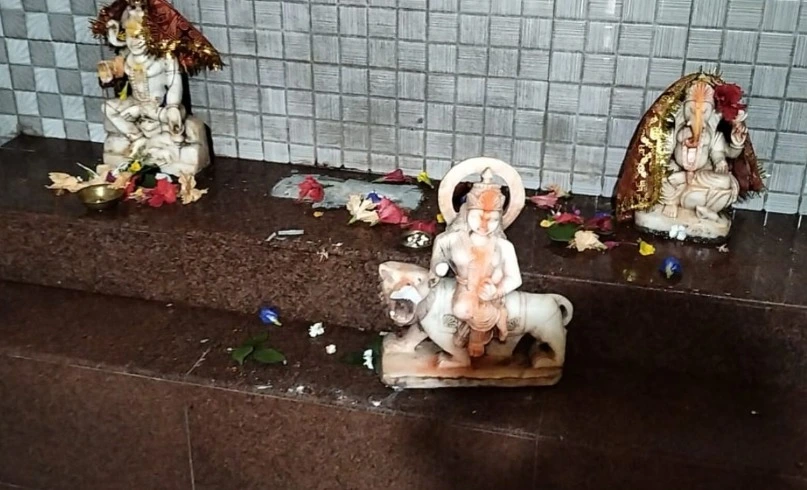
In Sisai, Gumla district of Jharkhand, a Hindu temple was vandalised, with the idol of Maa Durga damaged by an unknown miscreant. Along with the idol, two to three Shiv Lingas were also deliberately broken and left scattered. The incident occurred in the afternoon, when someone entered the Shiva temple and deliberately vandalised and desecrated the temple. According to a Hindu man named Umesh Kumar Malakar, a flower seller residing on the temple premises, he discovered the desecration at around 3:45 PM when he entered the temple to start devotional music. He had last seen devotees worshipping there until 1:30 PM and was in his room in the afternoon when the incident occurred. Upon witnessing the desecration, he alerted everyone, and the police were also informed. Police promptly arrived at the temple and started the investigation, scanning CCTV footage of the area. In response, local Hindu residents expressed their outrage by blocking the Sisai main road. By evening, all shops in the Sisai area were closed as a sign of protest. The protestors have demanded the immediate arrest of those responsible and warned of a larger protest if arrests are not made. As of the date of writing this report, a woman was arrested by the police as part of the investigation. It was claimed that the arrested woman is mentally challenged. The investigation was ongoing.
Case Images
Why it is Hate Crime ?
This case has been added to the tracker under the primary category of: - Attack on Hindu religious representations. Within it, the sub-category selected is: - Attack on temples. In Hinduism, a temple is the abode of the Deity. The Deity in the Temple is consecrated, thereby, making it a real, breathing entity. Hindus believe that not just the Deity but the temple premises itself are sacred to Hindus since Hindus hold the faith that the entire Temple space is an amalgamation of the divine energy of the deity. Given the central significance of Temples in Hindu Dharma, any attack against a Hindu Temple or its peripheral premises is an attack on the faith itself and is born out of animosity towards the faith, of which, the Temple is a central tenet. Any manner of attack against a Temple and/or its premises would therefore be considered a religiously motivated hate crime. The other sub-category relevant here is: - Desecration of Hindu religious symbols. Icons and symbols or a religious representation of a spiritual ideal are widely revered in Hinduism. Iconography is of vital significance in the Hindu milieu. It helps connect people’s spiritual beliefs with the real world. Iconography within the Hindu faith takes several shapes and forms. Murtis are of most significance to Hindus, to which daily rituals, prayers and offerings are done. Besides the murtis, there are several other symbols which have deep significance in the Hindu faith – the Om and Swastika for example. Since these Hindu religious symbols hold paramount importance in Hinduism, any desecration of symbols, icons, murtis, religious representations and manifestations, is driven by animosity towards the faith itself which manifests itself through these murtis, icons and symbols. Therefore, any desecration of these Hindu religious symbols and representations is considered religiously motivated hate crimes under this category. This case has been added to the tracker because the Shiva temple was vandalised, with its consecrated idol of Maa Durga damaged by the accused. The accused also broke multiple Shiv lingas present within the temple. A temple is an institution that holds immense spiritual importance in the Hindu faith. For Hindus, temples are not mere physical structures; they are sanctified spaces that embody the divine presence of Hindu deities. Acts of violence against such spaces are not isolated incidents of destruction but reflect underlying hostility towards Hindu beliefs and identity. The attack also involved the deliberate destruction of consecrated idol and Maa Durga and Shiv lingas inside the temple in an act of desecration. In Hinduism, idols of Hindu deities are not just artistic representations but are deeply revered manifestations of the divine. Their desecration is seen as a direct affront to the religious sentiments of Hindus and an act of profound disrespect. Such acts of violence against Hindu temples and their idols are not just an attack on the temple property; it is an act of violence against the religious sentiments of the Hindu community that derives spiritual, cultural, and social meaning from that temple space. Furthermore, the psychological impact of such attacks is immense. Hindu devotees visit temples to seek solace, peace, and a sense of connection with the divine. When these sacred temples are targeted and desecrated, it shatters the sense of security and belonging that the Hindu community derives from its religious institutions. The pain caused by the desecration of the temple idols is not limited to the physical damage; it is a wound to the collective psyche of the Hindu community. Since this attack was directed at both the Hindu temple and the temple idols, it is classified as a religiously motivated hate crime against the Hindu community. While a woman has been arrested in this case, it was claimed that she was mentally unstable. Such explanations are frequently used to deflect attention from the religious nature of the act. In several cases, where non-Hindu individuals vandalise and desecrate Hindu places of worship and a usual trope to shield the perpetrator is to attribute the crime to the mental health of the accused, claiming that the crime was committed since the perpetrator was ‘mentally ill’ or ‘mentally unstable’. The police and the media, in many such cases, where the crime has been committed against the Hindu faith by a non-Hindu perpetrator, deny that the crime committed was in any way motivated by a religious bias and attribute it to the perpetrator’s mental health. Many a time, the police downplay incidents of low-level communal crime because it is their jurisdiction that comes under question. The police also often say that the crime was committed because the accused was mentally unstable, because they wish to ensure that, owing to the crime already committed, there is no further flare-up in the area. In fact, there are many cases where this strategy has been used by the media to downplay such incidents where the crime was committed by a Muslim perpetrator, for example, the attack on the Gorakhnath temple or the incident in Telangana where two Muslim women wearing a burqa tried to damage temple and church idols. The use of the "mental illness" trope to justify crimes targeting Hindu temples or idols by Muslim perpetrators raises critical questions. If perpetrators are indeed mentally unstable, why do they specifically target Hindu idols and places of worship, leaving other places of worship untouched? This selective focus suggests that such acts are not driven by mental health issues but by religious animosity. The repeated use of this narrative to downplay crimes against Hindus reflects a strategic effort to whitewash religious hatred, obscuring the true motivations and intentions behind the attacks. The act itself, attacking the temple and desecrating idols, stemmed from hatred against Hinduism and resulted in the desecration of the sacred temple and would therefore be considered a religiously motivated hate crime.


Case Status
Arrested


Perpetrators Details
Perpetrators
Unknown
Perpetrators Range
One Person
Perpetrators Gender
female
 Sources




