Hindu man threatened with beheading by Muslim youth for asserting right on Hindu site in Indore
 Indore, Madhya Pradesh, India
  7 July, 2025
Case Summary
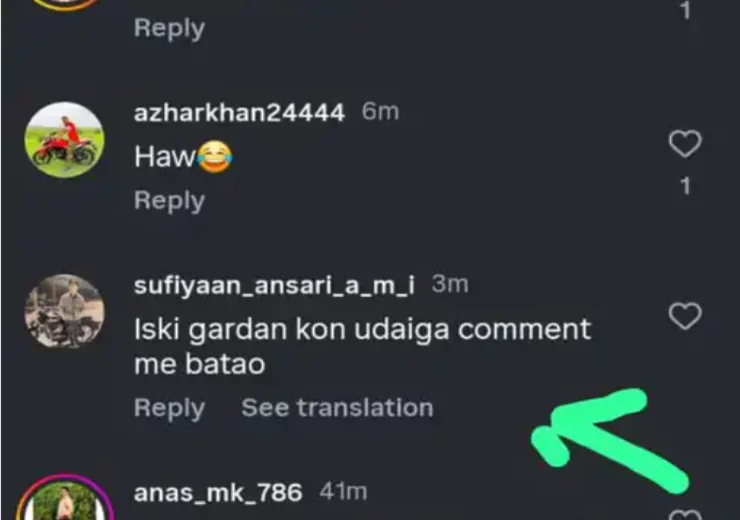
In Indore, Madhya Pradesh, a Hindu man received a veiled 'Sar Tan Se Juda' (beheading) threat from a Muslim youth named Sufiyan Ansari. According to the reports, on the night of July 8, a Maha Aarti program was organised at the Hanuman temple in Dhobi Ghat Maidan by the Hindu Jagran Manch and Dhobi Ghat Raksha Samiti. During the event, a Hindu man named Sumit Hardia, district convenor of the Hindu Jagran Manch, raised the slogan “Har Hindu ka naara hai, Dhobi Ghat hamara hai” (Every Hindu’s slogan is, Dhobi Ghat is ours), highlighting the long-standing cultural and religious association of the site with the Hindu and the Dhobi communities. A video of the slogan was later posted on social media, where a Muslim youth named Sufiyan Ansari commented on it, saying, “Iski gardan kon udaiga comment me batao" (Who will behead him?, write in comments). The comment was a direct death threat aimed at Sumit Hardia and an attempt to provoke communal tensions. Thus, the Hindu man, accompanied by members of the Hindu organisation, approached the police, stating that it wasn't just a personal threat but also part of a larger conspiracy to incite communal disharmony and provoke the Hindu community. As of the date of writing this report, a case was registered by the police, and the investigation was ongoing. Notably, in early July 2025, a fair planned at Dhobi Ghat ground (popularly known as Hanuman Chowk) near Lalbagh in Indore sparked intense local controversy. Official communications from the Indore Municipal Corporation (IMC) referred to the venue as “Karbala Ground”, instead of its traditional name. This led to protests by the Hanuman Chowk Dhobi Ghat Ground Protection Committee, who saw the renaming as a disrespect to their Hindu heritage and cultural identity. The committee stated the site is traditionally known as Hanuman Chowk Dhobi Ghat Ground and not Karbala. Protesters gathered on‑site, chanting slogans like “This is Hanuman Chowk” and reciting Hanuman Chalisa and prayers. They even offered to pay the municipal corporation Rs 9 lakh for the three-day permit, urging the IMC to maintain the traditional name. After the uproar, IMC, claiming that it was a clerical mistake, issued a revised official letter, correcting the venue name to “Dhobi Ghat ground”, reaffirming that all other permissions remained unchanged.
Case Images
Why it is Hate Crime ?
This case has been added to the tracker under the primary category of: - Hate speech against Hindus. Within it, the sub-category selected is: - Violent threats. Violent threats, explicit, implicit or implied, is the most dangerous form of hate speech since it goes beyond discriminatory and prejudicial language to express the intent of causing harm to an individual or a group of people based on their religious identity and faith. There could be several different kinds of threats that are issued to Hindus based on religious animosity. An explicit threat would mean the direct threat of violence towards an individual Hindu, a group of Hindus or Hindus at large. Physical violence, death threats, threats of destruction of property belonging to Hindus and threats of genocide would mean explicit threats against Hindus for their religious identity. Implicit threats may not be a direct threat but implied through the use of symbols of actions – for example – in the Nupur Sharma case, other than explicit threats, there were also implicit threats when Islamists took to the streets to burn and beat her effigies. It implies that they want to do the same to Nupur Sharma – thereby is considered an implicit threat. Violent threats can be delivered in person, through letters, phone calls, graffiti, or increasingly through social media and other online platforms. It would be important to understand that a threat – explicit or implicit, online or offline – to an individual who happens to be a Hindu does not qualify as a religiously motivated threat. Such a threat, while vile and dangerous, could be owing to non-religious reasons and/or personal animosity. To qualify as a religiously motivated threat, it would need to exhibit an indication that the individual is being targeted for religious reasons and/or owing to his/her religious identity as a Hindu. This case has been added to the tracker because a Hindu man was given a veiled beheading threat by a Muslim youth simply for asserting his Hindu identity and raising a slogan that reflected the long-standing cultural and religious association of Dhobi Ghat with the Hindus. That alone was enough for the Muslim youth, Sufiyan Ansari, to ask on social media, “Who will behead him?”, a clear and dangerous call to violence against the Hindu man. This was not an isolated expression of personal disagreement but a targeted, religiously motivated threat aiming to intimidate a Hindu man for exercising his right to free speech and for asserting his Hindu identity. Beheading or the 'Sar Tan Se Juda' threats have increasingly become a common feature among radicalised Muslim youth targeting Hindus, especially those who are vocal about their Hindu identity or critical of Islamic violence. These threats are rooted in religious animosity that exists in Islam against polytheistic religions, like Hindus, which paints non-Muslims as legitimate targets for violence, simply for asserting their identity. From Kanpur in India’s northern plains to the southern metropolis of Bengaluru, from Kolkata in the east to Hyderabad in the south, protests in the name of blasphemy have erupted in almost every corner of the country as Islamists took to the streets running and shouting “Sar Tan Se Juda” chants over the perceived belief of blasphemy against the Prophet. Though a radical Muslim outfit in Pakistan coined the slogan, it has gained popularity among Muslims in regions beyond its geographical origins. Over the years, we have seen large crowds of Islamists chanting the “Sar Tan Se Juda” slogan, which is nothing but a direct incitement to violence, leading to murders committed in the name of blasphemy. The radicalised outcry is not merely a statement of disapproval; it is a call for the execution of an individual through beheading, based on their religious identity. When this slogan is raised, it sends a clear and terrifying message not just to the individual targeted but also to anyone else who might share similar views or dare to express them. This tactic of intimidation aims to silence dissent and suppress freedom of expression, particularly in religious discourse. It aims to instil fear in the broader community. Islamists use this tactic to settle personal scores with Hindu and Christian families by levelling fabricated charges of blasphemy against them, which causes outrage and paints a target on them. The underlying hatred and animosity toward non-Muslims, especially Hindus, drive these false accusations as a means to subjugate and victimise them. This aligns directly with previous patterns observed in cases where Hindus, like Nupur Sharma, have been doxxed and harassed for expressing religious opinions or criticising historical or contemporary Islamic violence. The Hindu man's identity and his religious assertion became the only trigger for a violent threat, making the intent and religious animosity behind it undeniable. As a result, this case is classified as a religiously motivated hate crime and has been added to the hate crime database.
Victim Details
Total Victim
1
Deceased
0
Gender
- Male 1
- Female 0
- Third Gender 0
- Unknown 0
Caste
- SC/ST 0
- OBC 0
- General 0
- Unknown 1
Age Group
- Minor 0
- Adult 1
- Senior Citizen 0
- Unknown 0


Case Status
Complaint registered


Perpetrators Details
Perpetrators
Muslim Extremists
Perpetrators Range
One Person
Perpetrators Gender
male
 Sources




