Dalit Hindu gau rakshak brutally attacked by Muslim mob with sharp weapons for opposing cow smuggling
 Mandideep, Madhya Pradesh, India
  5 June, 2025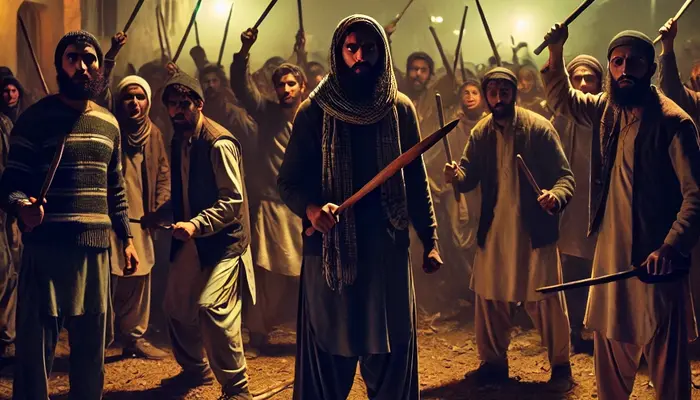
Case Summary
In Mandideep, Madhya Pradesh, a Dalit Hindu gau-rakshak (cow protector) named Ajay Malviya was brutally attacked by a Muslim mob of more than 500 people after he and his fellow Hindu activists opposed illegal cow smuggling by Muslim cow smugglers and apprehended them. According to media reports, the dispute occurred on the day of Eid, when Muslim cow smugglers were illegally transporting cows and cattle. Members of Hindu organisations, alarmed by the incident, attempted to apprehend the smugglers and rescue the cattle. They managed to detain the smugglers and brought them to the nearest police station. Members of the Muslim community also gathered at the police station. Subsequently, a mob of more than 500 Muslims launched a violent attack on the Hindu activists. Among them, Ajay Malviya was severely injured, suffering wounds from sharp weapons. The Hindu activists managed to rescue him and rushed him to Hamidia Hospital for treatment, where his condition was critical. The main accused leading the mob were identified as Sohail Khan and Aslam Pathan, who led the attack on Ajay Malviya and other Hindu activists. Following this, the police registered cases under serious sections, including attempted murder (Section 307), rioting, and incitement to riot. The Hindu organisation demanded the immediate arrest of the accused. However, the police also registered cases against Hindu activists. In total, cases were registered against 12 individuals: Mohammad Sohail Khan, Aslam Khan, Shivkumar Tagore, Sandeep English, Mandeep, Rakesh Keer, Ayat Ali Lucky, Farhan Sheikh, Farhan, Hamza Ahmed, and Mohammad Saifi. All were arrested and sent to jail. Hindu activists expressed outrage over this, demanding that the cases against the Hindu activists be dropped. They also called for the Muslim perpetrators to be charged under the SC/ST Act and criticised the police for not taking strict action against the main perpetrators, who were booked under lighter sections of the law. The Hindu activists staged protests, demanding the removal of cases against the Hindu gau-rakshaks, the arrest of all the Muslim accused, and that the main perpetrators be charged under the SC/ST Act. Reports also suggest that Hindu activists had previously held protests with the same demands, but the police had not taken any action.
Why it is Hate Crime ?
This case has been added to the tracker under the primary category- Attack not resulting in death. Within this, the subcategory selected is- Attacked for opposing radicals or trying to save the victim. In several cases, Hindus are attacked for opposing religiously motivated crimes being committed against a fellow Hindu or simply for voicing an opinion opposing radical elements, who either have in the past or continue to persecute Hindus. In such cases, the initial attack against the victim, against which the Hindu was trying to defend the victim, would also need to be classified as a religiously motivated hate crime. Since the initial crime itself was religiously motivated and the subsequent crime of attempting to save the victim or speaking against the radical elements ends up inviting a violent attack, it would also be classified as a religiously motivated hate crime under this category. Another subcategory selected in this case is- Communal clash/attack. Communal clash is a form of collective violence that involves clashes between groups belonging to different religious identities. For a communal clash between Hindus and non-Hindus to qualify as a religiously motivated hate crime, the trigger of the violence itself would have to be anti-Hindu in essence. For example, if there is a Hindu religious procession that comes under attack from a non-Hindu mob and after the initial attack, Hindus retaliate in self-defence, leading to a communal clash between the two religious communities. While at a later stage, both communities are involved in the clash/violence, the initial trigger of the violence was by the non-Hindu mob against the Hindus and therefore, it could safely be termed as an anti-Hindu violence. Further, the trigger would also have to be religiously motivated. In the cited example, the attack by the non-Hindu mob was against religious processions and therefore, can be concluded to be religiously motivated. In some cases, the trigger may be non-religious, however, it develops into religious violence against Hindus at a later stage. In such cases too, the foundational animosity towards Hindus becomes the motivating factor of the crime and therefore, it would be classified as a religiously motivated hate crime against Hindus under this category. In this case, the Hindu activists were brutally attacked by a Muslim mob because they opposed and attempted to stop cow smuggling—an act that is deeply rooted in their religious beliefs, as cow protection holds great importance in Hinduism. After the Hindu activists intervened and detained the Muslim cow smugglers, a large mob of over 500 Muslims quickly assembled. They all had weapons with them and launched a violent, coordinated assault on the Hindu activists. The disproportionate violence inflicted on the Hindus glaringly demonstrates that the attack was not an isolated incident or a spontaneous outburst, but a well-calculated and targeted act of violence against the Hindu group. Such actions reveal strong communal undertones behind the attack, making the religious motivations behind the crime evident. The deliberate use of such violence, aimed at individuals because of their religious identity and actions, is a defining feature of religiously motivated hate crimes. This incident highlights how Hindus were attacked for upholding their religious convictions regarding cow protection. The fact that the violence was triggered by their opposition to cow smuggling—an act intimately connected to the Hindu faith—further underscores the communal and hate-driven nature of the crime. The Muslim mob did not seek legal recourse to resolve the dispute. Instead, they chose to inflict violence on the Hindus, clearly demonstrating a deliberate intent to target Hindus out of deep-rooted hostility towards their faith. Such actions are rooted in entrenched animosity towards the Hindu community and its religious practices. What is particularly concerning is the role of Islamic supremacist ideology, which fosters the belief that non-Muslim beliefs, especially Hindu customs like gau raksha, are inferior and can be disregarded or violently suppressed. This supremacist outlook emboldens mobs to respond with collective violence when their religious behaviour—such as cow slaughter—is challenged by those from outside their faith, particularly Hindus. Another important point to highlight is the inaction displayed by the police, who not only failed to protect the Hindu activists but also went so far as to book the Hindu victims along with a few Muslim perpetrators. This clearly demonstrates a systemic bias and discrimination against the Hindu community, where even those who suffered the attack were unjustly charged and arrested. Since this case is a prime example of religiously motivated crime against Hindus, it is being added to the hate crime database.


Case Status
Complaint filed


Perpetrators Details
Perpetrators
Muslim Extremists
Perpetrators Range
From 10 to 100
Perpetrators Gender
unknown
 Sources




