Nagpur violence against Hindus downplayed as article blames history and politics instead of attackers
 Germany
  26 March, 2025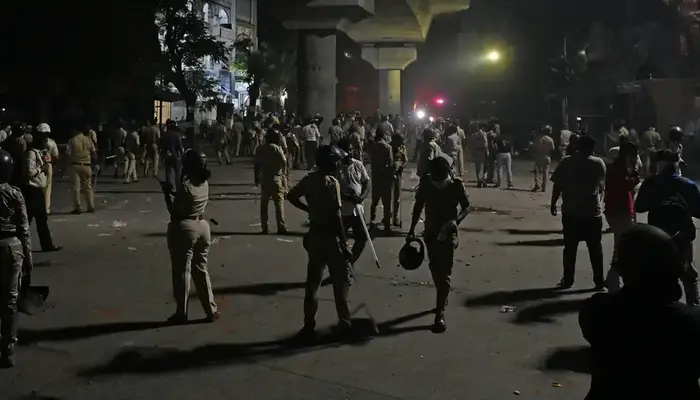
Case Summary
In an article by Shaikh Azizur Rahman, the communal violence in Nagpur was examined as a reflection of India's deepening religious divide. Rahman highlighted how historical grievances and political rhetoric had intensified communal tensions in Nagpur. He discussed how right-wing Hindu groups’ opposition to Aurangzeb’s legacy, combined with recent events like the release of the film Chava, had led to increased polarisation. The protests and counter-reactions, including the desecration of religious symbols, escalated into violent clashes between Hindu and Muslim groups. He noted that Aurangzeb remained a highly controversial figure in India, with many Hindus viewing him as a symbol of religious persecution, while some sections of the Muslim community saw him as a historical ruler whose actions were often misrepresented. Rahman also pointed out that historical records indicated Aurangzeb had protected some Hindu temples, challenging the common narrative that he had only destroyed them. Quoting Maharashtra Deputy Chief Minister Devendra Fadnavis, he highlighted how political leaders had reinforced these divisions, with Fadnavis condemning the violence and stating, "Chava ignited people's anger against Aurangzeb." He also attributed the clashes to a "well-planned attack" aimed at disturbing communal harmony. He further argued that the violence reflected a broader pattern of growing religious divisions in India. The government’s response, including mass arrests and curfews, signalled concerns over maintaining order, yet underlying tensions remained unresolved. Rahman suggested that political and ideological influences continued to shape narratives around historical figures, further deepening the communal divide.
Why it is Hate Crime ?
This case has been added to the tracker under the prime category- Hate speech against Hindus. The sub-category relevant in this case is- Denial or mocking of historical genocide/large scale persecution. Denial or mocking of genocide/large-scale persecution/ethnic cleansing refers to the act of denying or minimizing the fact of the ethnic cleansing and/or genocide and/or religious persecution of Hindus. This often involves denying the scale, mechanisms, religious intent, or even the occurrence of the ethnic cleansing and/or genocide and/or religious persecution of Hindus. Hate speech of this kind involves the dissemination of falsehoods that deny or distort established historical facts or mock the suffering of Hindus by saying that they deserved the persecution, motivated by Hinduphobia. Denying such atrocities is not only about the denial of facts or rewriting/revising history, but it also delegitimises the religiously motivated persecution of Hindus, the religious hate/motivation/animosity that led to the persecution, and dehumanises Hindus as a religious group. Such denial of ethnic cleansing and/or genocide and/or religious persecution of Hindus not only denies the suffering but also paves the way for future/present atrocities and hate speech, inciting prejudice and violence against Hindus. It also provides a justification for violence by delinking religious animosity from religiously motivated crimes committed against Hindus. Since such denial and/or mocking of genocide/ethnic cleansing/atrocities motivated by religious animosity leads to present and future ramifications of creating more hate speech, violence, dehumanisation and delegitimisation, it would be considered hate speech under this category. The other subcategory selected is- Anti Hindu subversion and prejudice. Within this, the sub actegory selected is- Anti-Hindu Fake News or Downplaying. Hate speech is defined as any speech, gesture, conduct, writing, or display that is prejudicial against a specific individual and/or group of people, which is leading to or may lead to violence, prejudicial action or hate against that individual and/or group. Media plays a specific and overarching reach in perpetuating prejudicial attitudes towards a community owing to unfair, untrue coverage and/or misrepresentation/misinterpretation, selective coverage and/or omission of facts of/pertaining to issues affecting a specific religious group. This type of bias can dehumanise the victim group, making it easier for others to justify harmful actions against them, which aligns with the objectives of hate speech laws aimed at preventing such harm. It is often observed that the media takes a prejudicial stand against the Hindu community driven by their need to shield the aggressor community which happens to be a numeric minority, however, is the one perpetrating violence against Hindus. For example, the media is often quick to contextualise religiously motivated crimes against Hindus, omit or misrepresent facts that point towards religiously motivated hate crimes, justify and/or downplay religiously motivated hate crimes or simply present fake news to stereotype Hindus. Such media bias leads to the denial of persecution and is often used to dehumanise Hindus, leading to justification for violence against them. For example, the media covered several fake allegations of Hindus targeting Muslims and forcing them to chant Jai Shree Ram. Most of these cases were proved false and fabricated after police investigation. These fake news reports were subsequently never retracted or clarified. Such fake news led to the justification of violence and dehumanisation of Hindus based on the argument that since Hindus targeted Muslims and forced them to chant Jai Shree Ram, the dehumanisation of Hindus and violence against them was par for the course and merely a retaliation. Such media bias leads to prejudicial portrayal of Hindus and offers a justification for violence against them and therefore, is considered hate speech under this category. This case has been added to the tracker because the article by Shaikh Azizur Rahman engaged in narrative distortion that denied and minimised the historical persecution of Hindus. By selectively portraying Aurangzeb as a ruler who protected Hindu temples, the article attempted to sanitise a long record of religiously motivated oppression, including temple destruction, forced conversions, and the execution of Hindu rulers such as Chhatrapati Sambhaji Maharaj. This rewriting of history diminished the documented suffering of Hindus and obscured the religious motivations behind Aurangzeb’s policies. The article also reframed the present day anger over Aurangzeb’s legacy as a reaction manufactured by political groups, instead of acknowledging the deep rooted historical trauma associated with his rule. By doing so, it delegitimised Hindu perspectives on centuries of persecution and portrayed Hindu grievances as exaggerated or politically driven. This narrative not only undermined the historical reality of anti Hindu violence but contributed to a broader pattern in which Hindu suffering is dismissed or presented as invalid. Such attempts to minimise, reinterpret, or excuse historical atrocities fall directly within the category of denial or mocking of historical genocide or large scale persecution. These kinds of narratives have long been used to downplay the severity of anti Hindu oppression, weaken public understanding of Hindu historical trauma, and create environments where religiously motivated violence against Hindus can be ignored or justified. Because the article denied, softened, and distorted historical harm done to Hindus, and because it reframed Hindu collective memory as extremism rather than legitimate historical grievance, it qualifies as a clear instance of anti Hindu hate speech and has been documented in the Hinduphobia Tracker under this category.


Case Status
Complaint not filed


Perpetrators Details
Perpetrators
Muslim Extremists
Perpetrators Range
One Person
Perpetrators Gender
male
 Sources




