Hindu Turha community youths beaten after objection to music by Muslims in Buxar, Bihar
 Buxar, Bihar, India
  23 March, 2025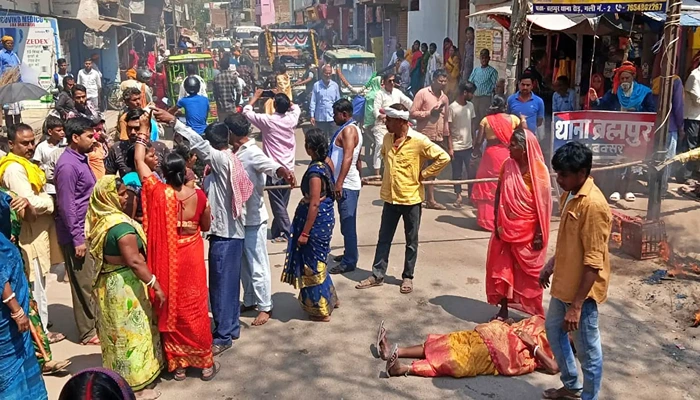
Case Summary
In Buxar district’s Brahmapur block, several youths from the Turha community were assaulted by members of the Muslim community after they objected to music during Ibadat. The dispute began on Sunday evening when the Muslim community objected to the loud music, citing the time of Ibadat, which led to heated arguments and physical assault. Although both parties approached the police that night, the matter remained unresolved due to the Governor’s programme. The conflict flared up again on Monday, resulting in several injuries, with five to six Turha youths seriously beaten. Allegations of damage to religious sites also surfaced, though unconfirmed by the administration. In protest, the Turha community blocked the road, disrupting traffic and demanding arrests. Police detained six individuals from both sides, deployed heavy forces, and brought the tense situation under control while appealing for peace.
Why it is Hate Crime ?
This case has been added to the tracker under the primary category of- Attack not resulting in death. Within this, the sub-category selected is- communal clash/attack. Communal clash is a form of collective violence that involves clashes between groups belonging to different religious identities. For a communal clash between Hindus and non-Hindus to qualify as a religiously motivated hate crime, the trigger of the violence itself would have to be anti-Hindu in essence. For example, if there is a Hindu religious procession that comes under attack from a non-Hindu mob and after the initial attack, Hindus retaliate in self-defence, leading to a communal clash between the two religious communities. While at a later stage, both communities are involved in the clash/violence, the initial trigger of the violence was by the non-Hindu mob against the Hindus and therefore, it could safely be termed as an anti-Hindu violence. Further, the trigger would also have to be religiously motivated. In the cited example, the attack by the non-Hindu mob was against religious processions and therefore, can be concluded to be religiously motivated. In some cases, the trigger may be non-religious, however, it develops into religious violence against Hindus at a later stage. In such cases too, the foundational animosity towards Hindus becomes the motivating factor of the crime and therefore, it would be classified as a religiously motivated hate crime against Hindus under this category. The above incident qualifies as a communal clash as it involved two communities—Hindus (Turha community) and the Muslim community—coming into conflict over religious sensitivities. The trigger for the violence was the objection raised by the Muslim community to the playing of music during Ibadat, specifically targeting the Hindu side’s celebratory activity, a birthday function, near a religious site. The demand to stop or reduce the sound was not a general grievance but was linked to the Muslim community’s religious observance, which directly escalated into violence. Furthermore, the attack was primarily directed at the Turha community, with several of their young members brutally assaulted. Allegations of damage to religious sites also indicate a religious angle to the incident. While both sides were later involved in the clash, the initial aggression stemmed from the non-Hindu side objecting to Hindu festivities. As the clash developed along religious lines and the violence was directed at Hindus during a Hindu social function, it meets the criteria of a religiously motivated communal clash. Therefore, this case has been included in the hate crime database.


Case Status
Complaint filed


Perpetrators Details
Perpetrators
Muslim Extremists
Perpetrators Range
Unknown
Perpetrators Gender
male
 Sources




