Hate Speech targeting Hindus: Left-liberal 'journalist' attempts to justify anti-Hindu Nagpur violence
 Delhi, Delhi, India
  17 March, 2025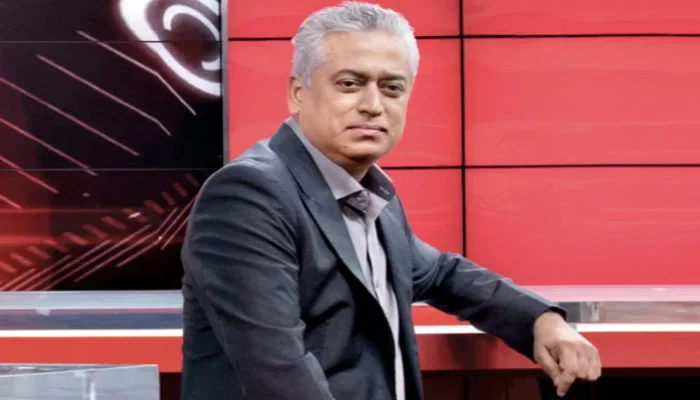
Case Summary
An India Today journalist, Rajdeep Sardesai, sought to justify the violent attacks against Hindus in Nagpur carried out by Muslim mobs. Hindu groups had demanded the removal of Aurangzeb’s tomb, the resting place of the Mughal tyrant. During this, a rumour about the Quran being burned, which lacked verification, circulated and resulted in widespread violence against Hindus. The Muslim mobs targeted Hindu shops, carts, and vehicles selectively. Despite Hindus being the victims, Sardesai justified the violence committed by Muslim mobs against them in Nagpur. A video clip of his remarks went viral on social media, where he stated, “To unleash a hate-filled narrative where you want to go and demolish Aurangzeb’s tomb, you must be prepared for some reaction and a backlash.” Sardesai’s comments came a day after Muslim mobs launched a violent rampage in Nagpur. They torched Hindu shops and vehicles and pelted Hindus with stones in the area. The violence in Nagpur was a deliberate attack on Hindus. Multiple eyewitnesses confirmed that Hindu shops and carts were deliberately targeted. The Muslim mob chanted religious slogans such as ‘Allahu Akbar’ and ‘Labaik Ya Rasool Allah’ while carrying out the assault. Around 15 police officers and five civilians sustained injuries during the violence. Section 144 was imposed in the affected area to restore order. Instead of holding the Muslim mobs accountable for initiating the violence over an unverified rumour of Quran burning, journalists like Rajdeep Sardesai shifted blame onto the Hindu victims. He accused Hindus of provoking the violence by demanding the removal of the tomb of an Islamic tyrant who had brutally slaughtered many Hindus and destroyed numerous Hindu temples.
Why it is Hate Crime ?
This case has been added to the tracker under the primary category- Hate Speech against Hindus. Within this, the subcategory selected is- Anti-Hindu slurs, mocking faith. Anti-Hindu slurs and the deliberate mocking of the Hindu faith owing to religious animosity involve the usage of derogatory terms, stereotypes, or offensive references to religious practices, symbols, or figures. One of the common anti-Hindu slurs used against Hindus is “cow-worshipper” and “cow piss drinker”. The intention of using this term is to demean and mock Hindus as a group and their religious beliefs since Hindus consider the cow holy. Additionally, some symbols and the slurs attached to them have a historical context that exacerbates the insult, hate, stereotyping, dehumanisation and oppression against Hindus. Cow worship has been used for centuries to denigrate Hindus, insult their faith and oppress Hindus specifically as a religious group. There has been overwhelming documentation about how cow slaughter has been used to persecute Hindus with cow meat being thrown in temples and places of worship. There has also been overwhelming documentation where cow meat (beef) has been force-fed to Hindus to either forcefully convert them to Islam or denigrate their faith. Apart from cow worship, the Swastika – which holds deep religious significance for the Hindus – has also been misinterpreted and distorted to use as a slur against Hindus. Similarly, the worship of the Shivling has been used by supremacist ideologies and religions to denigrate Hindus owing to religious animosity. Such slurs and denigration stem out of inherent animosity and hate towards Hindus and their faith, therefore, it is categorised as hate speech targeted at Hindus specifically owing to their religious identity. The other subcategory selected is- Anti-Hindu subversion and prejudice. The tertiary category selected is- Anti-Hindu fake news or downplaying. Hate speech is defined as any speech, gesture, conduct, writing, or display that is prejudicial against a specific individual and/or group of people, which is leading to or may lead to violence, prejudicial action or hate against that individual and/or group. Media plays a specific and overarching reach in perpetuating prejudicial attitudes towards a community owing to unfair, untrue coverage and/or misrepresentation/misinterpretation, selective coverage and/or omission of facts of/pertaining to issues affecting a specific religious group. This type of bias can dehumanise the victim group, making it easier for others to justify harmful actions against them, which aligns with the objectives of hate speech laws aimed at preventing such harm. It is often observed that the media takes a prejudicial stand against the Hindu community driven by their need to shield the aggressor community which happens to be a numeric minority, however, is the one perpetrating violence against Hindus. For example, the media is often quick to contextualise religiously motivated crimes against Hindus, omit or misrepresent facts that point towards religiously motivated hate crimes, justify and/or downplay religiously motivated hate crimes or simply present fake news to stereotype Hindus. Such media bias leads to the denial of persecution and is often used to dehumanise Hindus, leading to justification for violence against them. For example, the media covered several fake allegations of Hindus targeting Muslims and forcing them to chant Jai Shree Ram. Most of these cases were proved false and fabricated after police investigation. These fake news reports were subsequently never retracted or clarified. Such fake news led to the justification of violence and dehumanisation of Hindus based on the argument that since Hindus targeted Muslims and forced them to chant Jai Shree Ram, the dehumanisation of Hindus and violence against them was par for the course and merely a retaliation. Such media bias leads to prejudicial portrayal of Hindus and offers a justification for violence against them and therefore, is considered hate speech under this category. This instance clearly exemplifies hate speech against Hindus by Rajdeep Sardesai through several disturbing patterns. First, Sardesai blamed the Hindu victims after they endured brutal targeted violence by Muslim mobs. The Hindus were demanding the removal of Aurangzeb’s tomb, a demand rooted in historical pain, as Aurangzeb was a ruthless Mughal ruler who zealously persecuted Hindus, desecrating temples and inflicting widespread suffering. Instead of condemning the persecution of Hindus by Aurangzeb, Muslims attacked Hindus over this demand, revealing their support for such a tyrant. Following this, Sardesai's remarks blaming Hindus for the violent actions of the Muslim mobs are a profound manifestation of animosity against the Hindu community. Sardesai’s stance effectively silences the Hindu victims and shifts responsibility onto those Hindu victims who suffered, reflecting an instance of blatant anti-Hindu slurring. Secondly, Sardesai attempted to whitewash and trivialise the violence by reducing it merely to a reaction to the demands of the removal of Aurangzeb’s tomb. Yet, he deliberately ignored the unverified but widespread rumour of Quran burning that had been circulated, a known tactic used by Muslim extremists to incite hatred and violence against Hindus. This crucial element was conveniently omitted by Sardesai, masking the true provocation behind the attacks. Quran desecration accusations have historically been weaponised to justify brutal communal violence against Hindus, and by overlooking this, Sardesai minimised the deliberate religiously motivated nature of the violence. His selective portrayal reveals not just negligence but an underlying religious animosity by blaming Hindu victims for the violence committed by radical Muslim mobs. Thirdly, eyewitness accounts, authorities, and reports confirmed that the violence was a premeditated attack on Hindus, with stones gathered well in advance. The attacks were not spontaneous outbreaks of anger but orchestrated assaults on innocent Hindus. By ignoring this significant evidence and trying to downplay the deliberate planning behind the violence, Sardesai further shielded the Muslim perpetrators from accountability. This whitewashing amplifies the message of hatred against Hindus by refusing to acknowledge the severity and calculated nature of the attacks. Together, these elements demonstrate how Rajdeep Sardesai engaged in anti-Hindu slurring, distorted facts, and manipulated the truth. His narrative sought to vilify the Hindu victims, excuse the violent Muslim mobs, and obscure the religious hatred fueling the attacks. This is an unmistakable instance of religiously motivated hate speech, which dehumanises Hindus and excuses brutality against them. Given that this case meets the parameters of a hate speech targeting Hindus, it is being added to the hate crime database.


Case Status
Unknown


Perpetrators Details
Perpetrators
Others
Perpetrators Range
One Person
Perpetrators Gender
male
 Sources




