Attack on Hindu religious sentiments: Indian politician makes derogatory remark on Mahakumbh Mela
 West Bengal, India
  17 February, 2025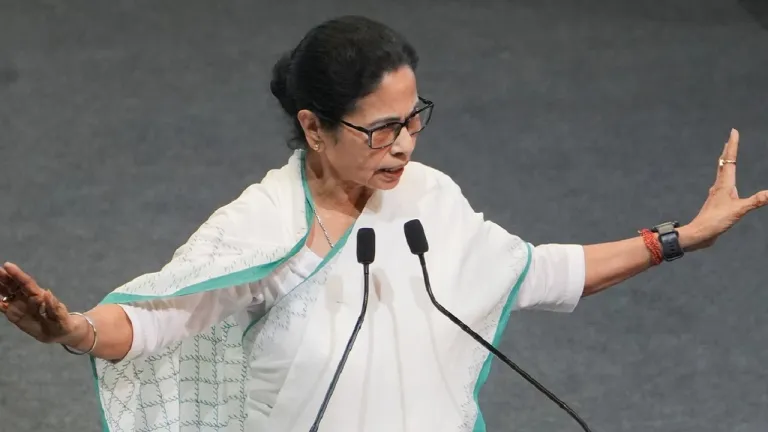
Case Summary
A derogatory remark targeting the Mahakumbh Mela, an important Hindu religious gathering, was made by the Chief Minister of West Bengal, Mamata Banerjee. The Mahakumbh Mela 2025 held deep spiritual significance for Hindus, occurring once every 144 years when the Sun, Moon, Jupiter, and Saturn aligned in a rare celestial event. It was the largest Hindu congregation, where crores of devotees took a holy dip in the Ganga, believing it cleansed them of their sins. According to news reports, Mamata Banerjee referred to the Mahakumbh as a ‘Mrityu Kumbh’. She said this in the context of stampedes that occurred in the Mahakumbh celebrations. She stated, “Mahakumbh has now turned into Mrityu Kumbh. VIP people are being given special facilities.” She further stated that the Yogi Adityanath government of Uttar Pradesh always plays politics over religion. This was not the first instance of such anti-Hindu remarks. The Trinamool Congress (TMC) party, to which Mamata belongs, has a history of making disparaging statements against Hindu beliefs. For example, in 2019, Mamata Banerjee wrote a Facebook post declaring she would continue to oppose ‘Jai Shri Ram’ slogans, calling them a deliberate attempt ‘to sell hatred ideology’. On another occasion, while sharing a stage with Prime Minister Narendra Modi at Kolkata’s Victoria Memorial for the Netaji birth anniversary celebrations, she took offence at the chanting of ‘Jai Shri Ram’ and ‘Bharat Mata ki Jai’. She criticised the crowd, stating, “Inviting people and then disrespecting them does not behove the government. This is a government programme, not a political party’s programme.” In a further example, in 2021, TMC MP Mahua Moitra attacked Yogi Adityanath during his election campaigning in Bengal for the BJP. Yogi Adityanath had said that all political violence by TMC and their goons would end if the BJP were elected in Bengal. Angered by this statement, Mahua Moitra responded with anti-Hindu remarks, referring to Yogi Adityanath’s supporters as the ‘Vanar Sena commune’. She tweeted that his “thok do culture” from his “vanar sena commune” would not work in West Bengal. The Vanar Sena is a revered force in the Hindu epic Ramayana, fighting for dharma alongside Lord Ram.
Why it is Hate Crime ?
This case has been added to the tracker under the primary category- Hate Speech against Hindus. The subcategory selected is- Anti-Hindu slurs, mocking faith. Anti-Hindu slurs and the deliberate mocking of the Hindu faith owing to religious animosity involve the usage of derogatory terms, stereotypes, or offensive references to religious practices, symbols, or figures. One of the common anti-Hindu slurs used against Hindus is “cow-worshipper” and “cow piss drinker”. The intention of using this term is to demean and mock Hindus as a group and their religious beliefs since Hindus consider the cow holy. Additionally, some symbols and the slurs attached to them have a historical context that exacerbates the insult, hate, stereotyping, dehumanisation and oppression against Hindus. Cow worship has been used for centuries to denigrate Hindus, insult their faith and oppress Hindus specifically as a religious group. There has been overwhelming documentation about how cow slaughter has been used to persecute Hindus with cow meat being thrown in temples and places of worship. There has also been overwhelming documentation where cow meat (beef) has been force-fed to Hindus to either forcefully convert them to Islam or denigrate their faith. Apart from cow worship, the Swastika – which holds deep religious significance for the Hindus – has also been misinterpreted and distorted to use as a slur against Hindus. Similarly, the worship of the Shivling has been used by supremacist ideologies and religions to denigrate Hindus owing to religious animosity. Such slurs and denigration stem out of inherent animosity and hate towards Hindus and their faith, therefore, it is categorised as hate speech targeted at Hindus specifically owing to their religious identity. In this case, the statement made by Mamata Banerjee is a clear example of a religiously motivated hate speech against Hinduism and the Hindu community. The speech, branding the Mahakumbh Mela as a ‘Mrityu Kumbh’—a “Death Kumbh”—in the wake of unfortunate stampede deaths, was not just criticism; it crossed the line into blatant hate speech. Criticism of government failures or mismanagement is reasonable and necessary in any large public event, but Mamata chose to descend into name-calling and deliberate denigration of a sacred event like the Mahakumbh. To label the sacred Mahakumbh as ‘Mrityu Kumbh’ was an outright insult to millions of Hindus who consider this gathering very sacred. It was a direct affront to their religious sentiments, trampling on a timeless tradition revered for its spiritual significance. Such rhetoric from a political leader did not merely critique; it actively sought to demean and humiliate the Hindu faith and its adherents, making it an instance of hate speech motivated by religious animosity. Given the Trinamool Congress’s well-documented history of anti-Hindu statements—and the fact that Mamata Banerjee has been a leading voice in the party—it would be naïve to dismiss her motives as anything but rooted in religious animosity. This was not an isolated outburst but part of a pattern. In 2019, Mamata openly opposed slogans like ‘Jai Shri Ram’, a revered Hindu slogan, calling them a ‘deliberate attempt to sell hatred ideology.’ During a public event alongside Prime Minister Narendra Modi, she took offence at the chanting of ‘Jai Shri Ram’ and ‘Bharat Mata ki Jai’, reprimanding the crowd for expressing their faith and patriotism. Likewise, TMC MP Mahua Moitra insulted Yogi Adityanath by mocking the Vanar Sena, a revered force in the Hindu epic Ramayana symbolising the fight for dharma alongside Lord Ram, branding it a “vanar sena commune.” These statements clearly reveal a sustained animus towards Hindu symbols, faith, and followers. To witness a chief minister publicly belittle one of the most sacred Hindu festivals is an instance of hate speech aimed at undermining the Hindu community’s dignity and right to worship freely. The Mahakumbh Mela is a cornerstone of Hindu identity; attempts to denigrate it showcase that the act is motivated by religious animosity towards Hinduism. Given that this case meets the parameters of a religiously motivated hate speech, it is being added to the hate crime database in the Hinduphobia Tracker.


Case Status
Unknown


Perpetrators Details
Perpetrators
State and Establishment
Perpetrators Range
One Person
Perpetrators Gender
female
 Sources




