Inflammatory remarks targeting revered Hindu king added to Wikipedia page by its editors
 California, United States
  20 February, 2025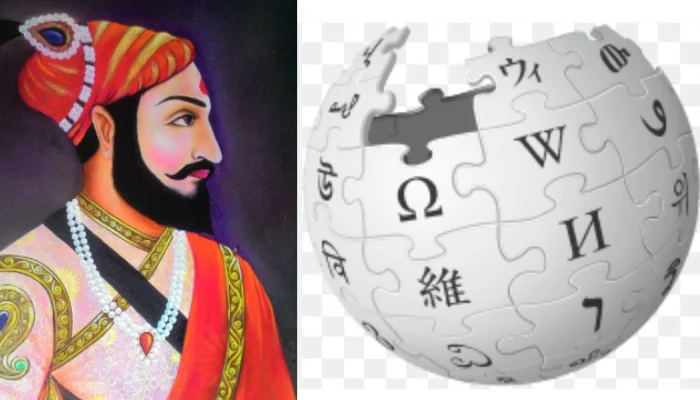
Case Summary
Derogatory remarks and factually incorrect information targeting the revered Hindu king, Chhatrapati Sambhaji Maharaj, were added to his Wikipedia page by Wikipedia editors, causing hurt and outrage among the Hindu community. Chhatrapati Sambhaji Maharaj was one of the greatest and most highly esteemed rulers of the Maratha empire. He succeeded Shivaji Maharaj and continued his father's expansionist policies. During his reign, he confronted invasions from the Mughals led by Aurangzeb, along with incursions from the Portuguese, British, and Janjira Siddhis. Sambhaji was eventually captured by the Mughals in 1688 and executed on 11th March 1689, after refusing to convert to Islam. His Wikipedia page had been edited to claim that Sambhaji Maharaj was 'irresponsible and addicted to sensual pleasures,' and even claimed that he had raped the wife of a Brahmin man. Such derogatory remarks provoked outrage and resulted in the Cyber Cell of Maharashtra Police initiating a case against four to five Wikipedia editors for failing to remove the controversial content about the Maratha ruler. According to media reports, four to five individuals were involved in spreading misinformation about Chhatrapati Sambhaji Maharaj on Wikipedia, an action with the potential to create a law and order problem. The Cyber Cell had earlier issued a notice to the US-based Wikimedia Foundation, seeking a response to its request for the removal of the content, but Wikipedia did not provide a reply. The Cyber Cell department maintained that the objectionable content could easily incite unrest amongst the thousands of followers of Sambhaji Maharaj. It further stated that Wikipedia had contravened Sections 69 and 79 of the IT Act. The Chief Minister of Maharashtra, Devendra Fadnavis, directed the Cyber Cell to communicate with Wikipedia as a matter of urgency, declaring that such distortion of historical facts on open-source platforms would not be tolerated. He emphasised, "Freedom of expression is not unlimited. It cannot encroach on the freedom of others."
Why it is Hate Crime ?
The case has been added to the tracker under the primary category- Hate Speech against Hindus. Within this, the subcategory selected is- Anti-Hindu slurs, mocking faith. Anti-Hindu slurs and the deliberate mocking of the Hindu faith owing to religious animosity involve the usage of derogatory terms, stereotypes, or offensive references to religious practices, symbols, or figures. One of the common anti-Hindu slurs used against Hindus is “cow-worshipper” and “cow piss drinker”. The intention of using this term is to demean and mock Hindus as a group and their religious beliefs since Hindus consider the cow holy. Additionally, some symbols and the slurs attached to them have a historical context that exacerbates the insult, hate, stereotyping, dehumanisation and oppression against Hindus. Cow worship has been used for centuries to denigrate Hindus, insult their faith and oppress Hindus specifically as a religious group. There has been overwhelming documentation about how cow slaughter has been used to persecute Hindus with cow meat being thrown in temples and places of worship. There has also been overwhelming documentation where cow meat (beef) has been force-fed to Hindus to either forcefully convert them to Islam or denigrate their faith. Apart from cow worship, the Swastika – which holds deep religious significance for the Hindus – has also been misinterpreted and distorted to use as a slur against Hindus. Similarly, the worship of the Shivling has been used by supremacist ideologies and religions to denigrate Hindus owing to religious animosity. Such slurs and denigration stem out of inherent animosity and hate towards Hindus and their faith, therefore, it is categorised as hate speech targeted at Hindus specifically owing to their religious identity. The other subcategory selected in this case is- Mocking/denigrating Hindu leaders. Hate speech is defined as any speech, gesture, conduct, writing, or display that is prejudicial against a specific individual and/or group of people, which is leading to or may lead to violence, prejudicial action or hate against that individual and/or group. Religious leaders are often seen as representatives of the community, especially, the community’s religious faith and beliefs. Mocking or denigrating a religious leader specifically owing to his religious identity and/or the religious rituals he observes can be considered hate speech because the motivating factor of the speech is animosity and/or dislike for what he represents – the religious beliefs and faith of the community. It is important to note that mere insulting words against an individual do not constitute hate speech. It is entirely possible that insulting words are used for an individual, however, the specific speech is not the result of religious hate and/or animosity towards the professed faith of the religious leader, but the individual himself. For the speech to be considered hate speech, the speech itself or the motivating factor behind the speech has to be religious in nature. Such speech which denigrates Hindu religious leaders specifically owing to animosity towards the faith they profess and the community faith they represent will be treated as hate speech under this category. This case is being added to the hate crime database because the Wikipedia editors directly targeted a revered Hindu king, Chhatrapati Sambhaji Maharaj. Sambhaji Maharaj, son of the legendary Hindu king Chhatrapati Shivaji Maharaj, occupies a place of immense significance in Hindu history. For Hindus, he is remembered not only as one of India’s greatest warrior kings but also as a steadfast protector of the Hindu religion and culture in the face of oppressive Islamic regimes. His legacy inspires nationalist pride and spiritual strength, and he continues to be held in deep respect by the Hindu community. When a public platform like Wikipedia publishes denigrating and malicious remarks against such a revered Hindu figure, it is nothing less than anti-Hindu hate speech. Inaccurate and unverified allegations—branding Sambhaji Maharaj a rapist or sexually perverse—are a deliberate attempt to tarnish not just his image, but the dignity and pride of Hindus everywhere. Such distortion does not simply spread falsehoods; it is designed to weaken the spirit of a whole community, sowing self-doubt and shame about their own heritage and heroes. These acts have also been used to portray Hindu kings as evil and to dishonour Hindu history and civilisation. Targeting a legendary Hindu figure with such baseless and offensive accusations openly displays hostility and animosity towards Hindus, Hindu history, and Hinduism itself. This sustained campaign reflects anti-Hindu prejudice and is a clear example of hate speech. For these reasons, this case is being added to the hate crime database.


Case Status
Complaint filed


Perpetrators Details
Perpetrators
Others
Perpetrators Range
From 5 to 10
Perpetrators Gender
unknown
 Sources




