Idol of Sant Ravidas damaged, Hindus abused with caste-based slurs by Muslim men in Ballia, Uttar Pradesh
 Ballia, Uttar Pradesh, India
  11 February, 2025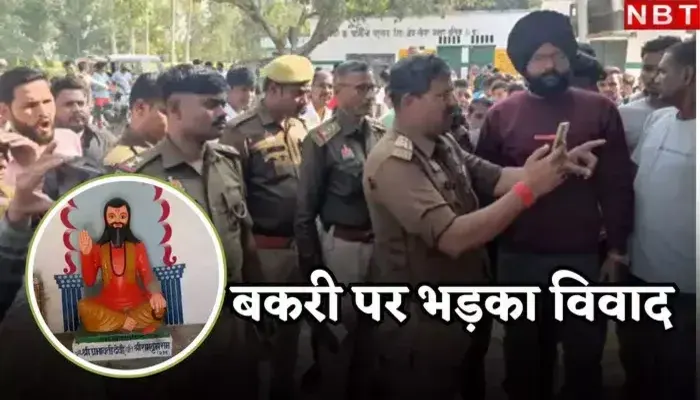
Case Summary
In Ballia district of Uttar Pradesh, Muslim men vandalised the idol of Sant Ravidas and hurled caste-based slurs against Hindus. The incident took place in the village of Padsara Nadouli Tajpur while preparations were underway for the pooja celebration in the temple. Members of the Mulsim community brought a goat into the temple premises, which caused the initial disruption. When efforts were made to remove the goat, a dispute erupted between the two groups. Muslim men vandalised the idol of Sant Ravidas and hurled caste-based slurs against Hindus. Police intervened promptly after being informed of the incident, calming the agitated crowd and restoring order. A case was registered under relevant sections of the Indian Penal Code against five named individuals—Sahil Qureshi, Raj Qureshi, Suhel, Mumtaz, and Firoz—along with other unidentified persons. Law enforcement officials deployed forces as a precautionary measure and were working to apprehend the accused.
Why it is Hate Crime ?
This case has been added to the tracker under the prime category- Attack on Hindu religious representations. The sub-category relevant in this case is- Desecration of Hindu religious symbols. Icons and symbols or a religious representation of a spiritual ideal are widely revered in Hinduism. Iconography is of vital significance in the Hindu milieu. It helps connect people’s spiritual beliefs with the real world. Iconography within the Hindu faith takes several shapes and forms. Murtis are of most significance to Hindus, to which daily rituals, prayers and offerings are done. Besides the murtis, there are several other symbols which have deep significance in the Hindu faith – the Om and Swastika for example. Since these Hindu religious symbols hold paramount importance in Hinduism, any desecration of symbols, icons, murtis, religious representations and manifestations, is driven by animosity towards the faith itself which manifests itself through these murtis, icons and symbols. Therefore, any desecration of these Hindu religious symbols and representations is considered religiously motivated hate crimes under this category. The other sub-category relevant in this case is- Attack on Temples. In Hinduism, a temple is the abode of the Deity. The Deity in the Temple is consecrated, thereby, making it a real, breathing entity. Hindus believe that not just the Deity but the temple premises itself are sacred to Hindus since Hindus hold the faith that the entire Temple space is an amalgamation of the divine energy of the deity. Given the central significance of Temples in Hindu Dharma, any attack against a Hindu Temple or its peripheral premises is an attack on the faith itself and is born out of animosity towards the faith, of which, the Temple is a central tenet. Any manner of attack against a Temple and/or its premises would therefore be considered a religiously motivated hate crime. The other primary category selected is - Hate speech against Hindus. The sub-category selected here is - Anti-Hindu slurs, mocking faith. Anti-Hindu slurs and the deliberate mocking of the Hindu faith owing to religious animosity involve the usage of derogatory terms, stereotypes, or offensive references to religious practices, symbols, or figures. One of the common anti-Hindu slurs used against Hindus is “cow-worshipper” and “cow piss drinker”. The intention of using this term is to demean and mock Hindus as a group and their religious beliefs since Hindus consider the cow holy. Additionally, some symbols and the slurs attached to them have a historical context that exacerbates the insult, hate, stereotyping, dehumanisation and oppression against Hindus. Cow worship has been used for centuries to denigrate Hindus, insult their faith and oppress Hindus specifically as a religious group. There has been overwhelming documentation about how cow slaughter has been used to persecute Hindus with cow meat being thrown in temples and places of worship. There has also been overwhelming documentation where cow meat (beef) has been force-fed to Hindus to either forcefully convert them to Islam or denigrate their faith. Apart from cow worship, the Swastika – which holds deep religious significance for the Hindus – has also been misinterpreted and distorted to use as a slur against Hindus. Similarly, the worship of the Shivling has been used by supremacist ideologies and religions to denigrate Hindus owing to religious animosity. Such slurs and denigration stem out of inherent animosity and hate towards Hindus and their faith, therefore, it is categorised as hate speech targeted at Hindus specifically owing to their religious identity. The vandalism of the Sant Ravidas idol constitutes a hate crime against Hindus. In Hinduism, idols (murtis) are revered representations of spiritual ideals and are central to daily rituals, prayers, and offerings. Damaging the idol demonstrates hostility towards the faith itself, as it undermines the symbolic and spiritual significance of the deity for devotees. By deliberately targeting the idol, the perpetrators displayed animosity towards Hindu religious beliefs, making this act a religiously motivated hate crime. Temples are considered sacred abodes of the deity, with the entire premises imbued with divine energy. When the perpetrators brought a goat into the temple and engaged in violent actions, they violated the sanctity of the temple space and disrupted the religious practices of the devotees. This attack on the temple premises directly challenges the religious faith of the Hindu community and reflects animosity towards the religion itself. Given the central significance of temples in Hindu Dharma, such actions are classified as religiously motivated hate crimes. In this case, Muslim men used casteist slurs against Hindus. It can be argued that a caste-specific slur is aimed at the victim's micro identity and not their Hindu identity itself. However, as far as Abrahamic religions are concerned, the micro identities of caste, region, and language are secondary. It is the religious identity that drives the animosity of the perpetrator against the Hindu victim. In this case, while the Muslim men hurled caste abuses at the victims, the animosity was driven by their animosity towards Hinduism and Hindus. The fact that caste slurs were hurled at the victim by the perpetrator makes it a religiously motivated hate crime against the victim.


Case Status
Complaint filed


Perpetrators Details
Perpetrators
Muslim Extremists
Perpetrators Range
From 2 To 5
Perpetrators Gender
male
 Sources




