Hindu students asked to remove kalava and wipe off tilak by school administration; minor forced to wear Priest attire
 Ayodhya, Uttar Pradesh, India
  11 November, 2025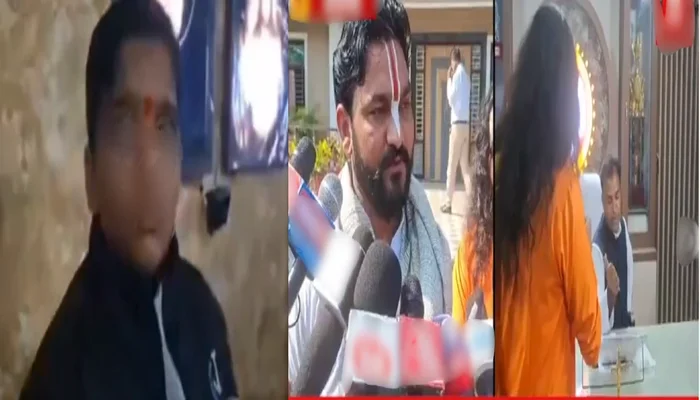
Case Summary
A Hindu student at Little Flower School in the Bharat Kund area of Ayodhya was pressured by the school administration to remove religious symbols such as chandan, kalava, and the shikha. The family reported that their child had already cut his shikha after being told to do so by the school. The Hindu parents stated that during a school function, their child was made to wear a priest’s costume against his wishes. The child was later instructed to take the outfit home, wash it, and bring it back. When he did not comply, a teacher scolded and mistreated him, leading the child to lock himself in a room out of distress. Once the family became aware of the situation, they went to the school along with local Hindu organisations and confronted the administration. During the discussion that followed, the school administration apologised and assured them that such actions would not be repeated. The family accepted the apology, and the situation settled. Public figures and local organisational representatives expressed their displeasure and demanded accountability from those involved.
Why it is Hate Crime ?
This case has been added to the tracker under the first primary category: Attack on Hindu religious representation. Within this, the subcategory selected is: Desecration of Hindu religious symbol. Icons and symbols, or a religious representation of a spiritual ideal, are widely revered in Hinduism. Iconography is of vital significance in the Hindu milieu. It helps connect people’s spiritual beliefs with the real world. Iconography within the Hindu faith takes several shapes and forms. Murtis are of most significance to Hindus, to which daily rituals, prayers and offerings are done. Besides the murtis, there are several other symbols which have deep significance in the Hindu faith – the Om and Swastika, for example. Since these Hindu religious symbols hold paramount importance in Hinduism, any desecration of symbols, icons, murtis, religious representations and manifestations, is driven by animosity towards the faith itself, which manifests itself through these murtis, icons and symbols. Therefore, any desecration of these Hindu religious symbols and representations is considered a religiously motivated hate crime under this category. The second primary category selected is: Restriction/ban on Hindu religious practice. Within this, the subcategory selected is: Restriction on expression of Hindu identity. An example of the state-affected prejudicial and targeted orders against the Hindu community would be a government denying the right of a Hindu or a group of Hindus to hold a religious procession owing to the animosity of non-Hindu groups. Denial of the religious right of the Hindus to assuage the non-Hindu group, which harbours animosity to a point where it could lead to violence against Hindus, is not only a failure of law and order but is a prejudicial order against Hindus, denying them their fundamental rights to express their religious identity. An example of a hate crime against Hindus by a non-Hindu would be a non-Hindu institution forcing its Hindu employees to abandon religious symbols that a Hindu would wear as an expression of faith owing to inherent prejudice against the faith professed by the victim or a non-Hindu group of people restricting a Hindu group from constructing a place of worship simply because the demography of the area in which the temple is being built is dominated by non-Hindus. Such actions are driven by religious animosity and/or prejudice against Hindus and their faith and would therefore be categorised as a hate crime. The third primary category selected here is: Predatory Proselytisation. Under this, the sub-category selected is: Proselytisation by grooming, brainwashing, manipulation or subtle indoctrination. The tertiary category selected is: Conversion of minor. Religious brainwashing essentially means the often subtle and forcible indoctrination to induce someone to give up their religious beliefs to accept contrasting, regimented ideas. Religious grooming or brainwashing also involves propaganda and manipulation. It involves the systematic effort, driven by religious malice and indoctrination, to persuade “non-believers’ to accept allegiance, command, or doctrine to and of a contrasting faith. Cases of such grooming or brainwashing are far more nuanced than direct threats, coercion, inducement and violence. In such cases, it is often seen that there is repeated, subtle and continual manipulation of the victim to induce disaffection towards their own faith and acceptance of the contrasting faith of the perpetrator. While subtle indoctrination is widely acknowledged as predatory, an element which is often understated in such conversions or the attempts of such conversion is the role of loyalty and trust that might develop between the perpetrator and the victim. Fiduciary relationships are often abused to affect such religious conversion. For example, an educator transmitting religious doctrine of a competing faith to a Hindu student. The Hindu student is likely to accept what the teacher is transmitting owing to the existence of the fiduciary relationship. The exploitation of the fiduciary relationship to religiously indoctrinate victims would also be included in this category. Since the underlying animosity towards the victim’s faith forms the basis of predatory proselytisation, such cases are considered religiously motivated hate crimes. The other category selected here is- Attack not resulting in death. Within this, the subcategory selected is- Attacked for Hindu identity. In several cases, Hindus are attacked merely for their Hindu identity without any perceived provocation. A classic example of this category of religiously motivated hate crime is a murder in 2016. 7 ISIS terrorists were convicted for shooting a school principal in Kanpur because they got ‘triggered’ seeing the Kalava on his wrist and tilak that he had put. In this, the Hindu victim had offered no provocation except for his Hindu religious identity. The motivation for the murder was purely religious, driven by religious supremacy. Such cases where Hindus are targeted merely for their religious identity would be documented as a hate crime under this category. The incident at Little Flower School in the Bharatkund area of Ayodhya, where a Hindu child was subjected to the forcible removal of his shikha, tilak and kalawa by the school administration, is a clear example of religious intolerance and a hate crime against a Hindu child. This act goes beyond mere disciplinary action and enters the realm of targeted hostility against a Hindu student for his religious identity, raising serious questions about the protection of Hindu students in educational institutions. The tilak, shikha and kalawa are not merely decorative; they hold profound spiritual and cultural significance for Hindus. Tilak and kalawa are an emblem of Hindu religious identity, often applied during prayers, rituals, and as an affirmation of faith. By forcing the student to remove such religious symbols, the teacher did not just remove a physical attribute, but symbolically attempted to erase the child’s religious identity and freedom of expression. Such an act is deeply disrespectful and is an attack on the core values and practices of Hinduism. Moreover, this incident represents a clear restriction on the expression of the Hindu identity of the Hindu child. The teacher’s action sends a chilling message that Hindu symbols are not welcome and that Hindu students may be punished or harassed for displaying them. This not only infringes upon a Hindu child’s fundamental right to religious expression but also sets a dangerous precedent for other Hindu students who may feel compelled to hide their faith to avoid similar treatment. Another point to highlight is that the Hindu child was forced to wear a Christian priest's attire for a play. This showcases the element of subtle manipulation involved in targeting a minor child to facilitate conversion. The forced manipulation of minors is particularly egregious, as it is a direct violation of their rights and an attack on their cultural and religious identity. Since the victim is a minor, the element of consent and genuine change of conscience was absent from the outset. Due to their young age and lack of maturity, minors are especially vulnerable to manipulation and coercion. They may not have the capacity to fully understand the implications of the acts they are performing, making them susceptible to religious indoctrination and brainwashing. These instances are not random incidents but rather a premeditated effort to further religious conversions, stemming from hatred and animosity towards the victims’ original faith, Hinduism. These are common tactics in environments where subtle or overt pressure is used to alienate Hindu children from their roots. It serves as the first step in a larger pattern of grooming, where consistent ridicule and punishment for Hindu practices make a child more susceptible to abandoning their faith and embracing another under pressure. According to the victim's family, this was not an isolated event; many students were also forcibly asked to remove their tilak and other religious symbols. Such repeated actions indicate a deliberate attempt to suppress Hindu religious practices and intimidate Hindu students who display their faith, thereby creating an atmosphere of fear and exclusion based on religious identity. This systematic targeting of Hindu symbols and students amounts to religious intolerance within the school environment. Such acts are motivated by religious hostility towards Hindus and their expression of their religious identity. Such actions are overt in that they directly attack Hindu symbols, but they are also gradual because repeated suppression of Hindu practices in a Christian missionary school setting works to erode the child’s confidence in their own religion over time, normalising the idea that Hindu identity must be hidden or discarded to fit in. These are meant to alienate Hindu children from their own faith. Such actions are rooted in bias and disdain for Hinduism, its adherents, and its practices, making it a religiously motivated crime. In conclusion, the forcible removal of Hindu symbols, the restriction on religious expression, and the targeting of a Hindu child for manipulative conversion collectively constitute a serious case of religiously motivated hate crime. Therefore, this case is being added to the hate crime database. Disclaimer: The Hinduphobia Tracker records incidents based on when an event occurred or when the victim's ordeal began. It is important to clarify that none of the media sources covering this case has specified the exact date when the forceful actions began. Therefore, for documentation purposes, we have recorded the date based on when the incident was reported in the media: 12 November 2025.


Case Status
Unknown


Perpetrators Details
Perpetrators
Unknown
Perpetrators Range
Unknown
Perpetrators Gender
unknown
 Sources




